Ball Vape Buying Guide 2026
At a Glance
Ball Vapes are among the most powerful desktop vaporizers on the market. The principle: small balls made of ruby, stainless steel or glass are heated and placed on a bowl. The stored heat vaporises the herb – often in a single draw. Prices start at around 23 Euro (kits), while complete sets cost between 150 and 400 Euro. Anyone looking for a dense, convection-heavy hit and able to live with a desktop device will find a world of its own in Ball Vapes.
- Ball Vapes use heated balls (ruby, stainless steel, glass) instead of a heating chamber – the thermal mass delivers dense convection hits
- Wired = unlimited hits, wireless (e.g. WOHW) = 1 hit per charge
- Prices: from – EUR (Elev8R) to – EUR (FlowerPot B2)
- Ruby balls are standard: chemically inert, flavour-neutral, durable
- A water filter (bubbler/bong) is essential – without one, the vapour becomes too harsh
What exactly is a Ball Vape?
A Ball Vape is a convection vaporizer that works with heated balls. Instead of an electronic heating chamber, hundreds of small balls are heated – usually with a heating coil or an industrial heating element. When the balls are hot enough, you place them on a bowl with herb and draw through a water filter.
The idea is not new. Years ago, hobbyists were already building their own Ball Vape setups, often with hot-air guns and self-made holders. There are now finished products from more than a dozen manufacturers – from simple DIY kits to precision titanium devices for 500 Euro and more.
Why balls?
The balls have a large surface area in a small volume. Hot air flows between them and absorbs an enormous amount of heat. The result: the air that hits the herb is evenly hot. No cold core, no uneven heating. Then there is the thermal mass – even with powerful draws, the temperature barely drops.
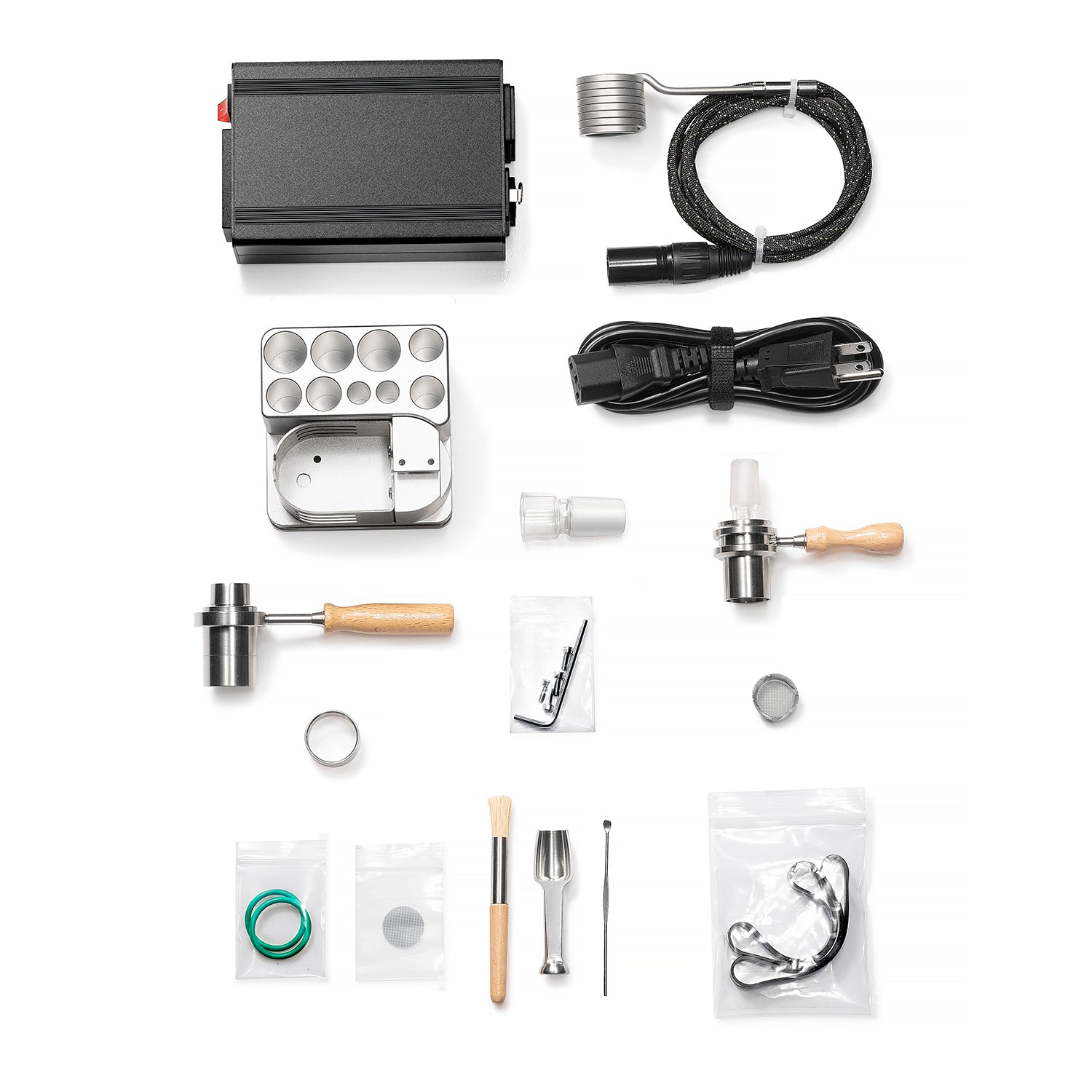
History of Ball Vapes
The idea of using balls as heat storage emerged in the DIY community around 2018–2019. Pioneers experimented with different ball materials and found that ruby balls offer an excellent combination of heat retention, heat resistance and flavour neutrality. The first commercially successful Ball Vape was the Flowerpot by NewVape (now Cannabis Hardware), followed by the Qaroma series from QaromaShop. Numerous variants appeared within a short time – from budget setups around 100–200 € to high-end solutions beyond 500 €.
The names of the QaromaShop models reveal the material used: Qaroma stands for Quartz, Taroma for Titanium, Ceroma for Ceramic, Staroma for Stainless Steel and Baroma for Brass.
How does a Ball Vape work in detail?
The process is similar for almost all Ball Vapes:
- Heating up: The balls are brought up to temperature in a heating coil or heating element. In most devices, a PID controller regulates the temperature automatically.
- Filling the bowl: The bowl is filled with herb and placed on a water filter (bong, bubbler).
- Placing the balls: The injector head with the hot balls goes onto the bowl.
- Drawing: The vacuum pulls air through the hot balls, heating it and vaporising the herb underneath.
The key difference from conventional vaporizers: the heat does not come from a fixed heating element, but is stored in the balls and called up when needed. This makes Ball Vapes extremely efficient – but also different to handle.
In depth: operating principle in detail
Unlike with classic convection vaporizers, the air in Ball Vapes does not simply flow over a heating element. Instead, it passes through a bed of heated balls – typically between 200 and 1000 of them. These balls have an enormous surface area and store heat extremely efficiently. This ensures that the air already has exactly the desired vaporisation temperature when it enters the herb chamber.
Injector vs. diffuser: the two designs
| Type | How it works | Use |
|---|---|---|
| Injector | Hot air is pushed through the herb from above | For water pipe adapters (WPA) |
| Diffuser | Hot air spreads evenly from below | For direct inhalation |
The balls are typically heated to 200–260°C. When you inhale, each individual ball releases part of its stored heat to the air flowing through it. Since hundreds of balls release heat at the same time, the air is brought to the target temperature almost instantly – regardless of how hard you draw.
Technology in detail: the physics of heat transfer
Convection, conduction and radiation
In thermodynamics, three types of heat transfer are distinguished: conduction, convection and radiation. Ball Vapes primarily rely on convection, supplemented by a little conduction at contact points.
In convection, heat is transferred by moving air — active drawing creates what is known as “forced convection”, which works especially efficiently. Conduction also comes into play: heat transfer through direct contact, for example at the bowl wall or the screen. Radiation from the hot metal head contributes a small amount, but overall plays a subordinate role.
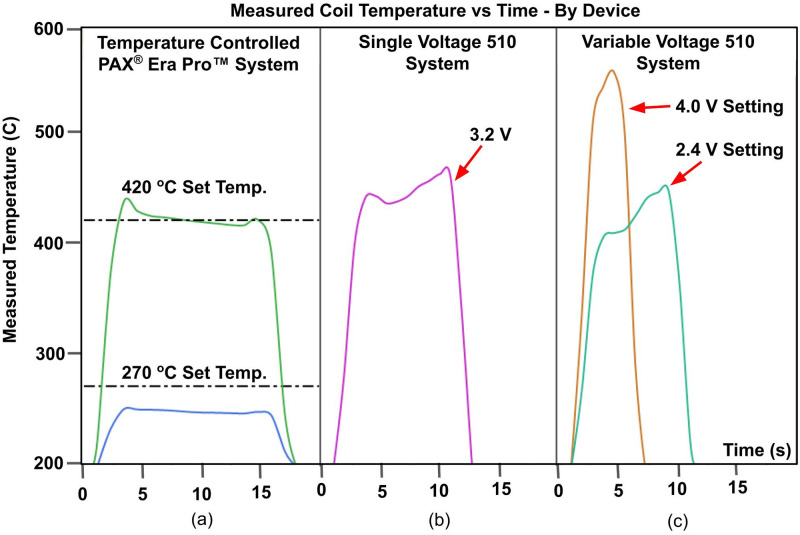
Thermal mass and heat capacity
Heat capacity describes how much energy a body can store before its temperature changes. The formula is: Q = m · c · ΔT (energy = mass × specific heat capacity × temperature change). Ball Vapes make maximum use of this principle: the greater the total mass of the balls, the more stable the temperature remains during a draw. A large ball stack reacts more slowly, but delivers extremely consistent heat – ideal for strong, even extraction.
Thermal conductivity (W/mK)
Thermal conductivity determines how quickly heat is transported through the material. High thermal conductivity means fast energy transfer and aggressive hits, while lower values mean gentler heat and often more “flavour”. Important: values vary depending on alloy and production process. Below you will find realistic guide values at room temperature.
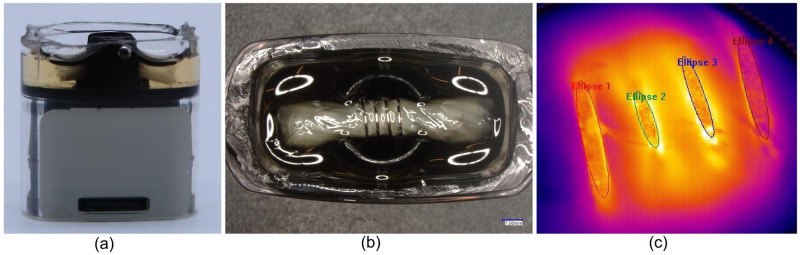
Laminar vs. turbulent flow: the core principle
The decisive advantage of Ball Vapes can be traced back to a basic physical principle: the difference between laminar and turbulent flow.
In a hollow tube — as with many conventional vaporizers — the air flows laminarly, meaning in orderly, parallel paths. Only the air directly at the tube wall has contact with hot metal. The result: around 90 % of the air flowing through remains cold and reaches the herb unheated.
If the same tube is filled with hundreds of small balls, the picture changes fundamentally. The air is forced to wind around each individual obstacle — like through a maze. A turbulent flow is created: the air molecules collide with the hot balls, swirl around and absorb heat in the process. The air is heated from room temperature (approx. 20 °C) to over 200 °C in milliseconds, before it even reaches the herb.
The key term is surface-area-to-volume ratio: the more balls, the more hot surface is available to the air. This is exactly why Ball Vapes achieve air heating that no battery-powered portable with its limited heating power can ever deliver.
Wired vs. wireless
Ball Vapes come in two basic variants. The differences are considerable, and the choice depends heavily on how you want to vape.
Wired Ball Vapes
In wired models, the balls sit directly in a heating element that is permanently connected to power. The advantage: the balls are constantly reheated. You can take as many draws as you like without waiting in between. In models such as the Taroma 3.0, the FlowerPot B2 or the Herborizer XL, the heating element sits firmly on the bowl – plug in, heat up, draw. For a strong budget pick, read our Ruby Twist Pro review.
This is the more common variant. Most Ball Vapes on the market are wired, and for the majority of users it is also the better choice. More flexibility with the bowl, longer sessions, no recharging between draws.
Wireless Ball Vapes
Wireless models such as the WOHW from Crossing Tech work differently: the balls are heated in a separate charging station and then removed. You carry the hot injector head to the bowl, place it on top and draw. Afterwards it goes back into the station to recharge.
That sounds cumbersome, but it has a clear advantage: you are not tied to a cable. The water filter can stand anywhere, and you do not have to sit next to a socket. Disadvantage: the stored heat is usually only enough for one hit. Then you have to wait.
| Feature | Wired | Wireless |
|---|---|---|
| Hits per heat-up cycle | Unlimited | 1 (then recharge) |
| Sessions | Continuous use possible | Pauses between draws |
| Bowl compatibility | High (permanent heat) | Limited (restricted heat) |
| Mobility | Tied to a cable | Free within the home |
| Entry price | From ~100 Euro | From ~170 Euro |
| Typical manufacturers | QaromaShop, Herborizer, Cannabis Hardware | Crossing Tech (WOHW) |
Materials: ruby, stainless steel, glass or titanium?
The balls are made from different materials depending on the model. Each has its own characteristics.
Ruby balls
Synthetic ruby balls (usually from GemCat or Bodhi) are the standard in most Ball Vapes. They store heat extremely well and release it evenly. Ruby balls are chemically inert – they do not react with heat or vapour and are flavour-neutral. Common sizes: 3 mm to 6 mm diameter. Smaller balls have a larger relative surface area, while larger ones store more heat per ball.
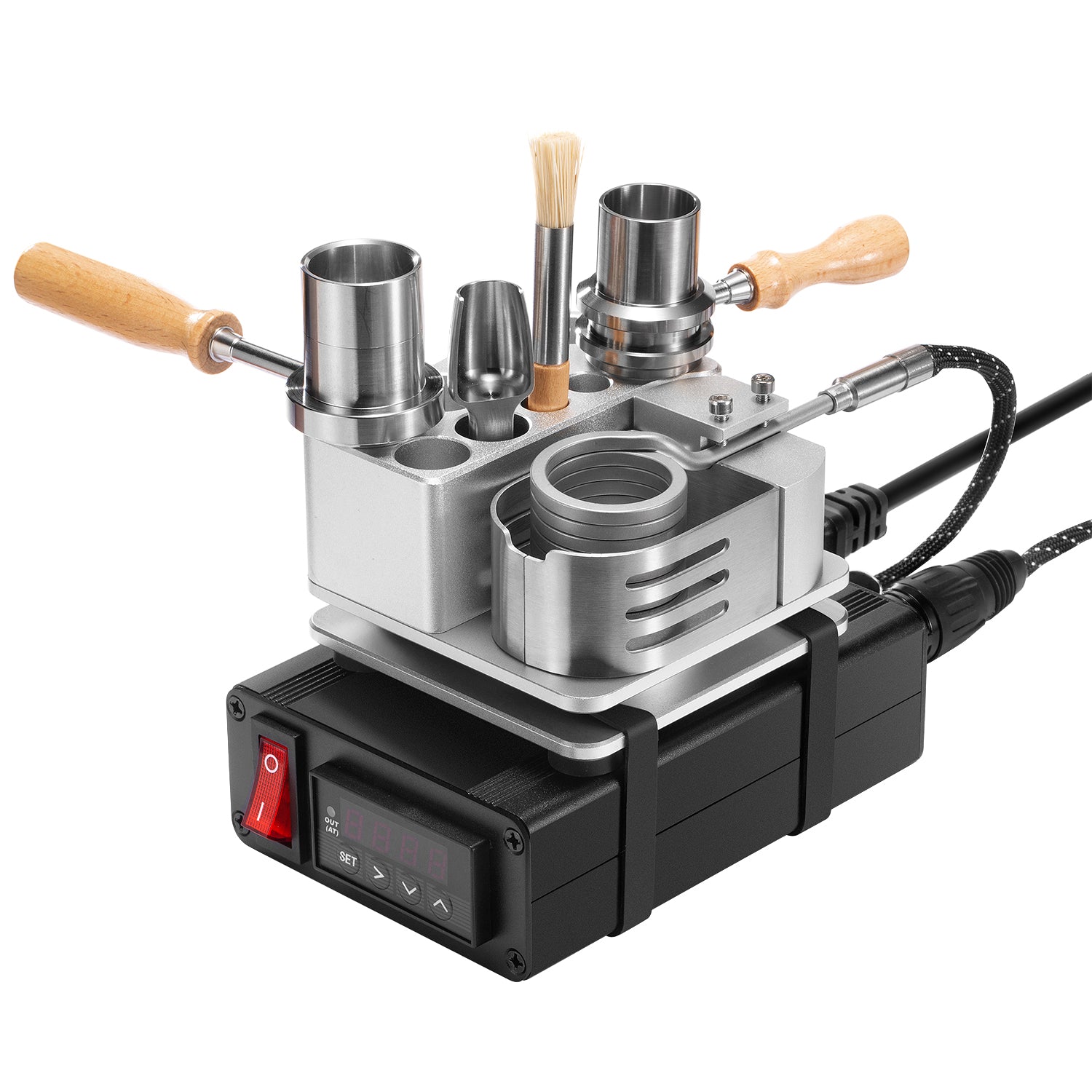
Stainless steel balls
Cheaper than ruby, heavier and with slightly higher thermal mass per ball. Stainless steel (SS316) is often offered in entry-level models or as an alternative. Some users report a minimal metallic taste during the first few uses – but it disappears after a few sessions.
Glass balls
Rather rare, but some manufacturers such as 7th Floor offer them. Glass is flavour-neutral, but stores less heat than ruby. For most people, it is more of a niche product.
The housing
Alongside the ball material, the housing also plays a role. Titanium is light and heats up quickly. Stainless steel is heavier and therefore stores additional heat – but can give off some taste at the beginning. Glass is flavour-neutral, but fragile. In high-quality devices from Herborizer or QaromaShop, the housing is usually made of borosilicate glass or titanium.
In depth: comparison table of ball materials
The choice of ball material has a significant effect on heat-up time, heat retention, heat transfer and flavour:
| Material | Heat retention | Heat-up time | Flavour | Thermal conductivity (≈ W/mK) | Price |
|---|---|---|---|---|---|
| Ruby/sapphire (corundum) | Excellent | Slow (3–5 min) | Purest | ≈ 35–45 | $$$ |
| Titanium | Very good | Fast (1–2 min) | Neutral | ≈ 20–23 | $$ |
| Quartz | Good | Medium (2–3 min) | Pure | ≈ 1–2 | $ |
| Ceramic (alumina) | Good | Medium (2–3 min) | Very pure | ≈ 20–30 | $ |
| Stainless steel (SS316) | Medium | Fast (1 min) | Slightly metallic | ≈ 15–20 | $ |
| Zirconia | Very good | Medium (2–3 min) | Pure | ≈ 2–3 | $$ |
Other materials: SiC pearls (silicon carbide) have by far the highest thermal conductivity of all ball materials and are valued by low-temp fans because they heat the air even more strongly, allowing lower PID temperatures. However, they are expensive, and there are isolated reports of abrasion with lower-quality products. Borosilicate glass is the cheapest option, but stores hardly any heat — more suitable for trying things out than for permanent use.
Important: use only synthetic balls! Natural rubies or sapphires may contain air inclusions, cracks or scratches. At high temperatures, such balls could burst — and fragments in the vapour path are a serious health risk. Synthetically produced corundum balls (ruby/sapphire) are free from these defects and guarantee consistent quality.
Recommendation: For the purest flavour, ruby or sapphire balls are the benchmark. Those who prefer faster heat-up times should choose titanium. Budget-conscious users start with quartz or stainless steel. Zirconia offers an interesting balance with very clean flavour and good heat retention.
Injector vs. showerhead: two paths, one goal
Many Ball Vapes can be operated in two modes – or the manufacturer offers different head variants from the outset.
Injector mode: The hot balls sit higher up, and the airflow is directed downwards through an opening. This creates a more concentrated, directed heat stream. Often slightly gentler vapour, easier to dose.
Showerhead mode: The balls sit closer to the herb, and the heat spreads broadly across the entire bowl area. More vapour, more even extraction, but also more intense. With the QaromaShop models (Taroma, Qaroma, Ceroma), this is the standard configuration.
Which mode suits you better is a matter of taste. Beginners are best off starting with showerhead mode – it is more forgiving of mistakes in draw technique.
Coil types, heating power and heat-up time
The coil is the heart of the ball heater. It determines how quickly the balls are heated and how stable the temperature remains.
Coil sizes (20 mm, 25 mm, 30 mm)
The most common coil size is 20 mm – it is used in all Flowerpot heads (B0, B1, B2, B-Zero) and delivers a solid balance of efficiency and heating power. If you need more heating surface and a little additional thermal mass, go for a 25 mm coil, which is especially common in the E-Nail area. At the upper end is the 30 mm coil, used for example in the Qaroma XL: it offers the greatest thermal reserve, but heats up more slowly. In principle: the larger the coil diameter, the more heat energy it can transfer to the balls – this ensures more stable temperatures during long or powerful draws, but also requires a more capable controller.
Heating power (watts) and heat soak
The higher the wattage, the faster the ball stack reaches the target temperature. High-performance models such as Taroma 360 use coils with around 150 W and achieve heat-soak times of 15 to 90 seconds (depending on the model). Smaller heads are more energy-efficient, but take a little longer.
PID controllers in detail
A PID controller ensures temperature-stable performance. It continuously balances target and actual values using three components:
The P component (proportional) reacts directly to current temperature deviations. The I component (integral) adds up past deviations and corrects long-term drift. The D component (derivative) anticipates trends and stabilises rapid changes.
Why this matters: when drawing, the temperature at the ball stack briefly drops. Without PID control, output would fluctuate. The controller compensates for these fluctuations and delivers consistent extraction – crucial for reproducible results.
What do you need to get started?
A Ball Vape alone is not enough. To operate it, you need a few additional items, which are included in the set or must be purchased separately depending on the model.
| Component | Function | Included in the set? |
|---|---|---|
| Ball Vape head | Holds the balls, is heated up | Yes (always) |
| Bowl / herb screen | Holds the herb, sits on the water filter | Usually yes |
| Heating coil / PID controller | Heats the balls to the desired temperature | Usually yes (with complete sets) |
| Water filter (bong/bubbler) | Cools and filters the vapour | Almost never |
| Glass adapter (14mm or 18mm) | Connects bowl to water filter | Often yes, sometimes extra |
The water filter is the most important additional purchase. Ball Vapes produce hot, dense vapour – without water filtration, this can become unpleasant. A simple bubbler for 20-30 Euro is perfectly sufficient.
The glass connections are standardised: 14.4 mm and 18.8 mm (often referred to as 14 mm and 18 mm). Most Ball Vapes come with one or both adapters. When buying the water filter, make sure the joint fits.
In depth: setup instructions step by step
A Ball Vape setup consists of several components:
Required components
The core is the Ball Vape head — the head with the balls, which functions as an injector or diffuser. It is heated by a heating coil, typically a 20–30 mm E-Nail coil. A PID controller with display regulates the temperature. A glass adapter (WPA or whip) connects the head to the inhalation device. Optionally, a water pipe can be used for filtered, cool vapour.
Setup step by step
- Place the coil on the Ball Vape head and tighten it
- Connect the coil to the PID controller
- Set the temperature (start: 220°C for flavour, 250°C for thick clouds)
- Allow to heat up for 3–5 minutes (depending on material and coil)
- Put herb into the bowl (0.1–0.3 g recommended)
- Draw slowly and evenly
Optimal temperatures
| Goal | Temperature | Result |
|---|---|---|
| Flavour | 190–210°C | Light, aromatic vapour |
| Balance | 210–230°C | Good flavour + decent clouds |
| Clouds | 230–260°C | Thick clouds, less flavour |
Draw techniques (slow vs. fast)
Draw speed has an enormous influence on the vapour result. With a slow, even draw, the air has more contact time with the hot balls – the result is denser clouds and more intense extraction. By contrast, if you draw quickly and sharply, you get cooler vapour with stronger terpene flavour, because the lower temperatures preserve sensitive aromatic compounds better. A third variant is known as pulse draws: you draw in short, rhythmic bursts, which stabilises the temperature in the ball stack and helps achieve even results especially with very strong airflow.
Bowl packing and fill quantities
When filling the bowl, the right density matters. The material should be filled loosely and airily so the hot air can flow evenly through it – this is the key to good convection. If you pack too tightly, you risk “choking” the bowl: the airflow cannot pass through, and extraction becomes uneven. For most setups, 0.1 to 0.3 grams are sufficient, because Ball Vapes work so efficiently that even small quantities deliver plenty of vapour.
Safety aspects
Thermal safety
Ball Vapes reach extreme temperatures. The heating heads can reach 500°C and more — hot enough to cause severe burns. Never touch the heating head during or shortly after operation. Always use a fireproof surface and wait at least 30 minutes until the device has cooled down before you start cleaning. Always keep the Ball Vape away from children and pets and do not operate it unattended.
Electrical safety
Many Ball Vapes use powerful heating coils. Always follow the manufacturer’s instructions for electrical installation. Use only recommended power supplies and avoid damp environments.
Material safety
Pay attention to the material quality of all components in the vapour path. Only food-safe materials should come into contact with hot air. Cheap imitation products may use inferior materials — invest in quality from reputable manufacturers.
Which manufacturers are there?
The Ball Vape market is smaller than the market for portable vaporizers, but there are now more than a dozen manufacturers. Here are the most relevant ones – sorted by entry price.
Crossing Tech (from ~18 Euro)
The Chinese manufacturer has by far the broadest line-up. From budget heads such as the Core 2.0 (from 67 Euro) to the wireless WOHW (from 259 Euro), Crossing Tech covers almost every price segment. The WOHW is the only wireless Ball Vape with notable distribution. 18 models in the range.
QaromaShop (from ~119 Euro)
Malaysian manufacturer specialising in high-quality Ball Vapes made of borosilicate glass. The Taroma series (Taroma Lite, Taroma 3.0, Taroma 360) is among the most recommended Ball Vapes in the community. 23 models in total – plenty of choice, but shipping from Malaysia and only one shop in Europe.
Herborizer (from ~70 Euro)
French manufacturer with a long history. The Herborizer models (XL, Ti, Sphere XL) are finely made and available from several European shops. Price: 70 to 389 Euro. Good availability in Europe.
Cannabis Hardware (from ~27 Euro)
American manufacturer of the FlowerPot series. The FlowerPot B2 (from 549 Euro) is considered one of the most powerful Ball Vapes of all – massive, heavy, uncompromising. If you want to spend less: the B0 starts at 375 Euro, and the VMAX at 190 Euro.
Other manufacturers
- 7th Floor – Known for the Elev8R (from – EUR), one of the oldest Ball Vapes on the market
- Ditanium – Hybrid device combining Ball Vape and E-Nail (Ditanium, from 251 Euro)
- Camouflet – Portable Ball Vapes powered by butane gas (Injector, from 119 Euro)
- Vapvana – Premium Ball Vapes such as the Screwball (166 Euro) and All-Star Wired (184 Euro)
- Jaxels Art – The handmade VapBong FlavorMaster (490 Euro) – a ceramic work of art with cult status
In depth: other platforms & classics
Here you will find additional internationally known systems with typical configurations and price positioning (list prices, may vary by shop):
Flowerpot series (B0, B1, B2, B-Zero)
The entry point into the Flowerpot world is the B0 (also called B-Zero): for around $52, you get a compact head with 20 mm coil and 3 mm ruby balls that has established itself as a price-performance winner. If you want more airflow and larger draws, you end up with the B1 for approx. $105 – a pure flower head with a very open design, ideal for fast, powerful hits. At the very top is the B2 at around $135: it is designed as dual-purpose and processes both flower and concentrates, making it the most versatile all-rounder in the series.
Expanded Qaroma series
Two models from the QaromaShop range deserve special mention. The Qaroma XL uses a 30 mm coil and around 500 ruby balls with a diameter of 3 mm – this creates extreme thermal mass that barely loses temperature even during long group sessions. The Taroma 360 takes a different approach: with its 150 W coil and hybrid design of convection and conduction, it achieves extremely fast heat-soak times. Both models are aimed at power users in the high-end segment.
Old Head
Old Head has made a name for itself with two specialised products. The Freight Train is a high-airflow head with ruby ball filling, offered as a complete kit for around $399.99 and designed for maximum vapour production. Alongside it, Old Head offers the Terp Hammer for approx. $199.99 – a wireless thermal-extraction accessory that works without a fixed power connection and is therefore much more flexible to use than classic desktop setups.
Elev8 Ball Mod
A mod kit that raises classic desktop vapes such as SSV/DBV to Ball Vape level with ruby balls. Usually priced around $87.99, ideal as a budget upgrade.
Ball Vapes by budget
The price range is huge. Here is a guide to what you can expect in each price segment.
Under 100 Euro: DIY and entry level
In this price class you get individual heads without heating – you have to source the PID controller, heating coil and water filter separately. Suitable for hobbyists who already have equipment or like putting things together themselves. The Elev8R (– EUR) is a classic entry-level option with butane heating.
100–250 Euro: solid complete sets
This is where the first complete setups appear. The WOHW (from 259 Euro) is just above this range, but includes everything except the water filter. The Taroma Lite (289 Euro) and the L Sphere (119 Euro) are solid mid-range entry points.
250–400 Euro: premium class
The sweet spot for most users. The Taroma 3.0 (359 Euro), the Herborizer XL (239 Euro) and the FlowerPot B0 (375 Euro) offer premium quality with good availability in Europe.
Over 400 Euro: high end
The FlowerPot B2 (549 Euro), the VapBong FlavorMaster (490 Euro) and the Qaroma XL (533 Euro) are for enthusiasts who want the maximum. High-quality materials, massive thermal mass, uncompromising vapour quality.
Pros and cons
Advantages
Ball Vapes deliver maximum vapour density that no other heating method achieves. Thanks to complete extraction, all active compounds are released in just a few draws, and pure convection without contact with the heating element ensures the purest flavour. Because Ball Vapes work so efficiently, you need significantly less material for the same effect. The balls themselves are extremely durable and, with proper care, last practically forever. The setup can also be customised individually — temperature, number of balls and material are freely selectable.
Disadvantages
As pure desktop devices without a battery, Ball Vapes are not portable. The entry price is around 200 €, while high-end setups cost 600 € and more. Added to this is the need for a PID controller or E-Nail for power supply. The optimal draw technique requires a certain learning curve, and the vapour intensity often overwhelms beginners. The heat-up time of 3 to 5 minutes also requires a little patience. In addition, Ball Vapes work so efficiently that with regular use they can significantly increase tolerance — microdosing (0.05–0.1 g per bowl) helps keep consumption controlled.
Comparison tables
Ball Vape vs. classic desktop vapes
| Criterion | Ball Vape | Classic desktop |
|---|---|---|
| Heating principle | Ball-matrix convection | Heating core / rod |
| Vapour profile | Very dense, fast | Gentler, longer |
| Setup complexity | High | Medium |
| Airflow | High | Variable |
| Target group | Power users | All-round users |
What should you look for when buying?
Ten points that should be clarified before buying:
- Wired or wireless? For most people, wired is the better choice. Wireless only if you really need mobility around the home and can live with one hit per charge.
- Complete set or individual components? Beginners are better off with a complete set. If you already have a PID controller or heating coil, you can save money with a single head.
- Check the glass connection. 14 mm or 18 mm? It must match your own water filter. Some sets include both adapters.
- Buy the water filter separately. You almost always need one. A simple bubbler is perfectly sufficient.
- Ball material. Ruby is the standard and safest choice. Stainless steel is cheaper, glass is more niche.
- Availability in Europe. QaromaShop ships from Malaysia (customs + waiting time), while Herborizer and many Crossing Tech models are available from European shops with fast shipping.
- PID controller quality. Cheap sets often use basic industrial controllers in Fahrenheit. They work, but adjustment is fiddly.
- Spare parts. Sealing rings, screens, balls – all wear out eventually. Before buying, check whether spare parts are available.
- Bowl size. Standard bowls hold 0.1 to 0.3 grams. Special small bowls are available for microdosers.
- Space requirement. A Ball Vape setup needs more space than a portable vaporizer. PID controller, docking station, water filter – it is not something you just place on a bedside table.
Do I need a water filter?
How often do I need to replace the balls?
Can I use concentrates in a Ball Vape?
How do I clean a Ball Vape?
Is a Ball Vape loud?
Ball Vape vs. Volcano: which is better?
Frequently Asked Questions
Do I need a water filter?
Yes, in practice you do. Ball Vapes produce very hot, dense vapour. Without a water filter, this is too harsh for most users. A simple bubbler for 20 to 30 Euro makes the difference.
How often do I need to replace the balls?
Almost never. Ruby balls are extremely durable and do not change through heat. Stainless steel balls may oxidise minimally after years, but are also long-lasting.
Can I use concentrates in a Ball Vape?
Yes, many Ball Vapes vaporise concentrates directly on the balls or with a pad. The Ditanium, for example, has an integrated E-Nail. With others you need a special quartz bowl or dab pad. But Ball Vapes are primarily made for dry herbs.
How do I clean a Ball Vape?
Soak the balls and bowl in isopropanol, wipe the housing with a damp cloth. The balls themselves need hardly any cleaning – an occasional bath in isopropanol is enough. The bowl and screen are blown out as needed or also soaked. Briefly rinse the water filter after each session.
Is a Ball Vape loud?
No. The device itself makes hardly any noise. The only thing you hear is the bubbling of the water filter when drawing. No fan, no vibration, no beeping.
Ball Vape vs. Volcano: which is better?
Ball Vapes deliver dense hits in one draw, while the Volcano fills bags evenly — the choice depends on draw style. The Volcano fills bags with vapour – evenly, controlled, but slowly. Ball Vapes deliver the vapour directly and immediately, with more control over the intensity. If you want a powerful hit: Ball Vape. If you want to share bags in a relaxed way: Volcano.
In depth: more frequently asked questions
Are Ball Vapes suitable for beginners?
No, Ball Vapes are designed for experienced users. Vapour production is very intense and can overwhelm beginners. It is better to start with a classic session vaporizer such as the Mighty+ or Arizer Solo.
Can I use a Ball Vape without a water pipe?
Yes, many Ball Vapes also work with a dry mouthpiece or whip. However, the vapour is then very hot. A water pipe cools and filters it, making the experience more pleasant.
How much material do I need per session?
Significantly less than with other vaporizers. 0.1–0.2 g is often enough for a full session. Ball Vapes are extremely efficient.
How long do the balls last?
Practically indefinitely. Ruby balls are extremely hard and heat-resistant. Even after years of daily use, they show hardly any wear.
What is the difference between injector and diffuser?
An injector pushes hot air through the herb from above – ideal for water pipes. A diffuser distributes heat from below – better for direct inhalation.
Why are Ball Vapes so powerful?
The high thermal mass of the balls ensures constant temperature, even with strong draws. The air is brought to vaporisation temperature in milliseconds.
Which ball size is optimal?
3 mm ruby balls are the common standard. Smaller balls offer more surface area (more heat transfer), while larger ones tend to offer a little more airflow.
Are there wireless Ball Vapes?
Yes, for example the Adaptaball from Vices or the Terp Hammer from Old Head. These devices work without a fixed power connection.
Which is better — ruby or quartz?
Ruby/sapphire conducts heat significantly faster (35–45 W/mK vs. 1–2 W/mK). Quartz is thermally stable and is often preferred for particularly neutral flavour.
Can I also use concentrates with a Ball Vape?
Yes, some models such as the Flowerpot B2 or Vrod are designed as dual-purpose devices and are suitable for flower and concentrates at the same time.
How long does heating up take?
Depending on the model, 15–90 seconds heat soak for high-power heads, otherwise 2–5 minutes.
What is a Ball Mod?
A Ball Mod is a retrofit kit (e.g. Elev8) that makes classic desktop vapes significantly more powerful with ruby balls.
What is the difference between B0, B1 and B2?
The B0 is the entry-level model (~$52), the B1 has open airflow for flower only (~$105), and the B2 is dual-purpose with a concentrate option (~$135).
Specific recommendations
Best entry point: WOHW V2 (from 292 EUR)
The Wireless One Hit Wonder from Crossing Tech is the simplest entry into the Ball Vape world. Everything included except the water filter, no need to put components together. Wireless, compact, fairly priced. Limitation: one hit per charge. Detailed WOHW review here.
Best all-rounder: Taroma 3.0 (from – EUR)
The Taroma 3.0 from QaromaShop is one of the most recommended Ball Vapes in the community. Borosilicate glass, ruby balls, precise temperature control. Disadvantage: shipping from Malaysia, only one European retailer.
Best value hit: Herborizer XL (from – EUR)
The Herborizer XL offers French quality at a reasonable price. Available in five European shops, short delivery times. Fine workmanship, good support.
For maximalists: FlowerPot B2 (from – EUR)
The FlowerPot B2 from Cannabis Hardware is for everyone who wants the maximum. Massive stainless steel construction, huge thermal mass, works with practically any bowl. Not cheap, but uncompromising.
Conclusion: who is a Ball Vape worth it for?
Ball Vapes are not for everyone. They need space, a water filter and a certain interest in the technology. If you want to switch on a portable vaporizer on the sofa in the evening and start drawing, you are better served with a portable vaporizer.
But if you are looking for dense hits that no portable device can deliver – if you are willing to set up a small rig and learn how to handle it – Ball Vapes open up a completely new dimension. The vapour quality is in another league. The efficiency of material extraction is too. And with prices from 100 Euro for a usable setup, the entry barrier is lower than you might think.
You can find all Ball Vapes with current prices in our price comparison.
Status: April 2026. Prices are updated daily.
Related topics
If you want to go deeper, you will find helpful information in our other glossary articles: the article Conduction vs. convection vs. hybrid explains the three heating methods in comparison. Under temperature settings, you will learn which temperatures are optimal for different effects. The article on vapour quality describes what makes good vapour. The article Session vs. On-Demand explains why Ball Vapes are typical on-demand devices. And under cleaning & care, you will find general tips on vaporizer maintenance.
Scientific sources
- Lanz, C. et al. (2016). Medicinal Cannabis: In Vitro Validation of Vaporizers for the Smoke-Free Inhalation of Cannabis. PLoS ONE, 11(1), e0147286. PubMed 26784441
- Hazekamp, A. et al. (2006). Evaluation of a Vaporizing Device (Volcano) for the Pulmonary Administration of Tetrahydrocannabinol. Journal of Pharmaceutical Sciences, 95(6), 1308–1317. PubMed 16637053
- Pomahacova, B. et al. (2009). Cannabis smoke condensate III: The cannabinoid content of vaporised Cannabis sativa. Inhalation Toxicology, 21(13), 1108–1112. PubMed 19852554
Butane Vaporizer series
- Mighty+ vs Volcano Hybrid: portable or desktop?
- Arizer Solo 3 vs Crafty+: which is better?
- TinyMight 2 vs Venty: on-demand or session?
- Crafty+ vs Venty
- PAX Plus vs Mighty+: budget or premium?
- Volcano Classic vs Hybrid: analogue or digital?
- Arizer Air Max vs Solo 3: which Arizer?
- PAX Plus vs Venty: budget or premium?
- Crafty+ vs PAX Plus: which is more worthwhile?
- Arizer Solo 3 vs Venty: glass or comfort?