Buying Guide · Desktop and Portable Systems
Current offers from our partner shops

 Visit shop
 Visit shop
All prices come from automated shop queries. Some shop links are affiliate links.
Ball Vape Buying Guide 2026: Which Setup Is Right for You?
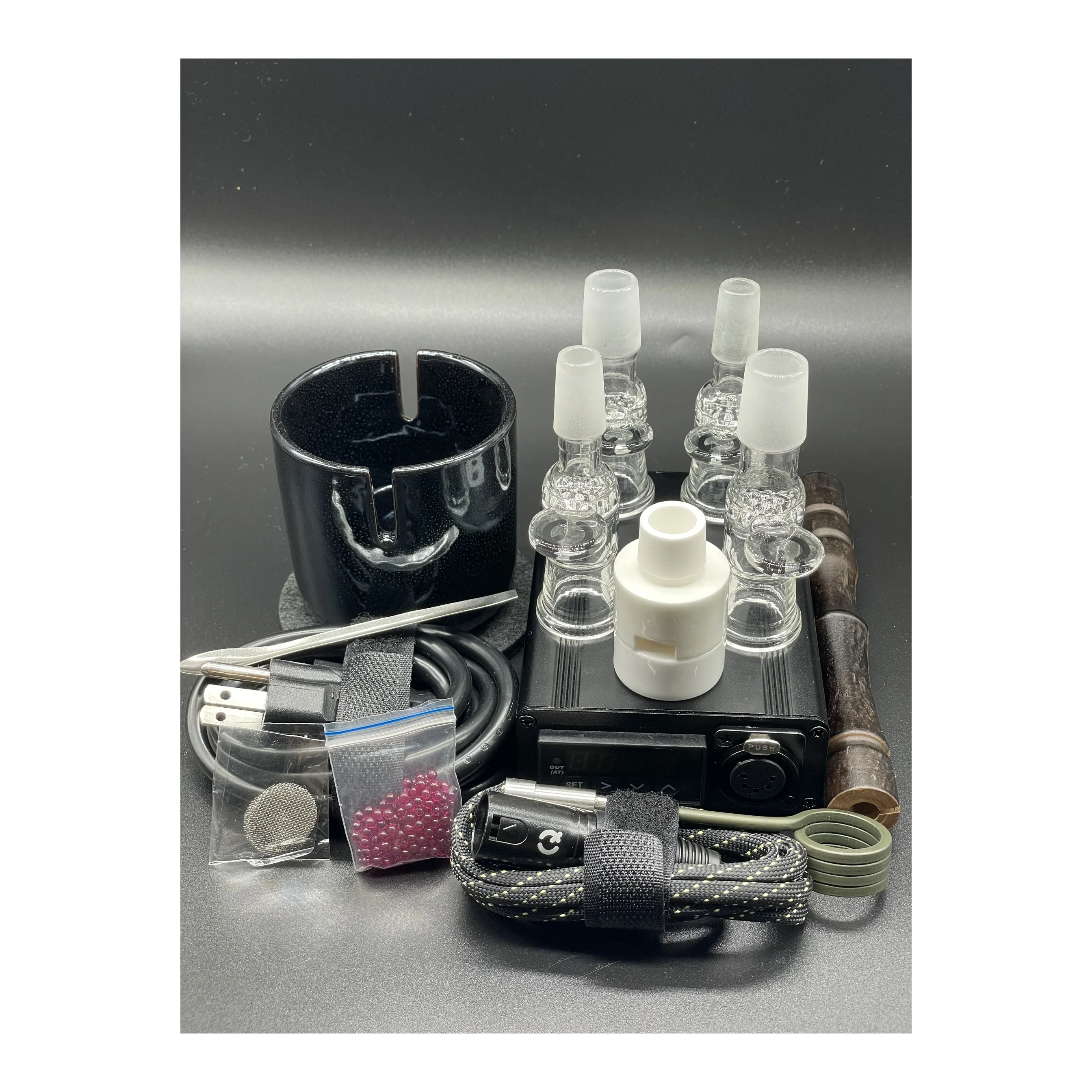
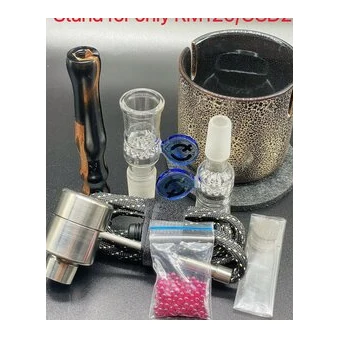
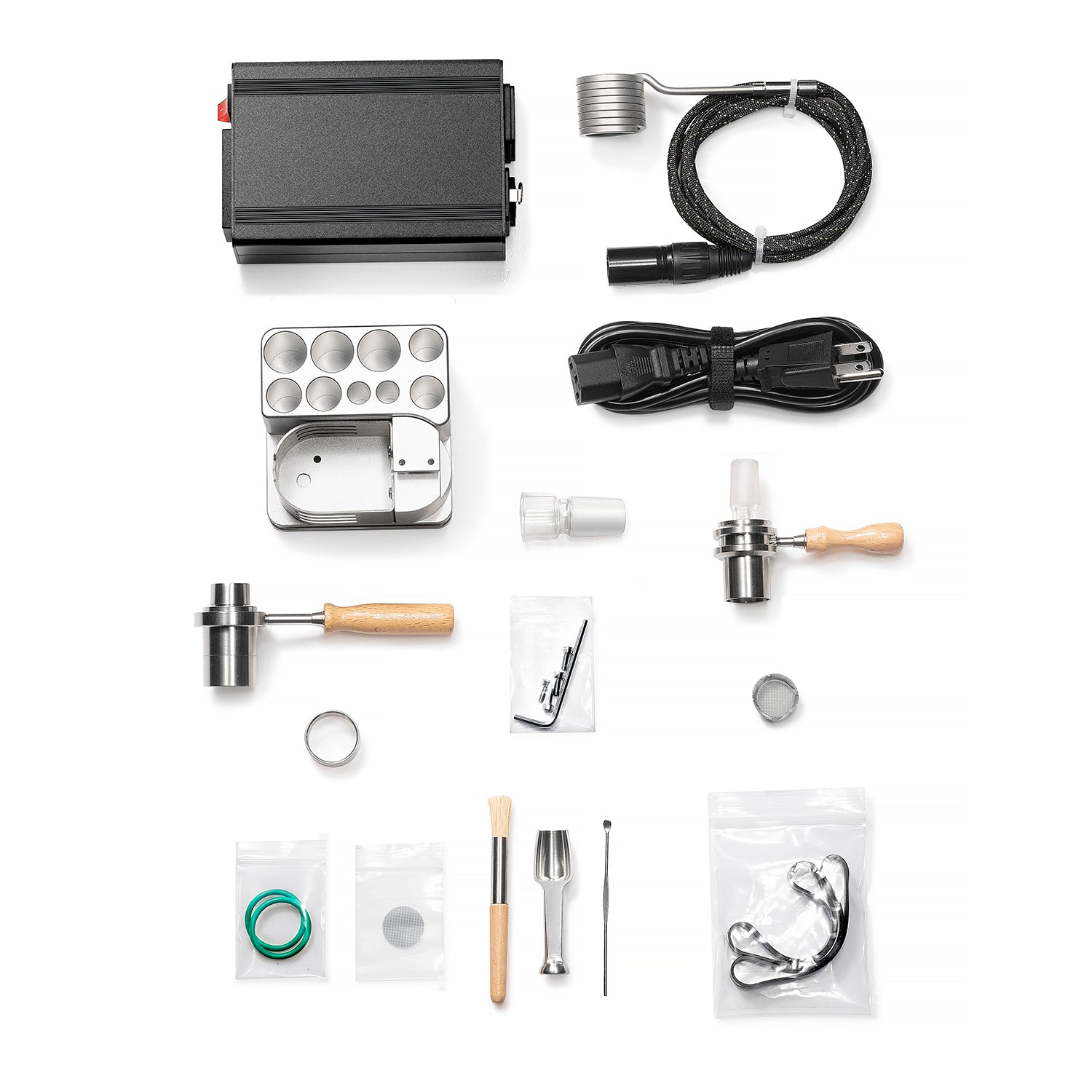
VapoChecker compares ball vapes: The CrossingTech WOHW V2 is currently listed starting at 294.24 € incl. shipping across 14 shops. A ball vape heats small balls and directs the hot air through the herb as you draw. When comparing setups, also factor in the heat source, bowl, glass, adapter, and stand, because the price of a single head is not an all-in price.
What Is a Ball Vape?
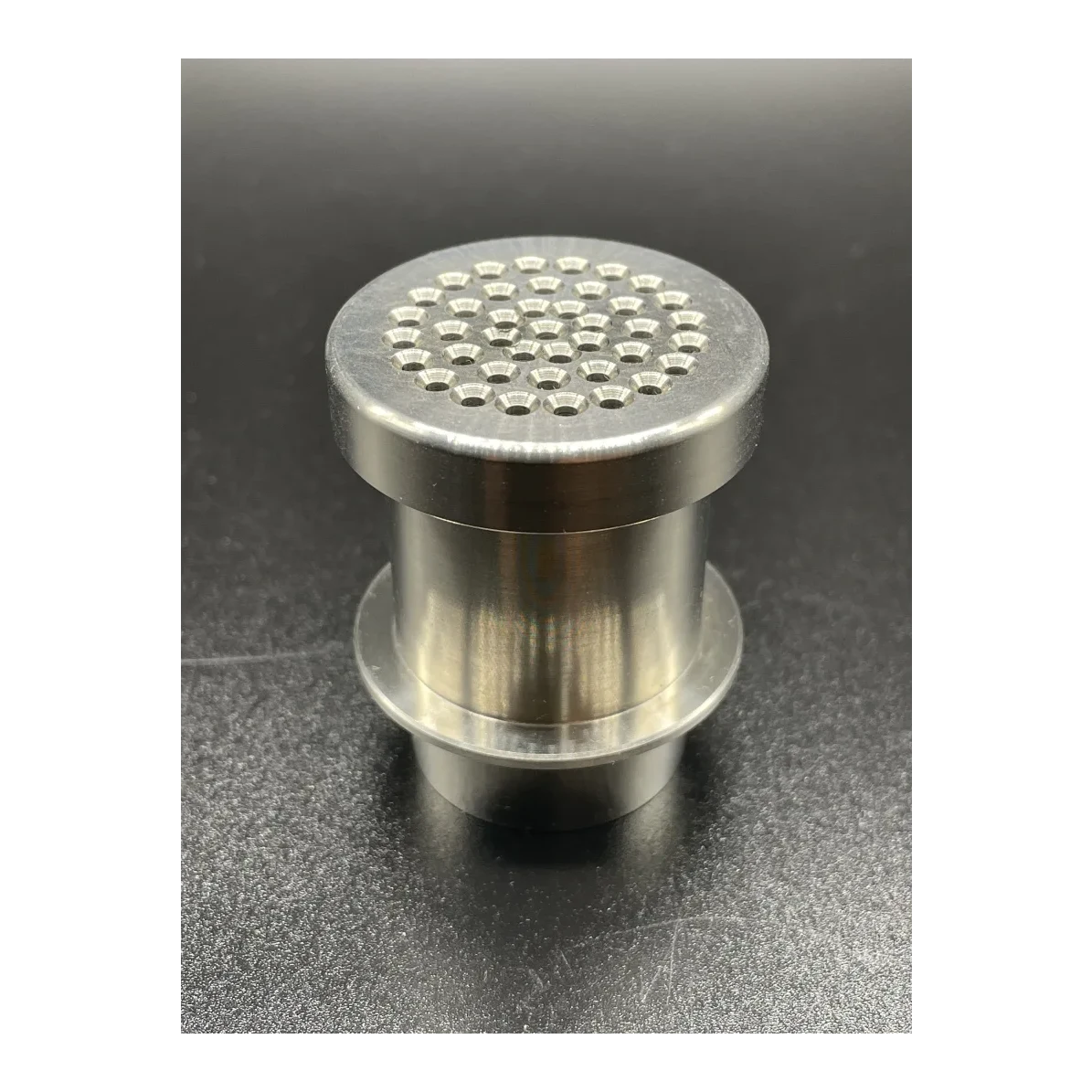
A ball vape is a convection vaporizer that works with heated balls. Instead of an electronic heating chamber, hundreds of small balls are heated — typically using a heating coil from the e-nail space or an industrial heating element. Once the balls are up to temperature, you place the head onto a bowl filled with herb and draw through a water filter.
The balls have a large surface area at small volume. Hot air flows between them and picks up a great deal of heat in the process. The air that reaches the herb is therefore uniformly hot: no cold core, no uneven heating. Add to that the thermal mass: even with strong draws, the temperature barely drops.
The idea originated around 2018 in the DIY community, which was experimenting with heat guns and homemade rigs. The first commercially successful ball vape was the FlowerPot by NewVape (now Cannabis Hardware), followed by the Qaroma series from QaromaShop. Their model names reveal the chamber material: Qaroma stands for quartz, Taroma for titanium, Ceroma for ceramic, Staroma for stainless steel, and Baroma for brass. By now there are finished products from over a dozen manufacturers, ranging from basic heads to titanium systems in the four-figure price range.
How a Ball Vape Works
- Heat up.
The balls are brought to temperature in a heating coil or heating element. On most devices, a PID controller regulates the temperature automatically.
- Load the bowl.
The bowl is loosely filled with herb and placed onto a water filter.
- Place the head.
The head with the hot balls goes on top of the bowl.
- Draw.
The negative pressure pulls air through the hot balls, which heats it and vaporizes the herb below.
The difference from conventional vaporizers: the heat doesn’t come from a fixed heating element but is stored in the balls and released on demand during the draw. This makes ball vapes very efficient in terms of material yield, but also different to handle. How the two designs — injector and diffuser — differ in vapor density, flavor, and handling is covered in the comparison Diffuser vs. Injector Ball Vapes.
Choose Your Design First
| Your Use Case | Right Direction | Check Before Buying |
|---|---|---|
| Fixed spot at home | Wired system | Space for controller, cables, glass, and hot parts. |
| Head that can be used cable-free while drawing | System with separate heating station | Compatible station and a safe rest for the head. |
| Compact device to take along | Portable model with external heating | Heat source, transport, and complete accessories. |
“Wireless” often refers to the detachable head in a desktop system. It does not automatically mean the entire setup runs without a power outlet or works anywhere on the go. With Cannabis Hardware, for example, the MOAB represents a heating station concept, while the Tempest 2 pursues a different, portable approach.
Wired Ball Vapes
In wired models, the balls sit in a heating element that stays permanently connected to power. The balls are continuously reheated, so you can take as many draws as you want without waiting in between. With models like the Taroma 3.0, the FlowerPot B2, or the Graveda Epic, the heating element sits permanently on the bowl: plug in, heat up, start drawing. This is the more common design and the better choice for most users: more flexibility with the bowl, longer sessions, no reloading between draws.
Systems with a Separate Heating Station
Models like the WOHW V2 by Crossing Tech work differently: the balls are heated in a station and then removed. You carry the hot head to the bowl, place it on top, and draw. Afterward it goes back into the station to reload. The advantage: the water filter can sit anywhere in the room. The disadvantage: the stored heat typically lasts for only one draw, then you wait.
| Feature | Wired | Separate Heating Station |
|---|---|---|
| Draws per heat-up | Unlimited | Usually one, then reload |
| Sessions | Continuous use possible | Pauses between draws |
| Bowl compatibility | High (permanent heat) | Limited (finite stored heat) |
| Freedom of movement | Cable length | Free within the room |
| Typical manufacturers | QaromaShop, Herborizer, Cannabis Hardware | Crossing Tech (WOHW), Cannabis Hardware (MOAB) |
Ball Vapes on the Go
Classic PID systems remain desktop devices due to the controller, power supply, and glass setup. Four approaches cover different mobile use cases:
- Portable ball vape with external heating: The MAD Heaters Tempest 2 uses heating balls in a mobile form factor. It doesn’t require a PID controller but is heated with a Torch or compatible induction heater. Getting started: the Tempest 2 guide.
- Separate heating station: The WOHW and the WOHW V2 do away with the cable between station and head. For the balcony, patio, or couch, that’s enough.
- Thermal mass to take along: The Vestratto Tornado is not a ball vape in the strict sense, but works on the same principle: a heated metal mass stores heat for the draw.
- Compact setup for travel: Anyone who wants to bring their desktop setup along packs the head, controller, and a compact bubbler instead of the large water pipe. At the destination, all you need is a power outlet.
Which Parts Do You Actually Need?
- Head and heat source.
They must explicitly be compatible with each other. For systems with a separate coil and controller, the diameter, the connector, and the electrical pinout all matter.
- Bowl and connection.
The connection between the head and the bowl is a different interface from the bowl’s connection to your glass. Check both sides.
- Stand and workspace.
Plan before you buy where the hot head will rest during and after use. Cables and glass must not pull against each other when you move.
| Component | Function | Included in the kit? |
|---|---|---|
| Ball vape head | Holds the balls, gets heated | Yes (always) |
| Bowl / herb screen | Holds the herb, sits on the water filter | Usually yes |
| Heating coil / PID controller | Heats the balls to the desired temperature | Usually yes with complete kits |
| Water filter (bong/bubbler) | Cools and filters the vapor | Almost never |
| Glass adapter (14 mm or 18 mm) | Connects bowl to water filter | Often yes, sometimes extra |
Glass joints are standardized: 14.4 mm and 18.8 mm, usually referred to as 14 mm and 18 mm. Most ball vapes come with one or both adapters. When buying a water filter, make sure the joint size matches. A simple bubbler is enough to start.
Setup Step by Step
- Place the coil on the head.
Slide the coil on and tighten it according to the manufacturer’s instructions, then connect it to the PID controller.
- Set the temperature according to the manual.
The controller reading is the temperature at the coil, not at the herb. Start from the value in the instructions for your specific combination and work your way from there.
- Let it heat soak.
Depending on the ball material, coil, and head, it takes anywhere from under a minute to several minutes for the balls to reach the coil’s temperature (heat soak).
- Pack the bowl loosely.
0.1 to 0.3 g is enough for most setups. Packed too tightly, air can’t flow through evenly.
- Draw slowly and steadily.
Place the head, draw, then set the head on a heat-resistant surface.
Injector and Diffuser: Pay Attention to the Connection
In the Cannabis Hardware system, an injector is inserted into the matching bowl; a female diffuser sits over the bowl’s socket. What matters is the explicitly supported combination. The terms alone don’t indicate that a system is only suitable for water filters or only for direct inhalation.
Many heads can also be used in two modes, or the manufacturer offers different variants from the start. In injector mode, the hot balls sit higher up, and the airflow is directed downward through an opening. This produces a focused heat stream that’s easy to dial in. In showerhead mode, the balls sit closer to the herb and the heat spreads broadly across the entire bowl surface: more vapor, more even extraction, but also more intense. For QaromaShop models, this is the standard configuration. Which mode works better is a matter of preference; showerhead mode is more forgiving of beginner draw technique.
If you’re just starting out, I’d prioritize verifiable compatibility over a promised flavor profile. When expanding an existing setup, what matters is whether the new head can actually reuse your existing bowl and heat source.
Why Balls Transfer So Much Heat
In thermodynamics there are three modes of heat transfer: conduction, convection, and radiation. Ball vapes rely primarily on convection, supplemented by some conduction at contact points such as the bowl wall or screen. Active drawing creates forced convection, which is particularly efficient. Radiation from the hot metal head plays a secondary role.
Heat capacity describes how much energy a body stores before its temperature changes: Q = m · c · ΔT (energy = mass × specific heat capacity × temperature change). The greater the total mass of the balls, the more stable the temperature remains during a draw. A large stack of balls responds more slowly but delivers very consistent heat.
Thermal conductivity (W/mK) determines how quickly heat is transported within a material. High values mean fast energy transfer to the air; low values mean a gentler release of heat. Values vary depending on alloy and manufacturing; the table in the materials section lists approximate figures.
The real trick lies in the flow: in a hollow tube, air moves laminarly — in ordered, parallel streams. Only the air directly at the tube wall makes contact with hot metal; a large portion reaches the herb barely warmed at all. Fill that same tube with hundreds of small balls, and the air is forced to wind its way around each individual obstacle. A turbulent flow develops: the air collides with the hot balls, swirls in all directions, and absorbs heat in the process. The key concept is the surface-to-volume ratio: the more balls, the more hot surface area is available to the air.
Ball Materials: Ruby, Stainless Steel, Glass, Titanium
Ruby balls: Synthetic ruby balls are the standard in most ball vapes. They store heat very well and release it evenly. Ruby is chemically inert, meaning it does not react with heat or vapor. Common sizes: 3 to 6 mm in diameter. Smaller balls have a larger relative surface area; larger ones store more heat per piece. Replacement and upgrade balls are available individually, such as YLLVape Ruby Balls 6 mm or the Mad Heaters Ruby Balls. All listed balls, compared by material, size, and price, can be found in the Heating Balls overview.
Stainless steel balls: Cheaper than ruby, heavier, and with somewhat higher thermal mass per ball. Stainless steel (SS316) is often used in entry-level models or offered as an alternative. Some users report a slightly metallic taste during the first few sessions, which disappears after use.
Glass balls: Fairly rare. Glass is flavor-neutral but stores less heat than ruby, making it better suited for experimentation than regular use.
The housing: Titanium is lightweight and heats up quickly. Stainless steel is heavier and therefore stores additional heat, but may impart flavor at first. Glass is flavor-neutral but fragile. In Herborizer or QaromaShop devices, the housing is typically made of borosilicate glass or titanium.
| Material | Heat Retention | Heat-Up Time | ≈ W/mK |
|---|---|---|---|
| Ruby, Sapphire | Very high | Slow (3–5 min.) | ≈ 35–45 |
| Titanium | High | Fast (1–2 min.) | ≈ 20–23 |
| Quartz | Good | Medium (2–3 min.) | ≈ 1–2 |
| Ceramic | Good | Medium (2–3 min.) | ≈ 20–30 |
| Stainless Steel | Medium | Fast (approx. 1 min.) | ≈ 15–20 |
| Zirconia | High | Medium (2–3 min.) | ≈ 2–3 |
Values for ruby/sapphire apply to synthetic corundum; ceramic refers to alumina; stainless steel refers to the SS316 alloy. Thermal conductivity (W/mK) is an approximate value at room temperature.
Additional materials: SiC pearls (silicon carbide) have the highest thermal conductivity of all ball materials and are valued by low-temp users because they heat the air more intensely, allowing lower controller settings. They are expensive, and there are occasional reports of abrasion with lower-quality versions. Borosilicate glass is the cheapest option but stores very little heat.
Which material “tastes better” cannot be derived from the table; that depends on the head, temperature, and draw style. What can be stated objectively: ruby stores the most heat and takes the longest to warm up; titanium and stainless steel heat up quickly; quartz and stainless steel are the affordable entry points.
Coil, Heating Power, and PID Controller
The coil is the core of the heating system. It determines how quickly the balls are heated and how stable the temperature remains. The most common size is 20 mm; it fits all FlowerPot heads (B0, B1, B2, B-Zero) and provides a solid balance of efficiency and heating power. The 25 mm coil offers more heating surface and is especially common in the e-nail space. At the top end is the 30 mm coil, as found in the Qaroma XL: the greatest thermal reserve, but slower heat-up. The larger the coil diameter, the more heat it can transfer to the balls, the more stable the temperature remains during long draws, and the more that demands of the controller.
Heating power and heat soak: The higher the wattage, the faster the ball stack reaches the target temperature. Models like the Taroma 360 use coils rated at around 150 W and achieve heat soak times ranging from under one minute to just a few minutes, depending on the model. Smaller heads are more energy-efficient but take a little longer.
PID controller: The controller continuously compares the target value with the actual value. The P component responds directly to the current deviation; the I component accumulates past deviations and corrects long-term drift; the D component anticipates trends and dampens rapid changes. When drawing, the temperature at the ball stack drops momentarily — the controller compensates and maintains consistent output. Budget sets often include industrial base controllers with Fahrenheit displays. This works, but the operation can be fiddly.
Draw Technique and Bowl Packing
Draw speed significantly influences the result. With a slow, steady draw, the air has more contact time with the hot balls: denser clouds, more intensive extraction. Faster draws produce cooler vapor with more terpene flavor, because the lower temperature preserves delicate aromatic compounds. A third option is pulse draws — short, rhythmic bursts — which stabilize the temperature in the ball stack and help with very open airflow.
When loading the bowl, density matters. The material should sit loosely and airy so that the hot air can flow evenly through it. Packing too tightly risks the bowl “sealing up”: airflow cannot pass through, and extraction becomes uneven. Most setups work well with 0.1 to 0.3 g; smaller bowls are available for micro-dosers.
Safety During Operation
Thermal: The head and coil reach several hundred degrees Celsius during operation — hot enough to cause severe burns. Do not touch the head during or shortly after use, use a heat-resistant surface for resting the device, and wait until everything has cooled down before cleaning. Do not operate the device unattended and keep it away from children and pets.
Electrical: Ball vapes use high-powered heating coils. Follow the manufacturer’s installation instructions, use only the specified controllers and power supplies, and avoid humid environments.
Materials: Only heat-resistant, food-safe materials belong in the vapor path. With counterfeit products, material quality is often undocumented.
Which Manufacturers Are There?
The ball vape market is smaller than the market for portable vaporizers, but there are now over a dozen manufacturers. The most notable:
Crossing Tech
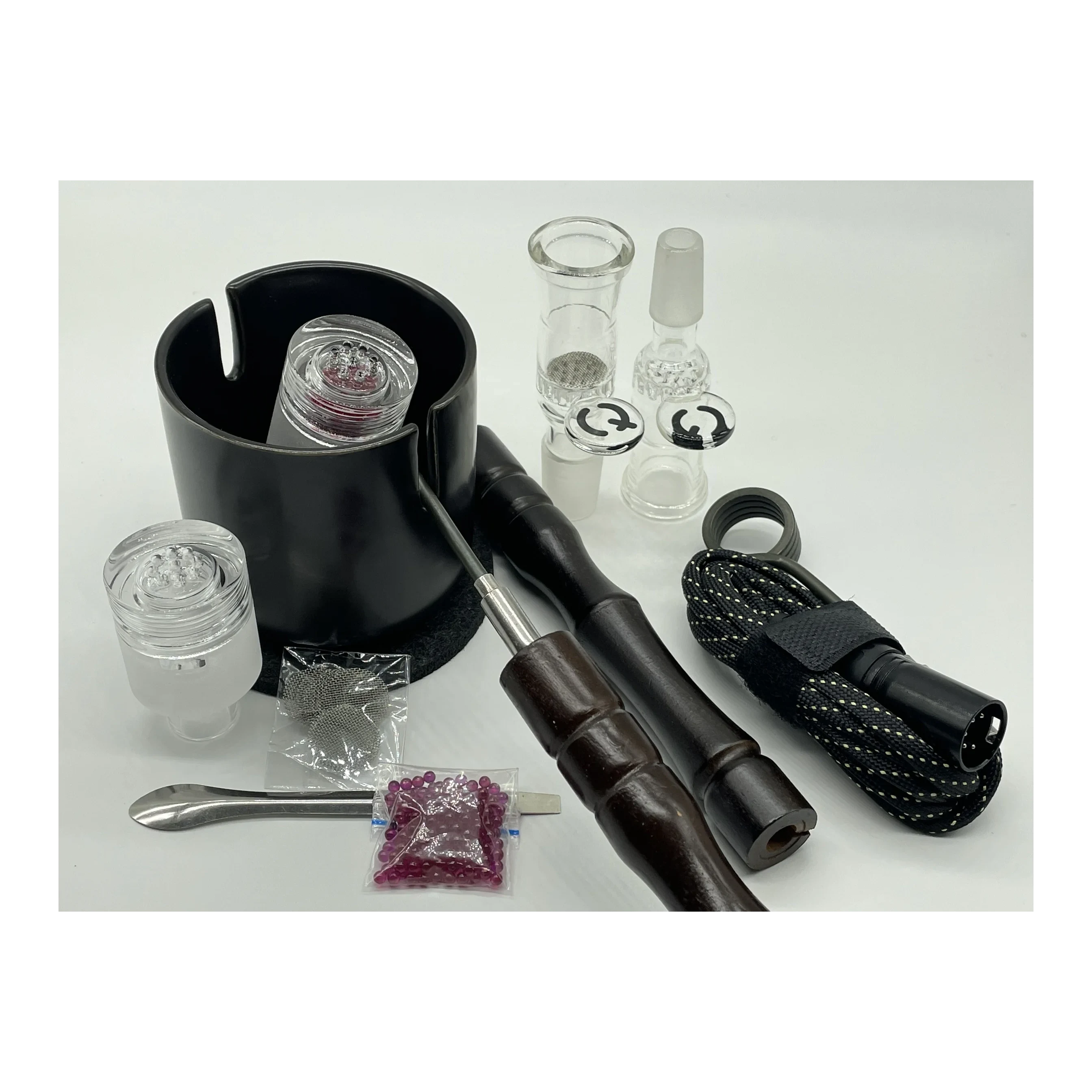
The Chinese manufacturer has the broadest lineup, covering nearly every segment from individual heads to systems with heating stations. The WOHW V2 (from 294.24 € incl. shipping) is the most widely used system with a separate heating station. Also in the range is the Ruby Twist Pro (from 205.07 € incl. shipping), an injector with PID regulation and a titanium chamber full of ruby balls, frequently cited in the community as a best-value recommendation. The Ruby Twist Injector (from 178.17 € incl. shipping) is the first generation of the same design; the Thermal Twist Injector (from 150.00 € other regions) uses a solid core with a spiral twist instead of a ball filling.
QaromaShop
Malaysian manufacturer specializing in heads made from titanium (Taroma), quartz (Qaroma), and ceramic (Ceroma). The Taroma series (Taroma Lite, Taroma 3.0 from 383.58 € incl. shipping · Import charges may apply, Taroma 360) is among the most recommended ball vapes in the community. The Qaroma XL features a 30 mm coil and approximately 500 ruby balls of 3 mm diameter — an extreme thermal mass for long group sessions. The Taroma 360 combines a 150 W coil with a hybrid convection-and-conduction design for very short heat soak times. Shipping is usually from Malaysia; the price comparison shows which EU retailers stock the range.
Graveda
German manufacturer, better known for its rosin presses. The Graveda Epic (from 369.99 € Import charges may apply) is a wired ball vape with a 25 mm heating coil, up to 130 W, adjustable in 1-degree increments up to 400 °C, and filled with sapphire balls instead of ruby balls; several European shops carry it. Not in this category are the XL, System Ti, and Sphere from Herborizer: they heat with a titanium heating element and no ball bed — injector systems, not ball vapes.
Cannabis Hardware
American manufacturer of the FlowerPot series. The FlowerPot B2 (from 397.74 € other regions) is a large, heavy head for herb and concentrates; according to the manufacturer, it requires the 20 mm heating coil from Cannabis Hardware or a coil with the same specs. The B0 (also B-Zero, from 374.90 € other regions) is the compact entry-level option with a 20 mm coil and 3 mm ruby balls; the B1 is a herb-only head with very open airflow. The VMAX (from 190.00 € other regions) is the more affordable line.
Other Manufacturers and Classics
- 7th Floor: The Elev8R (from 129.90 € other regions) is one of the oldest ball vapes on the market and is heated with butane. The Elev8 Ball Mod Kit retrofits classic desktop vaporizers like the Silver Surfer with ruby balls.
- Ditanium: Hybrid of ball vape and e-nail (Ditanium, from 249.97 € other regions).
- Camouflet: Butane-powered ball vapes such as the Camouflet Injector (from 112.36 € incl. shipping).
- Vapvana: Screwball (from 293.36 € incl. shipping) and All-Star Wired.
- Old Head: The Freight Train is a high-airflow head with ruby balls; the Terp Hammer is an attachment with no fixed power connection.
- Vices: The Adaptaball (from 356.62 € incl. shipping) is a ball attachment that operates without a fixed cable between station and head.
- Jaxels Art: The handcrafted VapBong FlavorMaster, a ceramic one-of-a-kind piece with cult status.
How to Compare the Full Costs
| Item | Your Check |
|---|---|
| Listing | Just a head, a partial kit, or a genuinely complete package? |
| Missing parts | Heat source, bowl, glass, adapter, and stand — check each one off individually. |
| Shipping | Country of origin, shipping costs, discount conditions, and any applicable import fees. |
| Ongoing maintenance | Screens, other wear parts, and their availability. |
A low head price is not an entry price for the complete system. For an initial selection, use the Ball Vape Price Comparison; then check the stated contents of the specific listings.
Price Ranges as a Guide
The range is wide. Here is what to expect at each level once you factor in what’s included:
- Individual heads without heating: The cheapest listings are bare heads. A PID controller, heating coil, and water filter all come separately. Suitable for tinkerers who already have equipment. The Elev8R with butane heating is the classic route for this approach.
- Complete sets in the mid-range: This is where the first full setups appear. The WOHW V2 includes everything except the water filter. The Ruby Twist Pro, as a kit with PID, coil, and micro matrix bowl, is the obvious choice when a complete setup without any assembly is the goal; here too, only a suitable water filter is missing. For the two injector variants, what else is needed depends on the kit chosen.
- Premium class: The sweet spot for many users: Taroma 3.0, Graveda Epic, and FlowerPot B0, with good availability across Europe.
- High End: FlowerPot B2, VapBong FlavorMaster and Qaroma XL for enthusiasts: massive thermal mass, high-quality materials, and a price to match.
EU Shop or US Import?
For a long time, there was no way around importing directly from the US. That has changed: more and more European retailers now stock devices from QaromaShop, Crossing Tech, and Cannabis Hardware within the EU. Which shops currently ship to Germany and what they charge is shown in the Ball Vape price comparison, updated daily.
When importing from the US, you add 19% import VAT on the total of the goods value plus shipping, a customs clearance flat fee depending on the carrier, and one to three weeks of delivery time. For a 300-euro setup, that quickly adds up to 70 to 90 euros in surcharges. On the other hand, some niche heads are only available directly from the manufacturer. Rule of thumb: buy standard models from an EU shop, import rare ones, and check the price comparison first to see whether an EU retailer carries the model you want.
Pros and Cons
Arguments in favor: Ball vapes deliver very dense vapor in just a few draws, because the air is already at temperature before it reaches the herb. As a result, you need less material for the same Session. The balls themselves are practically wear-free with proper care. And the setup is adjustable: temperature, number of balls, and material are all freely selectable.
Arguments against: As desktop devices without a battery, classic ball vapes are not portable and require space for a controller, glass, and a rest. A complete setup costs more than the advertised head price. The draw technique has a learning curve, and the vapor intensity often overwhelms beginners. The heat-up time requires some patience. Those who want to control their dose should pack small bowls (0.05 to 0.1 g).
| Criterion | Ball Vape | Classic Desktop |
|---|---|---|
| Principle | Convection through a ball bed | Heating element or heating rod |
| Vapor profile | Very dense, fast | Gentler, longer |
| Setup effort | High | Medium |
| Airflow | High | Variable |
| Target audience | Power users | All-around users |
Ball vape or Volcano? Ball vapes deliver vapor directly and immediately; the Volcano fills bags: evenly, controlled, more slowly. The choice depends on your draw style. The full comparison including costs and everyday usability can be found at Ball Vape vs. Volcano.
What to Look for When Buying
- Corded or heating station?
For most people, corded is the better choice. A heating station only makes sense if you need freedom of movement around your home and can live with one draw per charge.
- Complete set or individual components?
Beginners are better off with a complete set. Those who already have a PID controller or heating coil can save money by getting just a head.
- Check the glass connection.
14 mm or 18 mm? It needs to fit your water filter. Some sets include both adapters.
- Budget separately for a water filter.
You’ll almost always need one. A simple bubbler makes all the difference.
- Ball material.
Ruby is the standard and the safe choice. Stainless steel is cheaper; glass is more of a niche option.
- Availability in Europe.
QaromaShop usually ships from Malaysia (customs, wait time); Herborizer and many Crossing Tech models are available from European shops with fast shipping.
- Controller quality.
Budget sets often come with a basic controller in Fahrenheit. It works, but dialing it in is fiddly.
- Spare parts.
O-rings, screens, and balls eventually wear out. Before buying, check whether spare parts are available.
- Bowl size.
Standard bowls hold 0.1 to 0.3 g. Smaller bowls are available for micro-dosers.
- Space requirements.
A controller, station, water filter, and hot rest don’t just sit on a nightstand.
Concrete Recommendations
Four options that cover different priorities. Prices are taken from the offer comparison and refer to the lowest listed price; check the contents of each package.

WOHW V2
Entry-level without a cord at the head.
Complete set with heating station, head, controller, and bowl. All that’s missing is a water filter. Limitation: one draw per charge.
From 294.24 € incl. shipping

All-rounder with community backing.
Titanium chamber, ruby balls, precise temperature control. Ships mostly from Malaysia; check the price comparison for EU retailers.
From 383.58 € incl. shipping · Import charges may apply
Best value pick.
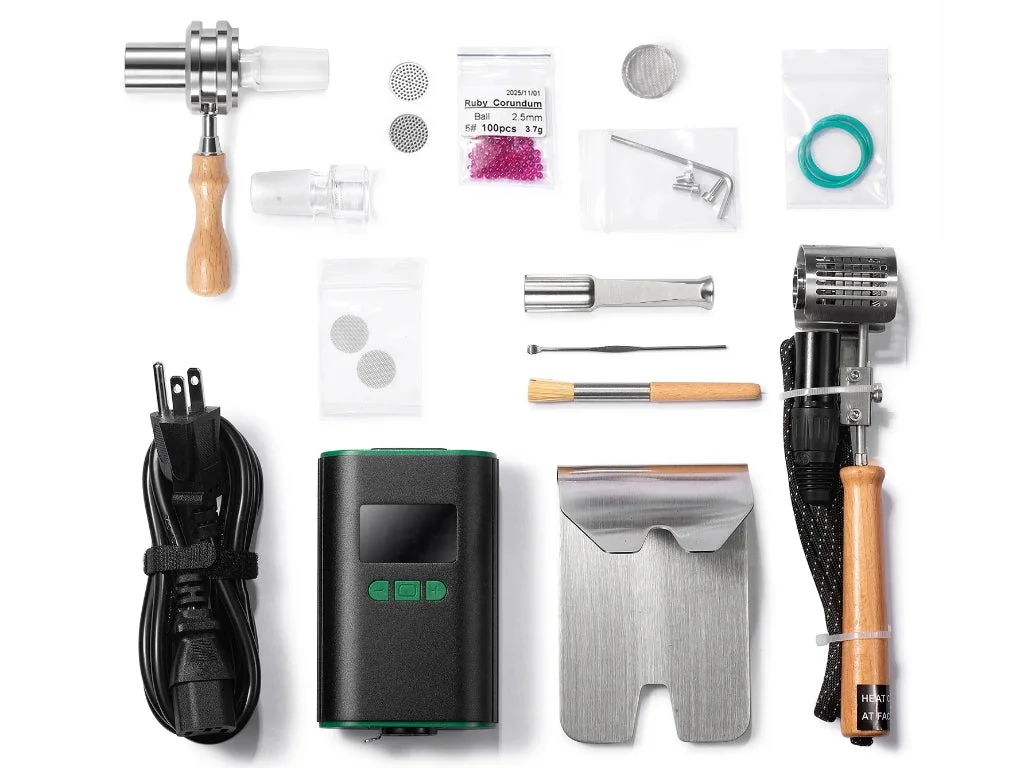
Injector with PID control and a titanium chamber full of ruby balls — the most frequent value recommendation in the community. Listed at several EU shops, short delivery routes.
From 205.07 € incl. shipping

For maximalists.
Large, heavy head with substantial thermal mass, for herb and concentrates, on the 20 mm coil from Cannabis Hardware.
From 397.74 € other regions
What a Spec Sheet Can’t Tell You
Heat-up time, extraction, and handling all depend on the specific combination. We don’t derive a blanket flavor winner from ball material or heating principle. Likewise, results from a study on a different vaporizer cannot be cited as evidence of effectiveness for a ball vape setup.
For your decision, a simple question helps: Which routine do you actually want to use regularly? A budget deal loses its advantage if the setup, heat-up time, resting, or cleaning consistently annoys you.
Frequently Asked Questions
Is a complete set always better?
It makes comparison easier when the required parts are clearly listed and matched to each other. Those who already have compatible components can make more sensible additions with individual parts.
Is there a universal temperature value?
No. Use the instructions for your specific combination. A controller reading is not automatically the temperature at the plant material.
Do I need a water filter?
In practice, yes. Ball vapes produce very hot, dense vapor; without a water filter, that is too harsh for most users. A simple bubbler makes all the difference. Many heads also work with a mouthpiece or whip, but the vapor arrives noticeably hotter that way.
Are ball vapes suitable for beginners?
Not really. The vapor production is very intense and can overwhelm beginners, and the setup effort adds to that. Those who have never owned a vaporizer usually do better starting with a classic Session vaporizer.
How often do I need to replace the balls?
Practically never. Ruby balls are very hard and heat-resistant and do not change with heat. Stainless steel balls may oxidize slightly after years of use, but they are also long-lasting.
What ball size is standard?
3 mm ruby balls are the common standard. Smaller balls offer more surface area for heat transfer; larger ones tend to provide slightly more airflow.
Can I use concentrates in a ball vape?
With some models, yes: the FlowerPot B2 is designed for dual use, and the Ditanium has an integrated e-nail. With others you need a quartz bowl or a dab pad. Ball vapes are primarily made for dry herb, however.
How do I clean a ball vape?
Soak the balls and bowl in isopropyl alcohol; wipe the housing with a damp cloth. The balls need very little cleaning — an occasional soak in isopropyl alcohol is enough. Blow out or soak the screen and bowl as needed; rinse the water filter briefly after each Session. Harsh cleaners such as acetone or abrasives have no place in the vapor path.
How much material do I need per Session?
Much less than with many other vaporizers. 0.1 to 0.2 g is often enough for a full Session.
Is a ball vape loud?
No. The device itself makes almost no noise. The only sound you hear is the bubbling of the water filter when you draw. No fan, no vibration, no beeping.
Can I use a desktop system on the go?
Check power supply, transport, and a place to rest the hot device. If you’re looking for a compact concept, start with the Tempest 2 guide rather than comparing stationary and portable options on head price alone.
Where can I buy a ball vape in Germany?
More and more EU retailers carry QaromaShop, Crossing Tech, and Cannabis Hardware. Which shops currently ship to Germany is shown in the Ball Vape price comparison with daily updated prices.
Conclusion: Who Should Get a Ball Vape?
Ball vapes aren’t for everyone. They require space, a water filter, and a genuine interest in the technology. Anyone who wants to switch on a portable vaporizer on the couch in the evening and head out is better served by a portable vaporizer.
Those who want dense draws, are willing to set up a small rig, and are ready to learn the technique get a device with a ball vape that operates in a class of its own when it comes to vapor density and material efficiency. Factor in the complete package, not just the head price, and choose the form factor based on the routine you will genuinely use on a regular basis.
Further Reading
- Ball Vape Head Comparison: 15 Heads in Detail
- Top 10 Ball Vapes List
- All Ball Vapes in the Price Comparison
- Diffuser vs. Injector Ball Vapes
- Ball Vape vs. Volcano
- Conduction vs. Convection vs. Hybrid · Session vs. On-Demand · Cleaning and Maintenance
Sources
- Cannabis Hardware: ZenLeaf — design types, bowls, and controller compatibility
- Cannabis Hardware: MOAB system
- MAD Heaters: Tempest 2
- QaromaShop: product pages for the Taroma and Qaroma series
- Crossing Tech: WOHW and Ruby Twist
- Herborizer: product documentation
This buying guide is an editorial recommendation, not an independent comparative test. Prices are taken from the offer comparison. Shop links may be affiliate links.