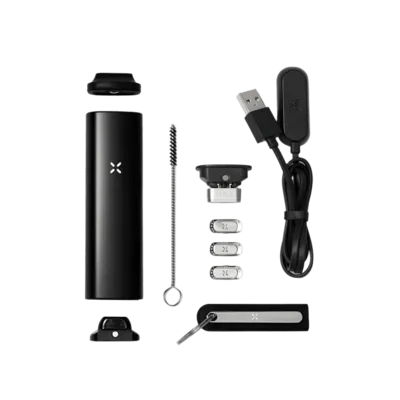
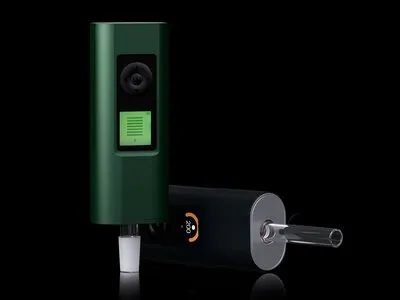
| Feature | PAX Plus | Solo 3 V2 |
|---|---|---|
| Heating | Conduction | Convection |
| Heat-up | 22s | 15s |
| Battery | 3300 mAh | 5000 mAh |
| WPA | Yes | Yes |
| Warranty | 10 yr | 99 yr |
Conduction vs Convection
The fundamental difference: PAX Plus heats by contact (conduction), the Solo 3 V2 by hot air (convection) through an all-glass path. For flavor the Solo 3 V2 wins clearly. For speed and discretion the PAX Plus.
Form Factor
The PAX Plus is flat and pocketable. The Solo 3 V2 needs a glass stem — less portable but the glass path makes a real difference in taste.
Battery Life
The PAX Plus has 3300 mAh, the Solo 3 V2 5000 mAh. Arizer is known for excellent battery performance — the Solo 3 V2 manages 10+ sessions. The PAX Plus lasts 6-8 sessions. Both charge via USB-C.
Accessories and Expandability
The Solo 3 V2 uses glass stems that double as WPA adapters — plug directly into water pipes. The PAX Plus is a closed system without a native water pipe option, but has a massive accessory market for cases and mouthpieces.
Verdict
PAX Plus for discretion, fast heat-up and 10-year warranty. Solo 3 V2 for flavor, glass vapor path and Arizer battery life.
Summary
Conduction or convection — that is the core question. The PAX Plus is the better travel companion: flat, fast, 10-year warranty. The Solo 3 V2 is the better flavor device: glass path, marathon battery, pure taste.
Both cost about the same. If you want to test the difference: many shops offer 14-day return policies.
Official product pages: PAX, Arizer
Daily Use and Practicality
In everyday use, heat-up time shapes your routine more than any spec sheet suggests. The Solo 3 V2 reaches operating temperature in 15 seconds, while the PAX Plus needs 22 seconds. That difference adds up over weeks of daily sessions. Quick morning sessions before work favor the faster device; relaxed evening sessions make the gap irrelevant.
Consider your typical usage pattern. If you vaporize 3-5 times daily, a few seconds per session compound into meaningful time savings. If you have one session per evening, both devices serve equally well. The Solo 3 V2 rewards impulsive, grab-and-go use. The PAX Plus rewards users who plan their sessions.
Build Quality and Materials
The PAX Plus: Anodized aluminum shell with a polished, minimalist design. PAX devices are designed in San Francisco with a focus on discretion and feel. The finish resists scratches well and the overall impression is premium consumer electronics rather than traditional vaporizer.
The Solo 3 V2: Durable polymer body with all-glass vapor path. Arizer devices are manufactured in Canada with a focus on simplicity and reliability. The glass stems are the signature feature: easy to clean, flavor-neutral, and available in multiple lengths. Build quality is consistently high across the product line.
Battery Strategy in Detail
The PAX Plus packs 3300 mAh, the Solo 3 V2 has 5000 mAh. The larger battery does not always mean longer runtime — heating method, chamber size, and usage pattern all affect real-world endurance. Both devices manage 5-8 full sessions on a charge under normal conditions.
The Solo 3 V2 has a swappable battery — a clear advantage for heavy users and travelers. Spare cells cost under 10 euros. The PAX Plus has a fixed battery.
Water Pipe Compatibility
Both devices support water pipe use. Water filtration cools the vapor and makes higher temperatures more comfortable. WPA adapters (14mm and 18mm joints) are available for both the PAX Plus and Solo 3 V2. Combining a vaporizer with glass elevates the experience significantly.
Cleaning and Maintenance
Regular cleaning directly affects vapor flavor and device longevity. Both the PAX Plus and Solo 3 V2 benefit from weekly isopropyl alcohol soaks of removable parts. Screens and seals are consumable items that should be replaced every few months for optimal performance. A basic cleaning kit consisting of isopropyl alcohol (90 percent or higher), cotton swabs, and pipe cleaners covers most devices.
A clean device delivers noticeably better flavor than a neglected one. Most flavor complaints in online forums trace back to insufficient cleaning rather than device limitations. Residue buildup narrows the vapor path, increases draw resistance, and adds a stale taste. Budget 10 minutes per week for maintenance and both devices will perform at their best for years. Deep cleaning every 2-4 weeks prevents hard-to-remove buildup and keeps the airflow unrestricted.
Long-Term Value and Durability
A vaporizer is a long-term investment. Beyond the purchase price, consider replacement parts, cleaning supplies, and eventual battery degradation. The Solo 3 V2 has the longer warranty at 99 years versus 10 years for the PAX Plus.
The resale market for vaporizers is active. Well-maintained devices from reputable brands retain 50-70 percent of their original value after a year. Both the PAX Plus and Solo 3 V2 hold their value well due to brand reputation and build quality. Buying a quality device upfront typically costs less than cycling through cheaper alternatives.
Community support also factors into long-term value. Devices with large user bases have better troubleshooting resources, aftermarket accessories, and replacement part availability. Both brands covered here have established communities that make ownership easier over the years.
Related Comparisons
- Solo 3 V2 vs Extreme Q: Arizer Portable or Desktop?
- XMAX V4 Pro vs Arizer Solo 3 V2: Budget Convection or Premium Hybrid?
- ArGo vs Solo 3 V2: Compact or Performance?
- ArGo vs PAX Plus: Glass Path or Stealth Design?
- Arizer ArGo vs Crafty+: Glass Path or Dosing Capsules?
Who Should Buy Which?
- Long-term security: Solo 3 V2 with 99-year warranty.
Frequently Asked Questions
Is the PAX Plus better than the Solo 3 V2?
Which heats up faster: PAX Plus or Solo 3 V2?
Which has the better warranty?
Testing and comparing vaporizers at VapoChecker since 2020. 800+ devices, 274 shops, 51 countries.