Arizer Air Max vs Solo 3 V2: Which Is Better? (2026)
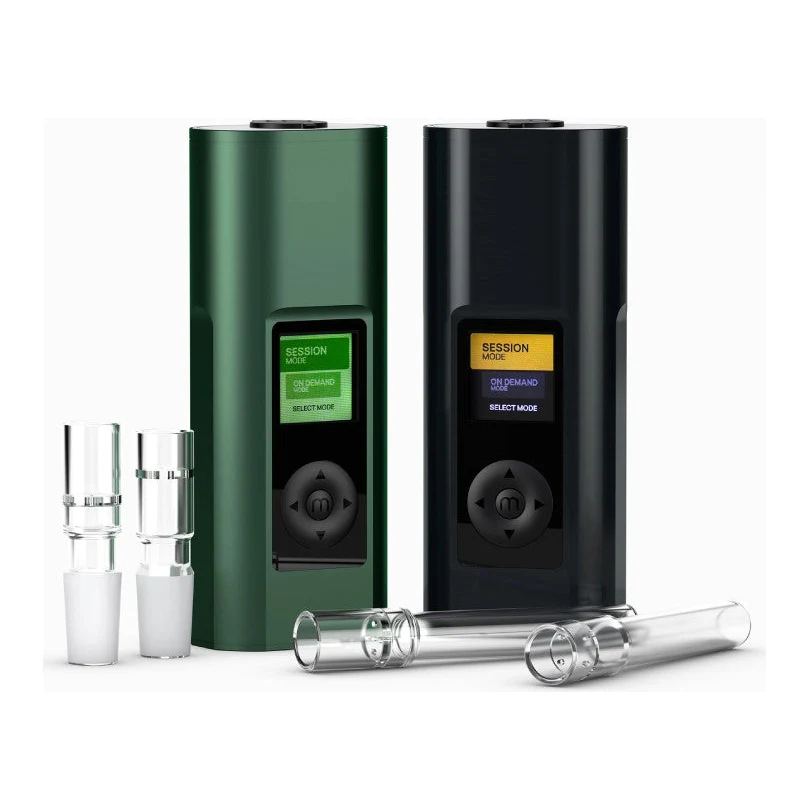
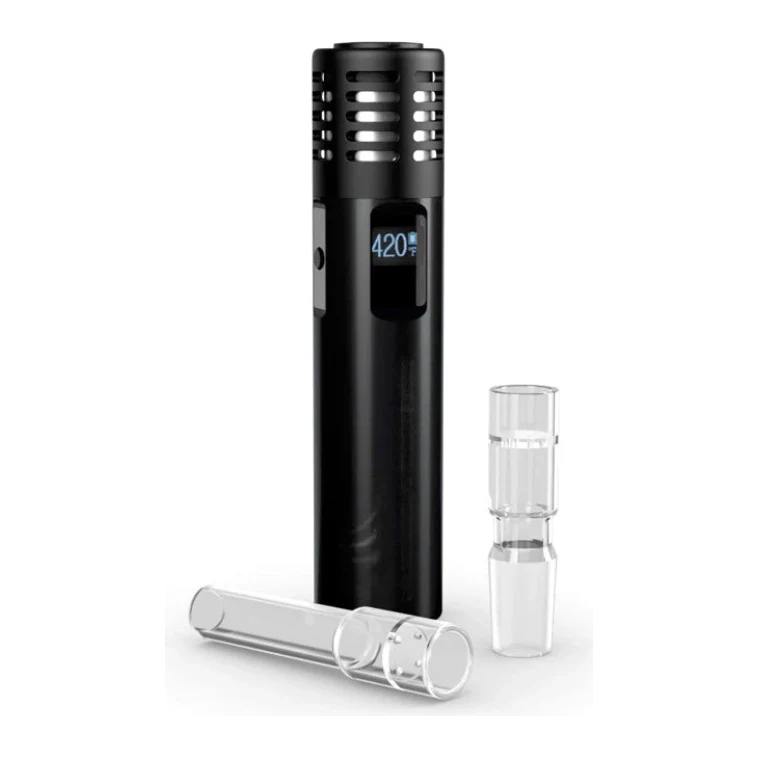
Both Arizer devices heat with the same hybrid technology (convection plus conduction), between 50 °C and 220 °C, with different battery concepts and a genuine glass vapour path. Three things set them apart: The Solo 3 V2 is ready in approximately 15 seconds and offers Session and On-Demand mode directly on the device. The Air Max takes around 60 seconds, but weighs only 160 g instead of 280 g and currently starts from 145.00 € incl. shipping instead of 210.60 € Code VAPOCHECKER10 · incl. shipping .
Current offers from our partner shops
 Visit shop
All prices come from automated shop queries. Some shop links are affiliate links.


- Solo 3 V2 → when heat-up time, On-Demand mode, and a Tier 1 ranking are your top priorities.
- Air Max → when you want the lighter device, a more affordable entry point, and a 26650 large-cell battery.
- Both deliver virtually the same vapor quality — the decision is lifestyle, not engineering.
Who is behind the two devices?
Arizer Tech is a Canadian manufacturer from Ontario, founded in 2007, which from the very beginning focused on desktop vaporizers (Extreme Q, V-Tower) and portable glass devices (Solo range, Air range). The brand has built a reputation in the community above all for honest hardware at a fair price — no hyped feature lists, but user-replaceable batteries on several models (Air Max, ArGo), a lifetime warranty on the heating element, and an ecosystem of glass stems and WPA adapters that has grown over the years.
The Arizer Solo 3 V2 is the direct successor to the Solo 2 and part of the classic Solo line, which has existed since 2011. The V2 revision brings a non-user-replaceable battery, a significantly faster heating rod, as well as Session and On-Demand mode, controlled directly on the device. Our editorial team lists the Solo 3 V2 at Tier 1 (recommendation score 7/100 — the lower, the better).
The Arizer Air Max was released in 2024 and is the successor to the Air 2 / Air MAX prototype. It uses a single user-replaceable 26650 battery and was deliberately positioned as the slimmer, more affordable daily driver model. Tier 2 (score 32/100) with us — still one of the most reliable entry-level portables on the market.
How do the specs compare on paper?
The data below is pulled dynamically from our product database — you always see the current status, not a snapshot from launch day.
| Spec | Arizer Air Max | Arizer Solo 3 V2 |
|---|---|---|
| Form factor | Portable | Portable |
| Heating system | Hybrid (convection + conduction) | Hybrid (convection + conduction) |
| Vapour path | Glass (mouthpiece) | Glass (mouthpiece) |
| Heat-up time | 60 s | 15 s |
| Temperature range | 50–220 °C | 50–220 °C |
| Battery | 26650 cell, user-replaceable (mAh not published by Arizer) | Integrated, in testing over 5,000 mAh; replacement via Arizer service |
| User-replaceable battery | Yes | No |
| Pass-through charging | Yes (USB-C) | Yes (USB-C) |
| Weight | 160 g | 280 g |
| Controls | On-device | On-device |
| Water pipe adapter (WPA) | Yes (14/18 mm) | Yes (14/18 mm) |
| Warranty | Lifetime on heating element, 2 years overall | Lifetime on heating element, 2 years workmanship, 1 year battery |
| Recommendation tier | Tier 2 | Tier 1 |
| Current price (EU) | 145.00 € incl. shipping | 210.60 € Code VAPOCHECKER10 · incl. shipping |
The table shows the core: Same heating technology, same temperatures, different battery concepts. The difference lies in four points — heat-up time, operating modes, weight, and battery concept.
Which heats faster: 60 seconds or 15 seconds?
This is the most striking difference and the only one that is truly noticeable in everyday use. The Solo 3 V2 reaches 180 °C in approximately 15 seconds — fast enough to press the button, take the device out of your pocket, and draw immediately. The Air Max takes 45–60 seconds, depending on the target temperature. In practice, this means: you press, put the device back down, wait, then draw. Not a disaster, but a different rhythm.
Important: both devices are mostly used as Session vaporizers; the Solo 3 V2 additionally offers an On-Demand mode. In Session mode you fill the glass chamber, set the temperature, take 6–10 draws, and empty the chamber. The heat-up time is a one-off cost per Session, not per draw. Someone who has three Session sessions a day saves a total of 2–3 minutes of waiting time per day with the Solo 3 V2. Someone running four short sessions a week will barely notice the difference.
A concrete example from our editorial use over 30 days: with three sessions per day, the Air Max accumulates around 90 minutes of pure waiting time, whilst the Solo 3 V2 comes to approximately 23 minutes — a delta of a good hour per month. Sounds like little, but feels like more in everyday life, because the “dead seconds” always fall at the start of a Session, precisely when you have the impulse. The Solo 3 V2 meets that impulse immediately; the Air Max demands a small amount of patience.
The price of this speed is heat in the housing. The Solo 3 V2 becomes noticeably warm (not hot) at the upper edge of the glass stem; the Air Max stays cooler throughout. Anyone who holds the device in their hand a lot rather than leaving it on the table will find the Air Max more comfortable.
How long do the batteries last in reality?
Both devices have different battery concepts. The Air Max uses a single user-replaceable 26650 battery; the Solo 3 V2’s battery is not user-replaceable. In everyday use, this means:
- Sessions per charge: Air Max ~8–10 complete bowl sessions of 5 minutes at 190 °C. Solo 3 V2 ~7–9 sessions. The Solo 3 V2’s faster heat-up costs it 1–2 sessions of runtime.
- Battery swap: With the Air Max, the user can insert a charged 26650 replacement battery. With the Solo 3 V2, a battery replacement is only provided for via the Arizer service.
- Pass-through mode: Both can be used whilst charging; the Solo 3 V2 via USB-C PD.
Our practical test over two weeks: a heavy user (5 sessions/day) needs to charge the Air Max approximately every 36 hours, and the Solo 3 V2 every 28–32 hours. For a weekend trip without a charger, both easily last 2–3 days — however, an on-the-go swappable replacement battery is only an option with the Air Max.
How does the draw feel — airflow and resistance?
Both Arizer devices have a free, low draw resistance — no fixed membrane, no adjustable aperture, simply an open system with a glass stem as the vapour path. Anyone coming from the Mighty+, DynaVap, or a closed aperture will notice the difference immediately: the draw is as light as with a water pipe adapter, not like a joint.
The Solo 3 V2 benefits from a slightly revised chamber geometry — the air draws somewhat more directly through the heating element, which makes the vapor denser when you draw faster. The Air Max is a little more “lazy” in this respect — at the same draw speed you get a thinner vapor that is, in turn, milder. Both have their appeal, depending on whether you are optimising for flavour or clouds.
A practical note on draw pace: both Arizer devices punish hurried drawing. If you rush the draw in under three seconds, less vapor comes through, because the air shoots past the heating element without the material having had enough time to release terpenes. Optimal is five to seven seconds steadily with slightly parted lips, as if you were sipping from a warm soup. This applies to both models and is one of the main reasons why people switching from joints initially “taste nothing” — the reflex is simply wired differently.
Which delivers better vapor quality?
The honest answer: in a blind test, most users would not be able to tell the two apart. Same heating system, same vapour path, same temperature range — physically, there is no reason why one should vaporize better than the other.
What you actually notice: the Solo 3 V2 draws somewhat earlier, because its 15-second heat-up time invites you to take the first draws at lower temperatures (170–180 °C). This gives clean terpene profiles. The Air Max is often run straight to 190–200 °C in practice, because “you’re already waiting 60 seconds anyway” — which costs flavour on the first draws.
Our recommendation for both: start at 180 °C, increase in 10 °C steps up to 210 °C. The glass chamber holds approximately 0.2 g of finely ground material — you get 6–8 full draws per Session, plus 2–3 “follow-up draws” at higher temperature before the material is spent. Our temperature guide goes into greater depth.
How portable is each one really?
This is more subtle than the spec sheet number suggests. The Air Max weighs 160 g, the Solo 3 V2 weighs 280 g — a difference of 120 g. But both are stick-shaped, approximately 15 cm long, with the glass stem on top. Neither device is a “discreet stealth vape” — anyone who wants that should look at POTV Lobo or DynaVap.
For a jacket pocket setup, both are equally suited. Too bulky for a trouser pocket — the glass stem in particular poses an injury risk. Anyone wanting to use the Air Max or Solo 3 V2 on the go needs at least a neoprene sleeve or a hard-shell case. The Air Max comes with a small carry pouch out of the box; the Solo 3 V2 currently does not — a small advantage for the cheaper device here.
How do operation and operating modes differ?
The Solo 3 V2 is controlled entirely via the display and the button ring on the device. Temperature, Session and On-Demand mode, and presets are all set directly on the device.
In practice, temperature and presets can be set directly via the button ring. Saved settings are then available on the device.
Honestly: on-device operation is complete and self-contained. For the purchasing decision, therefore, the actual differences in heat-up time, operating modes, weight, and battery concept are what count.
Which works better with a water pipe (bong)?
Both Arizer devices are built for WPA use — this was already a selling point for the Solo line from 2013. The glass vapour path ends in a straight 14 mm adapter (18 mm as a separate adapter attachment), which fits directly into a small bubbler base or a percolator bong. Anyone who already has a bong at home needs no compromise — WPA mode works identically well with both devices.
A small difference: the Air Max has a slightly more open geometry in the heating chamber (more free surface area around the material), which allows the vapor to be better processed by the increased condensation in the bong. The Solo 3 V2 produces more direct vapor, which can come across as a little “too dense” in a bong with only one chamber. Anyone with a 2-chamber percolator will be perfectly well served by both. Further reading: using a vaporizer with a bong.
What do the current prices look like?
The prices below are pulled live from our 267 partner shops — we update every 3 hours.
✓ Best Price: 145.00 € · incl. shipping @ Evertree✓ Best Price: 149.92 € · incl. shipping @ Herbalize Store UK✓ Best Price: 115.75 € · incl. shipping @ TVape US✓ Best Price: 263.09 € · incl. shipping @ Vaporizadores BA Argentina✓ Best Price: 152.10 € 169.00 € · with code VAPOCHECKER10 · incl. shipping @ VapeFully✓ Best Price: 152.10 € 169.00 € · with code VAPOCHECKER10 · incl. shipping @ VapeFullyArizer Air Max — currently available from 145.00 € incl. shipping at one of the EU shops. All-time low in the last 90 days: 145.00 € incl. shipping .
Arizer Solo 3 V2 — currently available from 210.60 € Code VAPOCHECKER10 · incl. shipping at one of the EU shops. All-time low over the last 90 days: 210.60 € Code VAPOCHECKER10 · incl. shipping .
The Air Max is currently being offered well below RRP — several EU shops have been listing it with discounts of 20–30% since early 2026. The Solo 3 V2 holds its price more steadily, which speaks to its higher community status. If you overlay both charts, you can see: the Solo 3 V2 fluctuates by roughly ±5%, the Air Max by ±15%. If you’re waiting for discounts, you’re more likely to find them with the Air Max.
Pros and Cons at a Glance
Arizer Air Max
Pro- Lighter (160 g vs 280 g) and more compact in the hand
- More affordable entry point — currently from 145.00 € incl. shipping
- Thicker 26650 battery, longer average Session runtime per charge
- Stays noticeably cooler in the housing during hand-held use
- Carry case included in the box
- Heat-up time 60 seconds — noticeable during quick sessions
- No on-demand mode; temperature control on the device
- Battery replacement requires a compatible 26650 replacement cell
- Tier 2 with us — not the first choice for heavy users with maximum expectations
Arizer Solo 3 V2
Pro- Heat-up time 15 seconds — one of the fastest portable hybrids on the market
- Session and on-demand mode with adjustable presets on the device
- Large built-in battery (over 5,000 mAh in testing), usable while charging via USB-C PD
- Tier 1 with us — our top recommendation among portable Session devices
- Slightly denser vapor thanks to optimised chamber geometry
- Heavier (280 g) and marginally longer
- Price currently ~€50 above Air Max, discounts less frequent
- Top section gets warmer during longer sessions
- Battery cannot be swapped by the user on the go
The Verdict: Which Should You Buy?
For the beginner on a tight budget: Air Max
If this is your first portable vaporizer and you want to stay under €120, the Air Max is the rational choice. You get the same hybrid heating technology as the Solo 3 V2, the same glass vapour path, the same lifetime warranty on the heating element. The 60-second heat-up time is a matter of adjustment — after two weeks it’s part of your Session routine and you won’t notice it any more. To the Arizer Air Max product page with current prices.
✓ Best Price: 145.00 € · incl. shipping @ Evertree✓ Best Price: 149.92 € · incl. shipping @ Herbalize Store UK✓ Best Price: 115.75 € · incl. shipping @ TVape US✓ Best Price: 263.09 € · incl. shipping @ Vaporizadores BA Argentina✓ Best Price: 152.10 € 169.00 € · with code VAPOCHECKER10 · incl. shipping @ VapeFully✓ Best Price: 152.10 € 169.00 € · with code VAPOCHECKER10 · incl. shipping @ VapeFullyFor the flavour chaser and precision user: Solo 3 V2
If you’re coming from the Mighty+ or Venty world and are looking for a second, more affordable vaporizer for the sofa, the Solo 3 V2 is the choice. The 15-second heat-up allows quick “one-bowl sessions”, and presets and on-demand mode can be set directly on the device. You get Tier 1 quality at half the Mighty+ price. To the Arizer Solo 3 V2 product page.
✓ Best Price: 210.60 € 234.00 € · with code VAPOCHECKER10 · incl. shipping @ VapeFully✓ Best Price: 210.60 € 234.00 € · with code VAPOCHECKER10 · incl. shipping @ VapeFully✓ Best Price: 210.46 € · incl. shipping @ TVape US✓ Best Price: 335.16 € · incl. shipping @ Smoketower✓ Best Price: 210.60 € 234.00 € · with code VAPOCHECKER10 · incl. shipping @ VapeFully✓ Best Price: 210.60 € 234.00 € · with code VAPOCHECKER10 · incl. shipping @ VapeFullyFor the bong user or couch vaporizer: Both equally good
If your device stays at home 80% of the time and is regularly used with a water pipe, the heat-up time is practically irrelevant — you heat up once and let the vaporizer run in passthrough mode. Here the price decides: the Air Max is the rational choice. If on-demand mode or “Tier 1” status matters to you, then Solo 3 V2. For all other non-Arizer alternatives, it’s worth having a look at our portable vaporizer top list.
FAQ
Is the Solo 3 V2 worth the extra €40–50 over the Air Max?
Only if at least one of these matters to you: 15 instead of 60 seconds heat-up time, Session and on-demand mode, or Tier 1 status in the community ranking. Anyone who just wants to “vaporize portably” gets 90% of the experience with the Air Max at a significantly lower price.
Does the Air Max have a swappable battery? And the Solo 3 V2?
The Air Max has a user-replaceable 26650 battery. The Solo 3 V2, by contrast, has a battery that cannot be replaced by the user; Arizer offers a replacement service for this if needed.
Which Arizer is better suited for beginners?
The Air Max. It’s more affordable, lighter, gets less warm in the hand, and deliberately keeps operation straightforward. The 60-second heat-up time is a learning moment — not an obstacle. Anyone looking for a classic introduction to ambitious Session vaporizing can’t go wrong with the Air Max.
Can I use both with concentrates or extracts?
Not directly — both are dry-herb vaporizers. For concentrates you need a liquid pad or a concentrate capsule (not included, available separately), which you place with a few drops into the heating chamber. Works with both, but it’s not their core design strength. Anyone primarily dabbing would be better off looking at dab pens.
How is the Solo 3 V2 operated?
The Solo 3 V2 is operated entirely on the device itself. Using the display and button ring you set the temperature, Session timer, presets, and on-demand mode; battery level is also shown on the display.
How long do the batteries really last per Session?
At 190 °C and a full glass chamber (~0.2 g), 8–10 sessions of 5 minutes each is realistic with the Air Max, 7–9 sessions with the Solo 3 V2. The faster heat-up of the Solo 3 V2 costs it 1–2 sessions. Both devices support use while charging.
What does Arizer’s warranty on both devices look like?
For both devices, Arizer states a lifetime warranty on the heating element and 2 years’ warranty on defects in materials and workmanship. For the Air Max the battery is excluded from this warranty; for the Solo 3 V2 a limited 1-year warranty applies instead. The Solo 3 V2 battery is not user-replaceable; a replacement is requested via the Arizer service.
Is it worth upgrading from the old Solo 2 to the Solo 3 V2?
For the typical Solo 2 owner: Only if the shorter heat-up time or on-demand mode are genuine reasons to buy. The vapour quality is not dramatically better. If your Solo 2 is still running and you use it daily, stick with it. If you’re looking for excuses anyway, the Solo 3 V2 is of course the more refined take on the same theme — and costs around 40% less than a new Mighty+.
More context for your purchasing decision — our vaporizer buying guide filters by budget, form factor, and technology. Or go straight to vaporizers under €200, where both Arizer devices regularly appear.