Fenix 2.0 is a portable dry-herb vaporizer. VapoChecker compares current offers from €134.94 (plus shipping) across 1 shop (as of Oct 18, 2026).Price basis: Item price excluding shipping and coupons
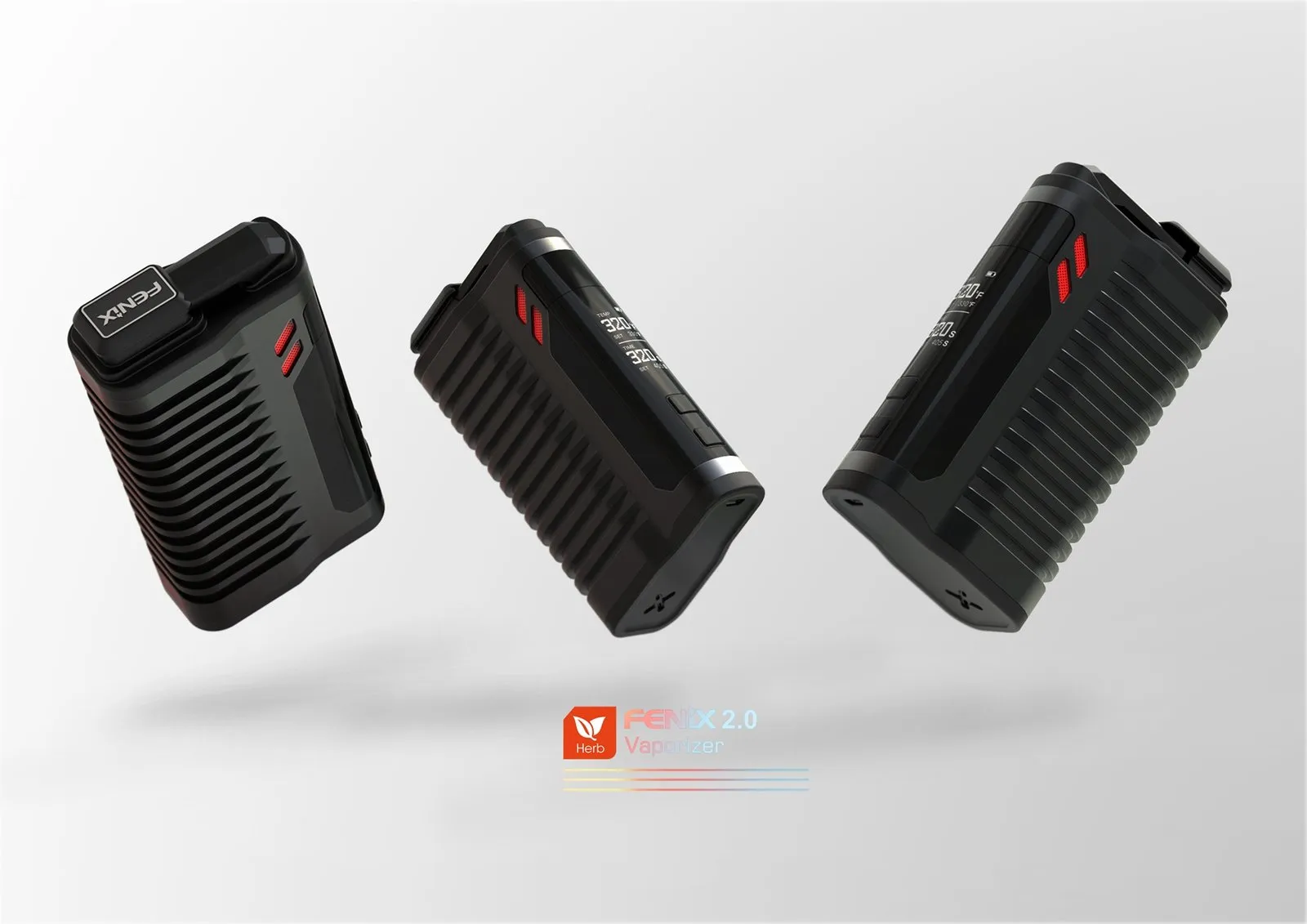
The Fenix 2.0 is a portable convection vaporizer built around a notably large 4400 mAh battery. Heats to 220°C in 30 seconds. With a WPA port and dosing capsule support baked in, it covers the key bases without fuss. That battery capacity means sessions run long without hunting for a cable — a real advantage for extended home use. One-year warranty; good pick for convection fans who want lasting power on a single charge.
The Fenix 2.0 from Fenix (Weecke, Czechia) is a portable vaporizer with pure convection heating — contrary to widespread misinformation, not a hybrid system. Temperature range 160–220 °C in 5-degree steps, heat-up time 30 seconds, weight 232 g. The fixed built-in 4400-mAh battery — twice as large as in most competitors in this price class — enables 5–6 complete sessions per charge.
The convection heating means: hot air flows through the material without the chamber wall directly touching the herb. This produces flavor-pure vapor without combustion notes. There are also dosing capsules, WPA compatibility (water pipe adapter) and passthrough charging. With currently 2shops in the price comparison, the Fenix 2.0 starts at around 106 € in the mid-range — significantly cheaper than the Storz-&-Bickel premium class, with genuine convection arguments against cheaper conduction devices.
The Fenix 2.0 is clearly positioned in the upper entry-level segment: too expensive for pure conduction devices, too affordable for the premium class. Three target groups benefit specifically:
Convection beginners: Anyone who wants to switch from a conduction vape (PAX, DaVinci IQ3) without immediately investing 400 €+ in a Mighty+. The Fenix 2.0 delivers genuine convection at half the price.
Battery marathon users: 4400 mAh is exceptional in this price class. Anyone who runs sessions back to back or wants to use the vape for several days without charging access gets substantial reserve here.
WPA bong users: The water-pipe-compatible adapter is designed for the Fenix 2.0 from the factory — not added afterwards as with some competitors.
Anyone who does not want to wait for 30 seconds of heat-up time or needs a warranty beyond 1 year should switch directly to the Fenix 2 MAX (20 s heat-up, 2 years warranty, larger battery — see comparison below).
Convection heating in detail: why it is not hybrid
Unlike what is occasionally claimed, the Fenix 2.0 is a pure convection vaporizer — not a hybrid construction. The distinction matters because it shapes the vapor character:
Convection (Fenix 2.0): Hot air flows through the material and releases active compounds + terpenes from the plant structure. The chamber wall remains below the vaporization temperature of the material. Result: pure, flavor-intensive vapor, no “toasting”.
Conduction (e.g. PAX): The chamber wall heats the material directly through contact. Ready for use faster, but the material can scorch if heated for too long.
Hybrid (e.g. Mighty+): Both mechanisms combined. More vapor density, but a more complex chamber construction.
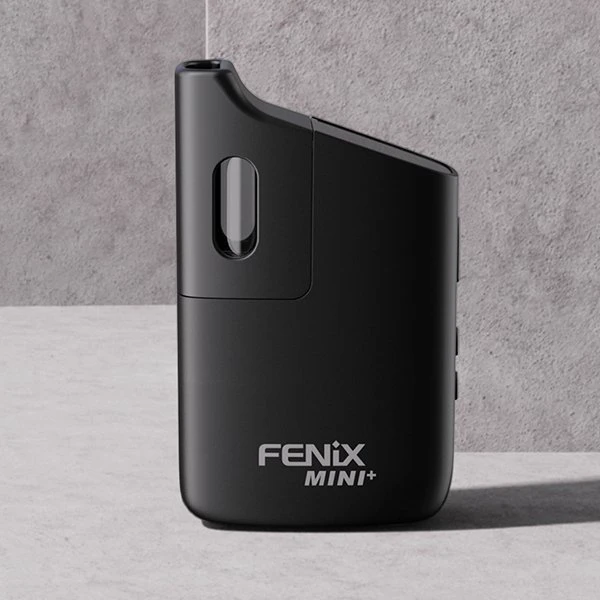
The Fenix 2.0 deliberately uses pure convection — the sister products Fenix Mini+, Svaty and Titanium are hybrid. Anyone who confuses these will reach the wrong conclusions about heat-up behavior and flavor profile.
Battery life: 4400 mAh in practice
The 4400-mAh battery is fixed built-in and not replaceable. In practice, at medium temperature (190 °C) it delivers around 5–6 complete sessions of 8–10 minutes each — equivalent to 60–75 minutes of pure usage time per charge. At higher temperatures (210 °C+) runtime drops to 4–5 sessions; at lower settings (170 °C), 7–8 sessions are possible.
A verified value for the charge time to 100% is not available here. The passthrough mode allows use while charging — practical if you vape stationary at home and the battery is currently empty.
Compared with the Mighty+ (3300 mAh), the Fenix 2.0 therefore delivers 33 % more battery capacity at a significantly lower purchase price. This is one of the strongest arguments of the Fenix design: anyone prioritizing mobility and endurance gets it here for a third of the price.
Temperature sweet spots & use cases
The temperature range 160–220 °C covers the entire sensible vaporization spectrum. Operation is via two buttons on the device — no app required.
Range
Character
Typical use
160–175 °C
Mild, terpene-rich, barely visible vapor
Entry, microdose, sleep hygiene
175–190 °C
Balanced aroma + effect
Daytime, sweet spot for most strains
190–205 °C
Dense vapor, complete extraction
Evening session, intensive effect
205–220 °C
Maximum extraction, rinsing out residues
Final draws for material utilization
The convection heating allows the finest temperature differences to be perceived in flavor — a 5-degree step changes the character noticeably. For beginners, starting at 185 °C is recommended, then adjust up or down depending on strain character.
Dosing capsule system & hygiene
The dosing capsules are an underrated comfort feature. Each capsule holds around 0.15–0.2 g material, can be filled outside the device and simply inserted into the chamber. Advantages:
Hygiene: The chamber stays clean because the material does not come into direct contact with the walls. Cleaning is reduced to every 2–3 weeks.
Dosing: One defined quantity per capsule — important for reproducible dosing.
Mobility: 5–8 prepared capsules in the magazine = a whole day's supply without grinding and filling while out.
The Fenix dosing capsules are compatible with other 14-mm standard capsules on the market. Anyone who already has capsules from the Mighty or XMAX can continue using them.
WPA setup: bong connection in practice
The water pipe adapter (WPA) turns the Fenix 2.0 into a stationary setup with water filtration. Setup in four steps:
Remove the standard mouthpiece, attach the WPA adapter (same plug-in mechanism).
Insert the adapter into a 14-mm or 18-mm bong joint, secure with a small joint ring.
Keep the water level moderate (max. 2 cm immersion depth) — too much water draws into the cooling unit.
Set the Fenix 2.0 to the desired temperature, inhale normally. The bong provides the additional cooling.
Advantages: significantly cooler vapor, less coughing irritation, the water catches plant particles. Disadvantages: stationary setup, mobile use is ruled out, bong cleaning is added to vape maintenance.
Cleaning & maintenance: convection is easy to care for
One advantage of pure convection heating: the material does not directly touch the chamber wall, so fewer resin deposits arise than with conduction. Maintenance rhythm:
After each session: Empty the chamber, brush out with a brush. When using dosing capsules: remove capsule, insert a new one.
Every 2–3 weeks: Disassemble mouthpiece and cooling unit, soak in isopropanol (90 %) for 20 minutes, rinse thoroughly, allow to dry completely.
Monthly: Clean stainless-steel screen in the chamber with cotton bud + isopropanol. If the screen is discoloured: replace it (replacement set around 8 €).
Every six months: Check silicone sealing rings of the cooling unit for brittleness. Replace if pressure is lost.
The simple maintenance makes the Fenix 2.0 a reliable everyday device — that cannot be said of every vape model.
Fenix 2.0 vs Fenix 2 MAX: direct comparison
The most important comparison for Fenix 2.0 buyers is its own bigger brother, the Fenix 2 MAX. Same development team, same convection system, but three decisive improvements:
Spec
Fenix 2.0
Fenix 2 MAX
Heating system
Convection
Convection (identical)
Battery
4400 mAh
4800 mAh (+9 %)
Heat-up time
30 s
20 s (33 % faster)
Temperature range
160–220 °C
160–220 °C (identical)
Weight
232 g
232 g (identical)
Warranty
1 year
2 years
App control
No
No
Dosing capsules
Yes
Yes
WPA compatibility
Yes
Yes
Expert score
7.6 / 10
7.7 / 10
Anyone who accepts the small extra cost for the 2 MAX gets 33 % faster heat-up, slightly more battery and, above all, double the warranty. For frequent users, the 2 MAX is the more rational choice. The 2.0 remains attractive for occasional users who can live well with a 30 second waiting time.
The Fenix family: 8 models at a glance
Weecke runs eight models in parallel under the Fenix brand — one of the broadest portfolios in the portable vaporizer market. Overview (as of 2026):
Convection line (5 models): Classic → Pro → NEO → 2.0 → 2 MAX — increasing battery capacity, otherwise similar concept. Hybrid line (3 models): Mini+, Svaty (extremely light 70 g), Titanium (premium components). The Fenix 2.0 is the penultimate model of the convection line — only the 2 MAX goes one better.
Weecke from Czechia: who is behind Fenix?
The Fenix brand is produced by the Czech manufacturer Weecke — headquartered in Prague and manufactured in its own factory. Weecke released the first Fenix in 2014 and has continuously expanded the line since then. The design language is sober and technical: no RGB LEDs, no app gimmicks, simple operation via OLED display and two buttons.
Unlike Chinese mass imports, the Fenix 2.0 is built with a traceable EU supply chain — that has advantages and disadvantages. Advantages: warranty handling through EU distributors, spare parts available long term. Disadvantages: higher prices than pure China imports (e.g. XMAX, Fivemints, Yocan).
How do I care for the battery long term?
The fixed built-in 4400-mAh battery is not replaceable — so battery care is relevant long term. Three rules of thumb:
Avoid deep discharge: Do not let the battery fall below 10 %. For longer storage, store with around 60 % remaining charge.
Avoid heat: Do not leave it in the car (summer heat measurably ages lithium batteries). Ideal storage temperature is 15–25 °C.
USB-PD charger: Fast charging with 30 W Power Delivery delivers full speed. How long the battery takes to charge to full cannot be reliably stated with the evidence available here. but unnecessarily slow.
After 18–24 months of daily use, users typically report 10–20 % capacity loss. In passthrough mode, the device remains fully usable on mains power even with an aged battery.
Warranty & service: reality check
Fenix grants 1 year warranty on the 2.0 — significantly shorter than the premium competition (Storz & Bickel 2 years, new DaVinci models 3 years). This is one of the compromises that makes the mid-range price possible.
Service experience in the market: Weecke and its EU distributors usually respond quickly to warranty enquiries; the repair route usually goes through the retailer of the initial purchase. Anyone buying the Fenix 2.0 from an unknown online shop should check the service reputation beforehand.
Practical tip: register the Fenix 2.0 immediately on the manufacturer's website or with the retailer after purchase — this significantly speeds up the warranty process later. Anyone wanting more service security should consider the Fenix 2 MAX (2 years warranty) or premium alternatives.
Mobility & portability: 232 grams in practice
At 232 grams, the Fenix 2.0 is not lightweight — comparable with the Mighty+ (242 g). Anyone looking for an ultra-mobile vape should choose the Fenix Svaty (70 g!) or Fenix Titanium (130 g).
In everyday use this means: fits into an inside jacket pocket, but not into a jeans trouser pocket. The weight distribution is well balanced — the device does not slip from the hand and can be operated one-handed. Dimensions: around 110 mm high, 50 mm wide, 25 mm deep.
Recommended for on the go: a silicone mouthpiece cap (often or available as an accessory), which keeps foreign matter out of the inhalation channel. With the magazine, 5–8 pre-filled dosing capsules can be transported — a whole day's supply without mess or filling action.
Convection vs. conduction: what is the real difference?
The heating method shapes flavor, vapor density and maintenance effort. Three comparison dimensions:
Property
Convection (Fenix 2.0)
Conduction (PAX, DaVinci IQ3)
Flavor
Pure, terpene-rich
Fuller-bodied, lightly roasted
Heat-up time
30 s (convection needs warming)
15–25 s (direct contact)
Material efficiency
Higher, because evenly flowed through
Lower, wall contact can scorch
Chamber cleaning
Rare, because no resin contact
Frequent, because wall becomes resinous
Battery consumption
Higher, because air is heated
Lower, direct heat transfer
Convection fans appreciate the pure flavor profile. Conduction is ready to start faster, but anyone who values aroma differences rarely switches back. The Fenix 2.0 is a classic “switching vape” for former PAX users.
Practical test: common problems & troubleshooting
Five symptom clusters that Fenix 2.0 users report from experience — with primary diagnosis and solution path:
Little or no visible vapor: Material ground too finely or packed too tightly (blocks airflow). Solution: coarser grind (pepper consistency), fill material loosely.
Burnt taste: Temperature too high or material left too long in preheated chamber. Solution: reduce by 10 °C, only fill material shortly before inhalation.
Battery does not last: High temperatures (>205 °C) significantly shorten runtime. Solution: lower settings, or use passthrough mode stationary.
Display freezes / does not respond: Soft reset: press all three buttons simultaneously for 10 seconds. No verified charge time is available for a full charge. then restart.
Loose-fitting mouthpiece: Silicone sealing ring worn. Order spare parts from retailer or directly from Weecke (typically 5 € per sealing ring set).
For recurring problems, contact warranty service before reaching for a screwdriver yourself — self-repairs void the warranty claim.
Fenix 2.0 vs premium class (Mighty+, Volcano Hybrid)
Anyone considering whether the extra cost for a Mighty+ or a stationary Volcano Hybrid makes sense should weigh three points:
Heating: Fenix 2.0 = pure convection. Mighty+ = hybrid (convection+conduction). Hybrid delivers denser vapor in a shorter time, convection delivers flavor-purer vapor. A matter of taste.
Heat-up: Fenix 2.0 = 30 s, Mighty+ = 60 s. Here the cheaper Fenix is actually faster — because of pure convection without a chamber wall needing to warm up.
Price: Fenix 2.0 from 106 €, Mighty+ from 280 €+. The extra price buys brand substance, warranty, app control and a slightly denser vapor profile — but no technical revolution.
Clear conclusion: anyone not prepared to pay double or triple gets equivalent performance in many respects with the Fenix 2.0. Only in a direct A/B comparison does the difference in flavor profile become visible.
Comparison with DaVinci IQ3 (premium conduction)
The DaVinci IQ3 is the most common alternative in the same price segment — but technically fundamentally different. Quick comparison:
Spec
Fenix 2.0
DaVinci IQ3
Heating
Convection
Conduction
Battery
4400 mAh (fixed)
3000 mAh (replaceable 18650)
Heat-up time
30 s
40 s
Weight
232 g
156 g
App control
No
Yes (optional)
Warranty
1 year
3 years (registered: 10 years)
Character
Clean convection vapor profile
Full-bodied conduction with app control
Anyone needing a replaceable battery or premium warranty goes for the IQ3. Anyone choosing pure convection + large integrated battery stays with the Fenix 2.0.
Market position: where does the Fenix 2.0 fit?
The Fenix 2.0 serves a specific niche in the upper entry-level segment:
Price class 100–150 €: Competes with XMAX V3 Pro (~120 €), Flowermate V5 Nano Pro (~95 €), AirVape X (~100 €). The Fenix 2.0 stands out through pure convection + 4400 mAh.
Mid-tier 150–220 €: Does not compete directly, but is often confused with Tinymight 2 (~349 €) and Healthy Rips Fury Edge (~180 €). Both are one class above.
Premium 280 €+: Mighty+, Crafty+, Tinymight 2 — all clearly above. The Fenix 2.0 is not in this league, and does not aim to be.
Its USP is the combination of genuine convection + large battery + low price — these three properties are otherwise not available together anywhere.
Long-term experience: what reviewers report after 6+ months
The Fenix 2.0 has been on the market since 2023 — long enough for robust long-term experiences from reviewer circles. Consensus after 6+ months of daily use:
Hardware robust: Housing, display, buttons withstand daily use without problems. No premature wear reported.
Battery stable: After 18 months, typically 10–15 % capacity loss — within range for lithium-polymer batteries of this size.
Heating chamber easy to care for: Due to convection, significantly less cleaning effort than with conduction vapes. Reviewer consensus: every 2–3 weeks is enough.
Seals wear: Silicone rings of the cooling unit become slightly brittle after 12–18 months — replacements included in the service set.
Weak point 1-year warranty: For defects after 13–14 months, the buyer pays themselves — noticeable compared with DaVinci premium warranties.
Overall: a workhorse vape without premium pretension, but with honest performance. For many users, it will be the main workhorse vape for 2–3 years.
Tips for first-time buyers: what you should know
Five practical tips for the first weeks with the Fenix 2.0:
First 5–10 sessions are burn-in phase: Smell and taste normalise, the heating element “breaks in”. Start low (180 °C), increase gradually.
Grind is half the battle: Too fine = blocked, too coarse = incomplete extraction. Coarse pepper consistency is the gold standard.
Fill level: Fill chamber to ⅔ , press down lightly. Completely filled = airflow blocked.
Dry-test the first WPA session beforehand: Water must be deep enough for vapor to be filtered, but low enough that nothing runs back into the device.
Register warranty immediately: Enter in manufacturer portal, digitise receipt — in case something does happen in 11 months.
Hidden functions: what the manual leaves out
The Fenix 2.0 has more features than the manual documents — four useful tricks from the community:
Adjust auto-off timer: Standard is 3 minutes. Via the menu sequence (hold Power + “+” simultaneously), it can be set to 5 or 7 minutes — practical for longer sessions without constant restarting.
Booster mode: Hold “+” during the session — the temperature jumps up by 10 °C for 30 seconds. Good for the final draws.
Battery indicator accuracy: The display shows 4 levels (full/3/4/half/empty). After 80 % of the battery, the estimate becomes more optimistic than reality — at “half”, there is often actually only 30 % left.
Material change without cooling: Refilling directly after a session with a warm chamber works — saves 30 s heat-up time. Caution: do not put your lip on the hot mouthpiece.
Conclusion & purchase recommendation
The Fenix 2.0 is a solid convection vape in the upper entry-level segment — not spectacular, but convincing in the points that really count: pure convection flavor profile, generous 4400-mAh battery, clean dosing capsule system, WPA compatibility from the factory.
Main compromises: short 1-year warranty (forces fast service intervention in case of defects) and 232 g weight (not ultra-mobile). Anyone unwilling to accept either should switch to the Fenix 2 MAX (2 years warranty, 20 s heat-up, 4800 mAh) or to the lighter Fenix Pro (130 g).
In the Storz-&-Bickel premium comparison, the Fenix 2.0 only loses in vapor density — and even then only narrowly. In price-performance ratio, it is one of the toughest competitors to the premium class, without their price pretension.
The Fenix 2.0 uses pure convection heating — not a hybrid construction. Hot air flows through the material without the chamber wall directly touching the herb. Anyone wanting hybrid should choose the Mini+, Svaty or Titanium in the Fenix family.
The fixed built-in 4400-mAh battery lasts for 5–6 complete sessions of 8–10 minutes at medium temperature (190 °C). A duration for a complete charge is not documented. Passthrough operation on mains power is possible.
For beginners, starting at 185 °C is recommended. Low (160–175 °C) means mild and terpene-rich. Medium (180–195 °C) is balanced. High (200–220 °C) delivers dense vapor with full cannabinoid extraction.
No. The Fenix 2.0 is operated exclusively on the device itself — via two buttons and an OLED display. There is no Bluetooth app. Anyone wanting app control should look at Mighty+ or DaVinci IQ3.
Fenix grants 1 year warranty on the 2.0. The bigger brother Fenix 2 MAX has 2 years, new DaVinci models up to 3 years. Registration with the manufacturer directly after purchase is recommended.
The 2 MAX offers 20 s heat-up time (instead of 30 s), 4800 mAh (instead of 4400), 2 years warranty (instead of 1) and identical convection heating. For frequent users, the extra cost is worth it; for occasional users, the 2.0 is enough.
After each session, brush out the chamber with a brush. Every 2–3 weeks, disassemble mouthpiece and cooling unit, soak in isopropanol (90 %) for 20 minutes, rinse, dry. Convection is significantly easier to care for than conduction.
Yes. The water pipe adapter (WPA) is designed from the factory. Standard 14 mm and 18 mm joints are supported. Setup: remove standard mouthpiece, attach WPA, insert into the bong. Keep water level moderate.
Yes, the Fenix dosing capsules follow the 14-mm industry standard and are compatible with Storz-&-Bickel and XMAX capsules. Anyone who already has capsules from another vape can continue using them in the Fenix 2.0.
The Fenix 2.0 is produced by Weecke in Czechia. Weecke has its roots in 2014 with the first Fenix model and operates its own manufacturing in the EU. Warranty handling is through EU distributors.
No. The 4400-mAh battery is fixed built-in and cannot be replaced yourself. Anyone needing replaceable-battery flexibility should choose the DaVinci IQ3 (18650 replaceable battery). The Fenix 2.0 is designed for battery longevity with an integrated build.
Spare parts (filter discs, sealing rings, mouthpiece, dosing capsules) are available directly from the retailer of the initial purchase or through EU distributors. Common wear parts such as silicone sealing rings typically cost 5–15 €. For battery defects, manufacturer service is the only official route.
Sign-in runs through Google or Microsoft, which process data themselves in the process. We only receive your email address, your name and an account identifier, and store them to manage your account. We do not pass on your data for advertising purposes.
To provide the best experiences, we use technologies like cookies to store and/or access device information. Consenting to these technologies will allow us to process data such as browsing behavior or unique IDs on this site. Not consenting or withdrawing consent, may adversely affect certain features and functions.
Functional
Always active
The technical storage or access is strictly necessary for the legitimate purpose of enabling the use of a specific service explicitly requested by the subscriber or user, or for the sole purpose of carrying out the transmission of a communication over an electronic communications network.
Preferences
The technical storage or access is necessary for the legitimate purpose of storing preferences that are not requested by the subscriber or user.
Statistics
The technical storage or access that is used exclusively for statistical purposes.The technical storage or access that is used exclusively for anonymous statistical purposes. Without a subpoena, voluntary compliance on the part of your Internet Service Provider, or additional records from a third party, information stored or retrieved for this purpose alone cannot usually be used to identify you.
Marketing
The technical storage or access is required to create user profiles to send advertising, or to track the user on a website or across several websites for similar marketing purposes.

























 Fenix 2.0

Comments
No comments yet. Be the first!
Sign in to comment