Isolated Air Path
What is the Air Path in Vaporizers?
The air path describes the route that air travels from the intake to the mouthpiece of a vaporizer. This path is key for the purity, taste, and safety of the inhaled vapor. In high-quality devices, the air path consists of inert materials such as glass, stainless steel, or medical-grade ceramics.
Isolated vs. Non-Isolated Air Path
The most important distinction in vaporizers lies in the construction of the air path:
Isolated Air Path
With an isolated air path, the inhaled air only comes into contact with safe, heat-resistant materials. Electronics, plastic parts, and other potentially harmful components are completely separated from the vapor path. This means no off-gassing from plastics or adhesives, a purer and unadulterated flavor, no potentially harmful particles in the vapor, and higher safety with regular use. Isolated air paths are also better suited for medical applications.
Non-Isolated Air Path
With cheaper vaporizers, the air path often runs partially through the housing or near electronic components. This can lead to the release of unwanted substances when heated. Common signs include a plastic taste with new devices, off-gassing of plasticizers at higher temperatures, particles from solder joints or cables in the vapor, and a burnt plastic smell when overheating.
Materials in the Air Path
The choice of materials in the air path significantly affects both flavor and safety:
Borosilicate Glass
Borosilicate glass is the preferred material for premium vaporizers. It is chemically inert, flavor-neutral, and withstands temperatures up to 500°C. Well-known vaporizers like the Arizer Solo 2 or Firefly 2+ use glass mouthpieces and glass vapor paths. The material does not react with vapor, is easy to clean, and its transparency allows visual inspection. The trade-off is that it is fragile and requires careful handling.
Stainless Steel 316L (Medical Grade)
Stainless steel 316L is corrosion-resistant and used in medical implants. It is the best choice for metallic components in the air path. It remains corrosion-resistant even at high temperatures, produces no off-gassing of harmful substances, and is very durable, robust, and easy to clean.
Zirconia Ceramic
Zirconia ceramic (zirconium oxide) is used in high-end vaporizers like the Firefly 2+ for the heating chamber. It is extremely heat-resistant to over 2000°C, provides excellent thermal insulation, is completely flavor-neutral, and very robust and durable.
PEEK (Polyetheretherketone)
PEEK is a high-performance plastic that remains stable even at high temperatures. It is used as an insulator between the heating element and housing. PEEK withstands continuous temperatures up to 250°C, shows no off-gassing at normal vaporizer temperatures, is FDA approved for food contact, and is lightweight and shatter-proof.
Popular Vaporizers and Their Air Paths
An analysis of air path construction in popular devices:
Storz & Bickel (Mighty, Crafty, Volcano)
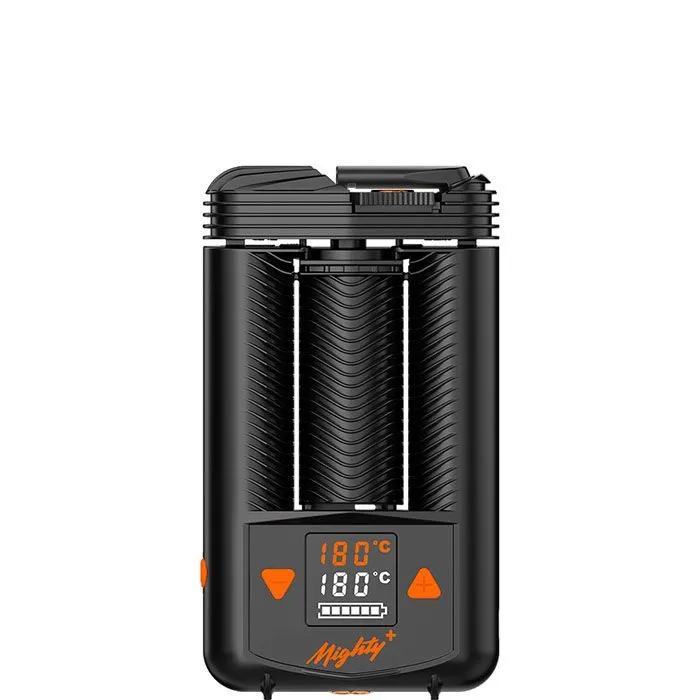
Storz & Bickel is considered a pioneer for medical vaporizers. All devices feature a fully isolated air path made of medical-grade plastic and stainless steel. The Mighty+ and Crafty+ have an improved ceramic heating chamber.
Arizer (Solo 2, Air MAX, Extreme Q)
Arizer consistently uses glass air paths. The glass stems are their trademark and offer one of the purest flavor experiences. The heating chamber consists of ceramic with stainless steel cladding.
DynaVap
DynaVap devices are made entirely of stainless steel and titanium. The entire air path is metallic, guaranteeing it is free from plastics. The titanium models offer faster heat-up times.
Firefly 2+
The Firefly 2+ has an air path made of borosilicate glass and a heating chamber of zirconia ceramic. The convection heating ensures particularly pure flavor.
PAX 3
The PAX 3 uses a stainless steel air path with medical-grade silicone as a seal. The heating chamber is made of stainless steel with a ceramic lid.
How to Identify an Isolated Air Path
Evaluating an air path is fairly straightforward when you know what to look for.
Positive signs include a manufacturer explicitly stating “isolated air path,” material specifications listing glass, stainless steel 316L, ceramic, or PEEK, medical certifications (TUV, CE medical), no plastic smell during first heat-up, and transparent communication about materials used.
Warning signs include no information about air path materials, a low price (under 50 EUR) for convection devices, plastic smell during operation, a heating chamber directly in a plastic housing, or no manufacturer information about isolation.
Cleaning and Maintaining the Air Path
A clean air path is important for flavor and hygiene. Glass parts can be soaked in isopropyl alcohol (at least 90%), with stubborn residue dissolving overnight. Hot water with a drop of dish soap works as an alternative. Stainless steel can be treated with isopropyl alcohol or special vaporizer cleaners, and soaking in hot water helps for heavy soiling. Ceramic is more delicate than glass or metal and should be cleaned gently with a soft brush and isopropyl alcohol. Fine-mesh screens should be replaced regularly, as clogged screens reduce airflow and degrade vapor quality.
Health Aspects
The air path has direct implications for health. With inferior materials, harmful substances can be released at high temperatures, including plasticizers (phthalates) from PVC, formaldehyde from certain adhesives, and heavy metals from cheap solder joints.
Even with high-quality vaporizers, a “burn-off” is recommended: the device is run several times at maximum temperature without material to remove any production residues. Dirty air paths can also harbor bacteria and mold, so regular cleaning every 1-2 weeks is recommended, more frequently for medical use.
Air Path and Temperature Management
The air path also influences vapor temperature. Longer air paths cool the vapor more effectively, which is more pleasant for the airways but can reduce vapor density. Vaporizers like the Mighty have a long cooling path in the mouthpiece. Many vaporizers can be connected to water pipes via adapters, where the water additionally cools and filters the vapor. The longer the air path, the greater the temperature drop between heating chamber and mouthpiece, which can be 20-40°C with convection vaporizers.
Upgrade Options
Many vaporizers can be upgraded with higher-quality accessories. Glass upgrades are available from third-party manufacturers for many devices, often improving flavor and cooling. WPA (Water Pipe Adapter) enable use with bongs, extending the air path and filtering the vapor. Special cooling units like the “Cooling Unit” for Mighty/Crafty extend the air path and improve cooling further.
Conclusion: What to Look for When Buying?
When purchasing a vaporizer, the air path should be an important decision criterion:
- Check materials: Glass, stainless steel 316L, ceramic, or PEEK are optimal
- Confirm isolation: Manufacturers should explicitly state an isolated air path
- Read reviews: Other users often report plastic taste with inferior devices
- Perform burn-off: Recommended even for high-quality devices
- Clean regularly: A clean air path is essential for flavor and health
A high-quality, isolated air path is especially important for medical users and anyone who values pure flavor and maximum safety. Investing in a device with a proven isolated air path pays off in the long run.
Vapor Quality and Air Path Design
Direct vs. Indirect Air Path
With a direct air path, air flows in a straight line from the heating chamber to the mouthpiece. This minimizes contact with other surfaces and optimally preserves flavor. Vaporizers like the Firefly 2+ use this principle. An indirect air path guides the air through bends or chambers, extending the path and cooling the vapor more effectively. The Mighty by Storz & Bickel uses such a design with its characteristic cooling unit.
Convection vs. Conduction Heating
The air path plays a greater role in convection vaporizers since hot air flows through the material. In conduction devices, the material is heated directly, and the air path primarily serves to transport the vapor. Convection offers more even extraction, less risk of combustion, better flavor development at low temperatures, and more efficient use of material.
Materials Science of Air Paths
Titanium vs. Stainless Steel
Titanium is used in premium vaporizers like DynaVap tips. It is lighter than stainless steel, has faster heat transfer, and forms a protective oxide layer against corrosion. However, titanium is more expensive and can form a thin oxide layer at very high temperatures. Stainless steel 316L is the standard for medical devices: cheaper but heavier, with excellent corrosion resistance and no off-gassing at normal vaporizer temperatures.
Quartz Glass vs. Borosilicate Glass
Quartz glass has even higher purity than borosilicate glass and is used in some high-end devices. It is more heat-resistant (up to 1000°C) and has lower thermal expansion. Borosilicate glass is the more practical compromise: sufficiently heat-resistant, easier to process, and more cost-effective. For most applications, it is the optimal choice.
Stainless Steel Grades
Not all stainless steel is equal for vaporizer air paths. The 316L (surgical steel) offers the highest corrosion resistance and is medically approved. The 304 is good quality but less resistant than 316L. The 201 is a budget option that may react when heated.
Ceramic Materials
Ceramic offers unique advantages through even heat distribution and chemical inertness. It is flavor-neutral but susceptible to mechanical damage. Silicon nitride ceramics as an advanced variant resist extreme temperatures above 1400 degrees, feature excellent thermal shock resistance, and have an ultra-smooth surface that does not retain residues.
Air Path Length and Cooling
The length of the air path noticeably influences the vapor experience. Short air paths, found in devices like DynaVap or Pax, deliver more intense, warmer vapor with faster delivery of active compounds and less condensation loss. Long air paths, such as the Arizer Solo with a long stem, produce cooler, gentler vapor that is more pleasant for the lungs and allows more flavor nuances to be perceived.
Common Problems and Solutions
Restricted Airflow
A common problem is restricted airflow due to clogged screens or deposits. Symptoms include heavy draw resistance when inhaling, reduced vapor production, uneven vaporization, and hotter vapor temperature. The solution is regular cleaning every 5-10 uses and replacing screens when discolored or deformed.
Condensation in the Air Path
During longer sessions, condensation can accumulate in the air path. This is normal and not a sign of defect. Regular cleaning prevents buildup.
Temperature Differences
Some users notice temperature differences between draws. This may be due to uneven heating or draw technique. Slow, steady draws provide more consistent results.
Accessories and Extensions
Connecting to water pipes significantly extends the air path. Bubblers offer compact water filters for on-the-go use, bong adapters with 14mm or 18mm joints fit standard bongs, and recyclers provide multiple water filtration for extra smooth vapor. Longer mouthpieces or tubes extend the air path and additionally cool the vapor. Replacement parts including screens, O-rings, replacement heating chambers, mouthpieces, and stems are available for most high-quality vaporizers.
Comparison Table: Air Path Materials
| Material | Temperature Resistance | Flavor | Durability | Price |
|---|---|---|---|---|
| Borosilicate Glass | 500°C | Excellent | Fragile | Medium |
| Stainless Steel 316L | 800°C | Very Good | Very High | Medium |
| Titanium | 600°C | Excellent | Very High | High |
| Zirconia Ceramic | 2000°C | Excellent | High | Very High |
| PEEK | 250°C | Neutral | High | Medium |
Advanced Cooling Systems
Modern vaporizers incorporate various types of heat exchangers:
| Type | Mechanism | Efficiency | Example |
|---|---|---|---|
| Aluminum fins | Passive dissipation | Moderate | Mighty+ |
| Glass beads | Thermal mass | High | Tinymight |
| Steel spiral | Extended surface | High | VapCap |
| Water chamber | Active evaporation | Very high | Volcano Hybrid |
Effective vapor cooling is based on three fundamental principles:
- Conduction: Heat transfer between vapor and solid surfaces like glass or metal
- Convection: Movement of hot vapor through cooler media
- Radiation: Emission of infrared heat to the surroundings, especially effective with dark surfaces
Advanced Air Path Concepts
Thermal Isolation
Thermal isolation prevents heat transfer to the housing. Manufacturers achieve this through double-wall constructions, air gaps as insulators, special plastics like PEEK as heat barriers, and ceramic insulators in the heating area.
Airflow Dynamics
Optimal airflow significantly affects vaporization. Too little airflow causes overheating and uneven extraction, while too much airflow cools the material and reduces efficiency. The optimal resistance requires a slight draw. Air ideally moves in orderly, laminar flow through the device, which is preferred for uniform extraction. Turbulent flow, caused by sharp angles or obstructions, can create hot spots.
Passive vs. Active Air Supply
With passive air supply, the user controls airflow through inhalation, offering intuitive control but variable results depending on technique. Active air supply with a built-in fan delivers constant airflow for more consistent extraction, but gives the user less control.
Device Overview by Air Path Quality
In the premium class, devices like the Storz and Bickel Mighty+ (medically certified, hybrid heating), the Volcano (gold standard for desktop vaporizers), the Arizer Solo 2 (continuous glass air path), and the Firefly 2+ (on-demand with borosilicate glass) offer fully isolated air paths from medical materials.
In the mid-range, good air paths can be found in the XMAX V3 Pro (ceramic chamber, stainless steel air path), the Healthy Rips POTV One (compact with clean air path), and the Arizer ArGo (replaceable glass tubes).
Cleaning and Care in Detail
Different materials require different cleaning agents. Glass is best cleaned with 99% isopropyl alcohol or warm water. Stainless steel handles isopropyl alcohol and specialized cleaners well. Ceramic should be dry-brushed, with caution around liquids. Silicone is best cleaned with warm soapy water, not alcohol.
As a cleaning schedule: empty the chamber and remove residue after each session, clean screens and mouthpiece weekly, perform a deep clean of all components monthly, and check and replace seals quarterly. Ultrasonic cleaners provide thorough cleaning for glass parts.
Preventive Maintenance
A regular maintenance schedule extends the vaporizer’s lifespan significantly:
- Remove all detachable parts
- Soak glass and metal components in isopropyl alcohol for 30 minutes
- Gently brush residues with a soft-bristled brush
- Rinse thoroughly with distilled water
- Dry completely before reassembly
Responsible manufacturers provide certifications guaranteeing exact chemical composition, absence of contaminants like lead or cadmium, emission tests at operating temperatures, and compliance with food safety standards. Wear parts should be replaced every 6-12 months, and connections and seals should be inspected regularly.
Expert Tips for Optimal Use
1. Break in new devices: Three to five heating cycles without material at the highest setting remove production residues.
2. Regular inspection: Regularly check all components for discoloration, cracks, or damage.
3. Proper storage: Store your vaporizer dry and protected from direct sunlight.
4. Temperature adjustment: Start with lower temperatures and slowly increase for the best flavor experience.
5. Quality material: The best air path construction is useless without high-quality source material.
Scientific Perspective
Vapor temperature drops significantly along the air path: directly at the heating element it is 180-220°C, in the middle of the air path 120-150°C, and at the mouthpiece only 40-80°C. This cooling is important for comfortable inhalation. In cooler areas of the air path, active compounds condense, which can lead to up to 10% loss. Regular cleaning prevents buildup, and the condensate can be collected and reused if desired.
When choosing a vaporizer, verify that vapor path materials have been safety tested by reputable manufacturers. Ongoing materials research continues to produce improved vapor path solutions that optimize safety and flavor.
Scientific Sources
- Hazekamp, A. et al. (2006). Evaluation of a Vaporizing Device (Volcano) for the Pulmonary Administration of Tetrahydrocannabinol. Journal of Pharmaceutical Sciences, 95(6), 1308–1317. PubMed 16637053
- Lanz, C. et al. (2016). Medicinal Cannabis: In Vitro Validation of Vaporizers for the Smoke-Free Inhalation of Cannabis. PLoS ONE, 11(1), e0147286. PubMed 26784441
Related Articles: Vaporizer Types · Vaporizers & Health
Frequently Asked Questions
What is an isolated air path?
An isolated air path means the air you inhale only touches food-safe materials (glass, steel, ceramic) and never contacts circuit boards, solder, or plastic components inside the device.
Why does the air path matter?
Without isolation, heated air can pick up microscopic particles from electronics, plastics, or adhesives. An isolated path ensures you inhale only vapor from your herbs, not unwanted byproducts.
Which vaporizers have fully isolated air paths?
The Mighty+, Crafty+, Venty, Arizer Solo 2, Firefly 2+, and Storz & Bickel desktop devices all feature fully isolated air paths with medical-grade materials.
{“@context”:”https://schema.org”,”@type”:”FAQPage”,”mainEntity”:[{“@type”:”Question”,”name”:”What is an isolated air path?”,”acceptedAnswer”:{“@type”:”Answer”,”text”:”An isolated air path means the air you inhale only touches food-safe materials (glass, steel, ceramic) and never contacts circuit boards, solder, or plastic components inside the device.”}},{“@type”:”Question”,”name”:”Why does the air path matter?”,”acceptedAnswer”:{“@type”:”Answer”,”text”:”Without isolation, heated air can pick up microscopic particles from electronics, plastics, or adhesives. An isolated path ensures you inhale only vapor from your herbs, not unwanted byproducts.”}},{“@type”:”Question”,”name”:”Which vaporizers have fully isolated air paths?”,”acceptedAnswer”:{“@type”:”Answer”,”text”:”The Mighty+, Crafty+, Venty, Arizer Solo 2, Firefly 2+, and Storz & Bickel desktop devices all feature fully isolated air paths with medical-grade materials.”}}]}