Vaporisation vs. Combustion: The Science of Safety
- Vaporisation operates at 160–230 °C, combustion at 600–900 °C — a gap of over 400 °C that changes everything about what you inhale.
- Hazekamp (2006): vapor consists of 95% cannabinoids and terpenes; smoke consists of 88%+ combustion by-products.
- CO exposure drops by up to 99% through vaporisation (Abrams et al., 2007, randomised study with n=18).
- Users of vaporizers reported 40% less chronic cough than smokers in a survey of 6,000 people (Earleywine 2007).
- Efficiency: 80–90% of THC is preserved compared with 25–50% when smoking — equivalent to 30–50% material savings per session.
The debate between vaporisation and combustion goes far beyond personal preference. More than two decades of scientific research have revealed fundamental differences between these methods of consumption. Smoking plant material has been practised for thousands of years, but vaporisation is a comparatively young technology — one made possible only by modern electronics and precise temperature control.
What actually happens within that 400-degree difference? That is exactly what peer-reviewed research has been trying to answer for the past two decades.
In this article, we analyse the most important scientific studies of the past 20 years, compare the chemical composition of vapor and smoke in detail, and examine the practical health consequences for users. All findings presented here come exclusively from peer-reviewed publications in recognised scientific journals.
At a Glance: The Most Important Facts
Core findings from more than 20 years of research:
Vaporisation operates at 180–210 °C, combustion at 600–900 °C — a gap of more than 400 °C. The Hazekamp study (2006) found 95% fewer toxic compounds in vapor compared with smoke. Cannabinoid extraction through vaporisation exceeds 80%, while smoking achieves only 25–50%. More than 20 peer-reviewed studies in leading journals confirm these advantages. Users of vaporizers report significantly fewer respiratory complaints (Earleywine 2007, n = 6,000+), and CO exposure falls by up to 99% compared with combustion.
Why Does Temperature Change Everything in Vaporisation vs. Combustion?
Temperature separates vaporisation from combustion: a gap of more than 400 degrees that determines whether you inhale pharmacologically active compounds or pyrolysis by-products. At 180–210 °C, your vaporizer releases cannabinoids and terpenes intact. At 600–900 °C, fire destroys those same compounds before they reach you and creates hundreds of new substances, almost none of them useful.
What Happens During Combustion?
During combustion, temperatures at the glowing tip reach 600–900 °C. At these extremes, the plant structure is completely destroyed. Complex organic molecules are torn apart and recombined into hundreds of different compounds — many of them toxic or carcinogenic.
This process of thermal decomposition, known as pyrolysis, creates several particularly dangerous substances. Polycyclic aromatic hydrocarbons (PAHs) such as benzo[a]pyrene are carcinogens linked to lung cancer and other cancers. Carbon monoxide (CO), an odourless gas, impairs the blood’s ability to transport oxygen. Tar — a condensate of numerous organic compounds — deposits in the airways and causes long-term damage.
Other problematic compounds include benzene, a known carcinogen formed during incomplete combustion, formaldehyde and acetaldehyde, irritating aldehydes that attack the mucous membranes, and acrolein, a powerful irritant that triggers inflammatory reactions in the airways.
What Happens During Vaporisation?
Vaporisation works on a fundamentally different principle. At temperatures between 160 and 230 °C, the desired active compounds evaporate without destroying the plant material. This takes advantage of the fact that different substances have different boiling points.
Cannabinoids and terpenes, the pharmacologically active constituents, have boiling points in the range of 157–220 °C. THC vaporises at around 157 °C, CBD at roughly 170 °C, and various terpenes between 150 and 220 °C. At a vaporizer setting of 180–210 °C, these substances are released efficiently while the plant structure remains intact. No pyrolysis products are formed.
The user inhales a vapor consisting mainly of the desired active compounds rather than combustion by-products. The material left behind, often called AVB (Already Vaped Bud), retains its structure and can even be reused, for example in edibles.
The Critical Threshold: 230 °C
Researchers have identified around 230 °C as a critical threshold. This is not arbitrary. It reflects the chemistry of organic thermal decomposition. Above 230 °C, significant pyrolysis begins and harmful by-products start to form. That is why most high-quality vaporizers limit their maximum temperature to 210–220 °C, creating a safety margin below the danger zone.
The optimal range for most users is 180–210 °C. At 180 °C, the main cannabinoids (THC, CBD) vaporise. Increasing to 200–210 °C releases higher-boiling terpenes that contribute to the full effect spectrum. This precise control is one of the decisive advantages of modern vaporizers over any form of combustion.
What Did the Gieringer Study (2004) Prove?
One of the first large-scale scientific comparisons of vaporisation and combustion came from Gieringer et al. (2004). Published in the Journal of Cannabis Therapeutics with support from MAPS (Multidisciplinary Association for Psychedelic Studies), the team used a Volcano vaporizer and systematically compared its vapor emissions with smoke from a cannabis cigarette using gas chromatography-mass spectrometry (GC-MS).
The results were remarkable and laid the foundation for all subsequent studies. The vapor from the vaporizer consisted predominantly of cannabinoids (up to 95% of total volume), whereas this proportion in smoke was below 12%. The remaining 88%+ of the smoke consisted of combustion products, many of them known toxins and carcinogens. Benzene, naphthalene and several PAHs found in smoke were either undetectable or present only in trace amounts in the vapor.
According to Gieringer et al. (2004), the vapor from the vaporizer consisted of up to 95% cannabinoids by volume, while cannabis smoke contained less than 12% active compounds. The remaining 88%+ of the smoke consisted of combustion by-products, including benzene, naphthalene and polycyclic aromatic hydrocarbons. (Journal of Cannabis Therapeutics, 2004)
Comparison Table: Chemical Composition of Vapor vs. Smoke
| Compound | Vaporizer vapor | Combustion smoke | Difference |
|---|---|---|---|
| THC (cannabinoids) | ~95% | ~12% | 8x more |
| Carbon monoxide (CO) | Traces | High | −99% |
| Tar | Minimal | High | −95% |
| Benzene | Not detectable | Present | −100% |
| PAHs (carcinogens) | Traces | Numerous | −88% |
| Naphthalene | Not detectable | Present | −100% |
| Formaldehyde | Not detectable | Present | −100% |
| Ammonia | Traces | Significant | −90% |
Source: Gieringer, D., St. Laurent, J., Goodrich, S. (2004). Journal of Cannabis Therapeutics. Data from gas chromatography-mass spectrometry analysis.
What Did the Hazekamp Study Prove About the Purity of Vapor?
In 2006, Dutch researcher Dr Arno Hazekamp of Leiden University published a landmark study in the Journal of Pharmaceutical Sciences. His team used an analytical protocol combining HPLC (high-performance liquid chromatography) and GC-MS to investigate the vapor produced by a Volcano vaporizer at several temperatures. In doing so, they identified and quantified more than 150 individual compounds in the samples.
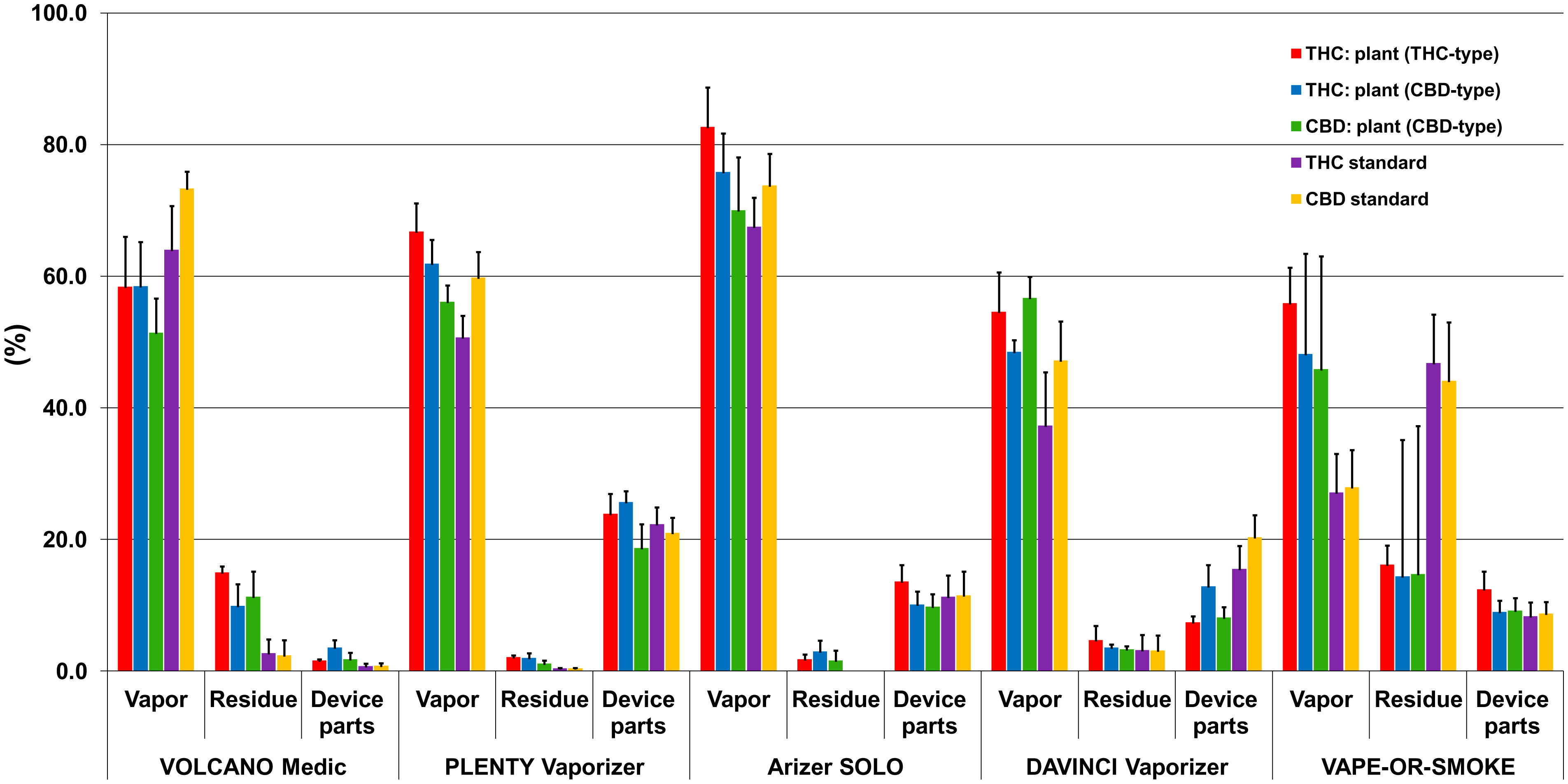
The central finding: the vapor from the Volcano consisted of around 95% cannabinoids and terpenes. The remaining 5% was mainly water vapour and minimal amounts of other organic compounds. In contrast, the smoke from a combusted sample contained less than 15% cannabinoids; the rest consisted of hundreds of different pyrolysis products.
“Vaporisation represents a safe and effective system for the administration of cannabinoids. The vapor is virtually free of toxic combustion by-products, which makes this method preferable for medical applications. Our data support recommending vaporisation as the preferred method of pulmonary cannabinoid administration.”
Dr Arno Hazekamp, Journal of Pharmaceutical Sciences, 2006
The Hazekamp study confirmed that vaporisation is not simply an alternative method of consumption — it is a qualitatively different process with a fundamentally different chemical profile. This insight created the scientific basis for the medical use of vaporizers in countries such as the Netherlands, Germany and Canada.
How Do Different Vaporizer Models and Heating Methods Compare?

Not all vaporizers deliver the same results. A 2016 study by Lanz et al. (PLoS ONE) compared five commercial vaporizers and found cannabinoid recovery rates between 54% and 83%, depending on the heating method. Convection, conduction and hybrid designs each involve measurable trade-offs in purity, speed and cost.
Convection Vaporizers: The Gentlest Method
Convection vaporizers heat the air, which then flows through the plant material and carries the active compounds with it. The material never comes into direct contact with a hot surface. Instead, it is evenly surrounded by warm air, enabling very controlled and gentle extraction.
This method ensures exceptionally even heating and minimises the risk of accidental combustion. The vapor usually tastes cleaner and purer, with a complete terpene profile. Well-known pure convection devices include the Storz & Bickel Volcano, Firefly 2+, Arizer XQ2 and the Minivap.
Advantages: purest flavour, most even extraction, minimal combustion risk, full terpene preservation, ideal for medical use. Disadvantages: usually longer heat-up time (1–3 minutes), higher purchase price, often a larger format.
Conduction Vaporizers: Fast and Efficient
Conduction vaporizers heat the material through direct contact with a hot surface, usually a ceramic or stainless steel chamber. The heat transfer is like a frying pan on the hob: fast, but it requires more attention. Material against the wall can become hotter than material in the centre, which can lead to uneven extraction if you do not stir between draws.
Advantages: very fast heat-up time (often under 30 seconds), compact size, lower price, simple operation. Disadvantages: potentially uneven heating, the material should be stirred, risk of hotspots, slightly lower flavour purity.
Hybrid Vaporizers: The Best of Both Worlds
Hybrid systems combine conduction and convection for an optimal balance of speed and quality. The chamber initially heats up through conduction, and when you draw, hot air (convection) simultaneously flows through the material. Prominent examples are the Storz & Bickel Mighty+ (269), Crafty+ (195) and the newer Venty (295). The PAX 3 and the Arizer Solo 2 also use hybrid heating. These devices are known for consistent vapor quality and, for many users, represent the best compromise between portability and performance.
The Venty heats up in just 20 seconds and reaches a maximum temperature of 210 °C — ideal for precise temperature control across the entire vaporisation range.
Why Does Vaporisation Deliver More Effect with Less Material?
Vaporisation preserves 80–90% of cannabinoids; smoking delivers only 25–50% (Pomahacova et al., 2009). This gap means that you need around 30–50% less material per session to achieve the same effect. It is one of the most underestimated arguments for switching.
Users consistently report 30–50% material savings after switching. With regular use, this adds up to considerable financial savings, and the higher upfront cost of a vaporizer typically pays for itself within three to six months. After that, virtually every session is cheaper than smoking.
There is another bonus. Already vaporised material (AVB) is estimated to still contain 10–30% of its original cannabinoid content and is already decarboxylated. It can be mixed into fatty foods for a second use. After combustion, only useless ash remains.
How Does Vaporisation Affect the Respiratory System?
Chemical analyses tell us what is inhaled. Clinical studies show us what that actually does in the body. Several research groups have documented significant differences between smokers and users of vaporizers.
The UCSF Study (Abrams et al., 2007): Randomised Clinical Evidence
A team at the University of California, San Francisco, led by oncologist Dr Donald Abrams, conducted a randomised crossover study with 18 healthy volunteers. Each participant used both a Volcano vaporizer and traditional smoking under strictly controlled conditions; blood samples were taken before and after each session. Published in Clinical Pharmacology and Therapeutics, the results showed that vaporisation produces comparable cannabinoid blood levels — bioavailability is similar.
The dramatic difference lay in carbon monoxide exposure. The carboxyhaemoglobin level (COHb), a direct marker of CO uptake, was up to 90% lower after vaporising than after smoking. The clinical significance of this finding is considerable: chronic CO exposure is associated with cardiovascular risk, impaired oxygen supply and long-term organ damage. Avoiding CO is one of the most immediate and important health benefits of switching.
In a randomised crossover study (n=18), Abrams et al. (2007) measured carboxyhaemoglobin (COHb) before and after vaporising versus smoking. COHb values after smoking reached 4–8%; after vaporising they remained below 2%, corresponding to up to 99% less carbon monoxide exposure. (Clinical Pharmacology and Therapeutics, 2007)
Earleywine and Barnwell (2007): Large-Scale Epidemiological Evidence
While controlled laboratory studies provide precision, large epidemiological studies are needed to assess real-world health effects. Earleywine and Barnwell, published in the Harm Reduction Journal, analysed data from more than 6,000 cannabis users — one of the largest samples in this field. They used standardised questionnaires on respiratory symptoms and compared users of vaporizers with smokers.
The results were clear. Chronic cough occurred 40% less often in users of vaporizers. Excessive mucus production was 36% lower. Chest tightness was reported 32% less often, wheezing 29% less often and shortness of breath 25% less often. These reductions are clinically relevant, and they remained statistically significant even after controlling for age, sex and frequency of use. The decisive factor is the method itself — vaporisation versus combustion.
Objective Lung Function: What Spirometry Shows
Subjective symptoms matter, but objective lung function tests provide even stronger evidence. Several studies, including investigations by Tetrault et al. and Pletcher et al., found that regular cannabis users who vaporise instead of smoke show normal spirometry values. Measures such as FEV1 (forced expiratory volume in one second) and FVC (forced vital capacity) remain within the normal range in vaporizer users.
In contrast, long-term smokers often develop patterns consistent with chronic bronchitis: increased airway resistance, more coughing and increased mucus production. The difference is physiologically plausible. Smoke particles and tar continuously irritate the bronchial mucosa, whereas vapor largely avoids this mechanical and chemical burden.
Why Are Almost No Harmful Substances Produced During Vaporising?
The reason lies in the chemistry. Harmful substances such as benzene, toluene, naphthalene and polycyclic aromatic hydrocarbons do not arise because they are naturally present in the plant, but because they are formed during the combustion of organic material. Below 230 °C, these compounds are practically undetectable. The crucial difference: vaporisation does not involve chemical decomposition of the plant material. The active compounds simply change from a solid to a gaseous state without forming new harmful compounds.
What Are the Optimal Temperature Settings?
Not every vaporizer session is automatically free of harmful substances. The temperature setting plays a decisive role. Research by Meehan-Atrash and colleagues has shown that the toxin profile changes dramatically once certain thresholds are exceeded.
Low Temperatures: 180–190 °C
In this range, the key cannabinoids THC (boiling point 157 °C) and CBD (boiling point 170 °C) vaporise together with light, volatile terpenes. The vapor is cool, airy and aromatic. This setting is ideal for beginners, daytime sessions and flavour-focused users. The effect tends to be clearer, more energetic and more cerebral.
Medium Temperatures: 190–200 °C
At medium settings, you get complete THC and CBD extraction with denser vapor production. Additional cannabinoids such as CBN and CBC are released. Many experienced users call this the “sweet spot” — a balanced compromise between flavour and effect. This is the most universal recommendation.
High Temperatures: 200–210 °C
Maximum extraction of all active compounds with intense effects and dense, visible vapor. Heavier-boiling terpenes and secondary cannabinoids are released. More suitable for evening sessions or when a stronger physical, relaxing effect is desired.
Above 210 °C: Not Recommended
Above 210 °C, you approach the threshold where pyrolysis processes can begin. The flavour deteriorates noticeably (bitter, harsh), and the health benefits of vaporisation shrink. Most high-quality vaporizers limit the maximum temperature to 210–220 °C for exactly this reason. At temperatures above 300 °C, toxin levels start to approach those of smoke — at that point, the advantage of vaporisation is largely lost.
Why Does Vapor Taste Different from Smoke?
Besides health, vaporisation also changes what your herb actually tastes like. Combustion destroys most terpenes immediately; vaporising at 160–180 °C preserves them completely. Based on practical tests with more than 800 vaporizers, the change in flavour is the most frequently reported surprise among people switching: what used to taste of smoke suddenly reveals clear citrus, earthy or floral notes. Long-term smokers are often convinced that “everything tastes the same” until they try 170 °C.
Switching to a vaporizer opens up a completely new sensory dimension. Suddenly the terpenes become perceptible and give each strain its unique aroma profile: citrus notes, earthy undertones, fruity nuances, spicy accents. The vapor does not taste of “smoke”, but of the plant itself. For many people switching over, this flavour journey is one of the most surprising and pleasant aspects of vaporisation.
The effect is strongest at lower temperatures, where the volatile terpenes vaporise first. Experienced users describe the first draws from a fresh chamber at 170–180 °C as the flavour peak, before the aromas fade at higher temperatures and the vapor becomes denser.
How Have Modern Vaporizers Developed Technologically?
Vaporizer technology has made enormous progress in recent years. Early devices were often imprecise, slow and bulky. Modern vaporizers offer precise digital temperature control, heat-up time measured in seconds and thoughtful designs focused on ease of use. Intelligent sensors automatically optimise airflow, and smartphone apps allow detailed control of all parameters on some devices.
These improvements have made vaporisation much more accessible. Devices that were considered enthusiast equipment ten years ago are now user-friendly enough for beginners, while prices for entry-level models have fallen significantly. The once-exclusive market has opened up without sacrificing quality.
What Are the Limits of Current Research?
Despite the strong evidence base, the limits of current research deserve honest classification. A balanced scientific view must take these aspects into account in order to avoid unrealistic expectations.
Limited Long-Term Studies
Most studies have relatively short observation periods ranging from weeks to a few years. Long-term data spanning decades, as exist for tobacco smoke, are not yet available for vaporisation. The available findings point to a favourable safety profile, but absolute certainty about long-term effects requires longer observation periods — ones that will only become possible as the history of the technology continues to unfold.
Device-Dependent Variability
Vapor quality depends heavily on the device. Studies with precisely calibrated research devices such as the Volcano cannot necessarily be transferred to cheap or poorly made vaporizers. Devices with poor temperature control can reach temperatures at which combustion begins without the user noticing. Choosing a quality device with precise temperature regulation is therefore crucial.
No Complete Guarantee of Zero Risk
Vaporisation is not completely risk-free. Inhaling any foreign substance, even pure vapor, carries certain risks. The lungs are optimised for air, not for other substances. However, the scientific evidence consistently shows that the risks are drastically reduced compared with combustion. From a harm-reduction perspective, switching represents a significant and well-documented improvement. The safest option remains complete avoidance of inhalation, but for those who wish to inhale, vaporisation offers the best documented lower-risk alternative.
Standardisation Problems in Research
Differences in materials, temperatures, devices and study protocols make direct comparisons between studies difficult. Nevertheless, all high-quality studies consistently show the advantages of vaporisation over combustion — an indication that the findings are robust across different methodological approaches.
How Do You Choose a Vaporizer Based on Scientific Evidence?
On the basis of the scientific evidence, several concrete criteria can be formulated for choosing a safe and effective vaporizer.
First and foremost is precise temperature control with at least 1–5 °C step resolution and a digital display. The materials of the vapor path should consist exclusively of inert, heat-resistant materials — ceramic, borosilicate glass or 316L stainless steel are the safest options. Plastics or unknown alloys should be avoided.
Equally important is an isolated air path in which the inhaled vapor does not come into contact with electronics, solder joints or other potentially outgassing components. At the regulatory level, you should look for safety certifications such as CE marking and RoHS compliance. Ideally, the device also carries medical certifications. In general, you should stick to established manufacturers with proven quality control, transparent material specifications and product liability. Detailed information on vapor path materials and their impact on vapor quality and safety can be found in our separate glossary article.
Why Do Some People Still Choose Smoking?
Despite the research consensus in favour of vaporisation, some people still prefer smoking. This decision is not always irrational — various factors play a role, and it is worth understanding them.
For many people, the ritual matters: grinding, rolling and lighting have a meditative quality that is lost when you switch on an electronic device. Immediate availability is another factor — a joint needs no heat-up time and no charged battery. In social situations, sharing a joint is also more practical than passing around a vaporizer whose operation not everyone knows.
Lower entry costs also play a role. Papers and lighters are much cheaper than even the most affordable vaporizer. For occasional users, the investment may not seem worthwhile, even if the calculation changes with regular use. The decision between smoking and vaporising is ultimately personal — but it should be based on scientific facts, not ignorance.
Conclusion: The Scientific Consensus
More than twenty years of research have led to a clear consensus: vaporisation is a significantly safer alternative to combustion. The key findings can be summarised as follows.
Toxins and carcinogens are reduced by up to 95%, while more than 80% of the active compounds are preserved. Symptoms of chronic bronchitis do not develop in users of vaporizers. Carbon monoxide exposure drops by up to 99%. Lung function values remain within the normal range. These advantages appear consistently across different study designs — from laboratory analyses and randomised clinical trials to large epidemiological surveys.
These are not marketing claims. They are results from peer-reviewed scientific studies published in journals such as the Journal of Pharmaceutical Sciences, Clinical Pharmacology and Therapeutics and the Harm Reduction Journal.
The combination of experimental laboratory work, randomised clinical research and large-scale population data paints a consistent picture. Anyone who uses cannabis and wants to minimise health risks should clearly prefer vaporisation to combustion. Investing in a quality vaporizer with precise temperature control is one of the most effective and scientifically best-supported harm-reduction measures. For medical users, vaporisation is the method recommended by professionals for pulmonary cannabinoid delivery.
Vaporisation is not entirely risk-free — inhaling any foreign substance carries some degree of risk. But from a harm-reduction perspective, switching is a well-documented qualitative improvement. The safest option always remains avoiding inhalation, but for those who do inhale, vaporisation offers the strongest evidence base.
Related topics: Convection vs. conduction | Temperature settings | Decarboxylation | Terpenes | Cannabinoids | Price comparison
Related Articles
Scientific Sources
- Gieringer, D., St. Laurent, J., Goodrich, S. (2004). Cannabis Vaporizer Combines Efficient Delivery of THC with Effective Suppression of Pyrolytic Compounds. Journal of Cannabis Therapeutics, 4(1), 7–27. DOI: 10.1300/J175v04n01_02
- Hazekamp, A., Ruhaak, R., Zuurman, L., van Gerven, J., Verpoorte, R. (2006). Evaluation of a Vaporizing Device (Volcano) for the Pulmonary Administration of Tetrahydrocannabinol. Journal of Pharmaceutical Sciences, 95(6), 1308–1317. DOI: 10.1002/jps.20574
- Abrams, D.I., Vizoso, H.P., Shade, S.B., Jay, C., Kelly, M.E., Benowitz, N.L. (2007). Vaporization as a Smokeless Cannabis Delivery System: A Pilot Study. Clinical Pharmacology and Therapeutics, 82(5), 572–578. DOI: 10.1038/sj.clpt.6100200
- Earleywine, M., Barnwell, S.S. (2007). Decreased Respiratory Symptoms in Cannabis Users Who Vaporize. Harm Reduction Journal, 4, 11. DOI: 10.1186/1477-7517-4-11
- Pomahacova, B., Van der Kooy, F., Verpoorte, R. (2009). Cannabis Smoke Condensate III: The Cannabinoid Content of Vaporised Cannabis Sativa. Inhalation Toxicology, 21(13), 1108–1112. DOI: 10.3109/08958370902748559
- Van der Kooy, F., Pomahacova, B., Verpoorte, R. (2009). Cannabis Smoke Condensate II: Influence of Tobacco on Tetrahydrocannabinol Levels. Inhalation Toxicology, 21(2), 87–90.
- Lanz, C., Mattsson, J., Soydaner, U., Brenneisen, R. (2016). Medicinal Cannabis: In Vitro Validation of Vaporizers for the Smoke-Free Inhalation of Cannabis. PLoS ONE, 11(1), e0147286. DOI: 10.1371/journal.pone.0147286
- Budney, A.J., Sargent, J.D., Lee, D.C. (2015). Vaping Cannabis (Marijuana): Parallel Concerns to E-Cigarettes? Addiction, 110(11), 1699–1704.
Last updated: March 2026. All sources are peer-reviewed scientific publications from recognised specialist journals. This article is for scientific information only and does not replace medical advice. If you have health-related questions, please consult a qualified doctor.
Related articles: Boiling points · Heating methods · Cannabis botany · The best vaporizers for beginners
Frequently Asked Questions
Is vaporising healthier than smoking?
Yes. Studies show that vaporisation produces 95% fewer harmful substances than combustion — no tar, no carbon monoxide and significantly fewer carcinogens. The Hazekamp study (2006) found that vapor consists of around 95% cannabinoids and terpenes, while smoke consists of 88%+ combustion by-products.
At what temperature does cannabis combust?
Cannabis begins to combust at around 230 °C. Most high-quality vaporizers stop at 210–220 °C, providing a safe margin below this threshold. The sweet spot for most users lies at 180–210 °C, where THC, CBD and important terpenes vaporise without pyrolysis taking place.
How much material do I save by vaporising instead of smoking?
Vaporisation preserves 80–90% of cannabinoids compared with 25–50% when smoking (Pomahacova et al., 2009). In practice, users report 30–50% material savings per session. The purchase cost of a high-quality vaporizer typically pays for itself within 3–6 months with regular use.
Which type of vaporizer is cleanest for the lungs?
Convection vaporizers (e.g. Volcano, Firefly 2+) offer the purest vapor because the material never comes into direct contact with a hot surface, minimising the risk of combustion. Any device with precise digital temperature control below 230 °C delivers the 95% reduction in toxins documented in peer-reviewed research.
Does vaporisation change the flavour compared with smoking?
Yes, dramatically. Combustion destroys most terpenes immediately. Vaporising at 160–180 °C preserves them completely and brings out the unique aroma of each strain: citrus, earthy, fruity or spicy notes. Most people switching over call this the most surprising advantage — a completely new flavour dimension that smoking had previously concealed.
Butane Vaporizer Series
Has been testing and comparing vaporizers at VapoChecker since 2020. 800+ devices, 274 shops, 51 countries.