DynaVap Technique Guide — Better vapor with the right technique
You’ve got your DynaVap in your hand, a lighter next to it, and somehow the first attempt doesn’t give you much. Or you combust your herb. Or the click never comes. Happens to a lot of people at the start. The good news: the DynaVap isn’t a complicated device — it just needs a technique you understand once, and then everything clicks into place (pun intended).
This guide walks you through what physically happens when you heat, where to hold the flame, how to control airflow and packing, and which mistakes most beginners (and some experienced users) keep making.
What happens at the click — and why it matters
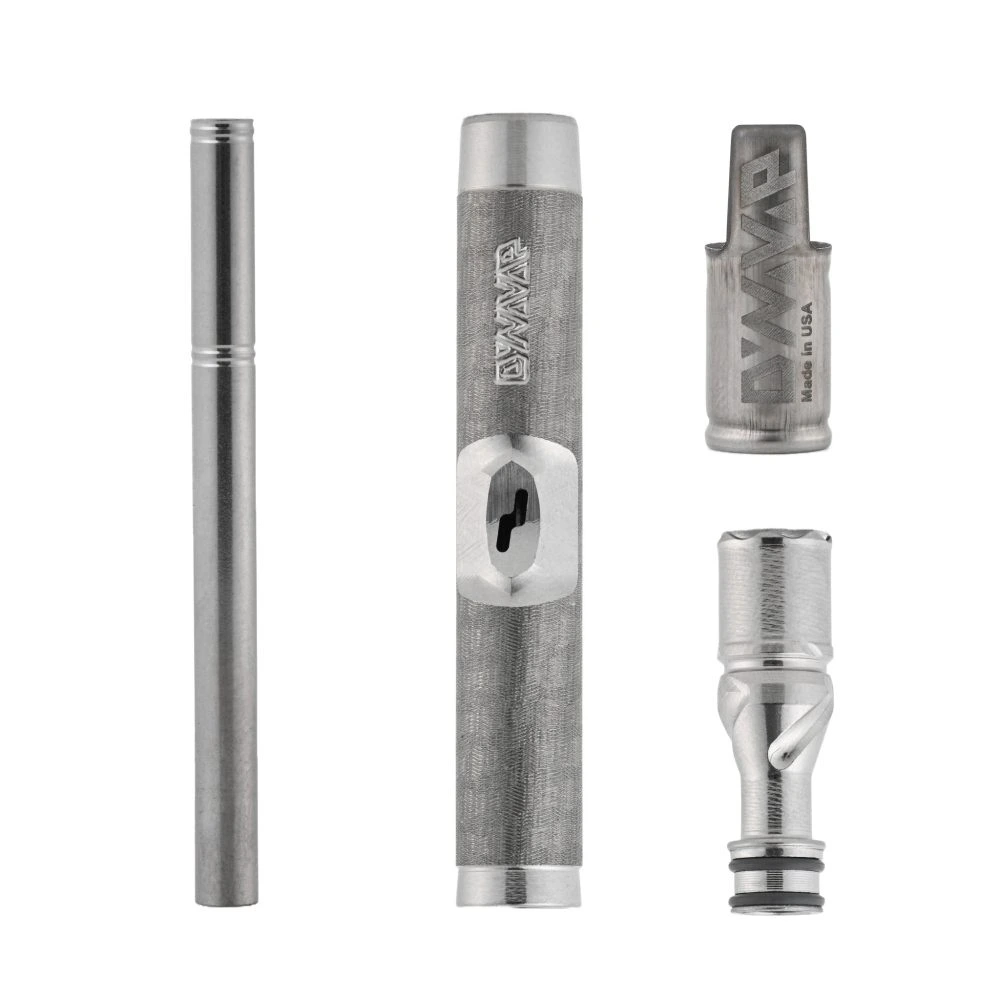
The DynaVap has a thermal indicator cap made of stainless steel. Inside that cap sits a small bimetallic spring. When you heat it, the two metal layers expand at different rates — and at a certain temperature, the spring snaps over. That’s the click.
This click tells you: the temperature is now in the optimal range. For most herbs that’s somewhere between 185°C and 210°C, depending on exactly where you heat and how fast. When you hear the click, you pull the flame away immediately and draw.
The second click — the cooling click — comes when the cap cools back down and the spring snaps back. That’s your signal: if you want another hit, you’re ready to heat again. Or you’re done.
Respect the Click isn’t just a community slogan. It’s literally the instruction manual for the device.
Where you heat — tip, middle, base of the cap
This is where most beginners go wrong. The position of your flame determines what happens inside the chamber.
Tip of the cap: This is where the cap is thinnest. If you heat directly at the tip, the click comes quickly — within 5–8 seconds with a single jet. The temperature is higher than when you heat the base, and you get more clouds. Good for strong hits, but watch yourself: too long and you overheat.
Middle of the cap: The standard zone for most users. Even heat distribution, reasonably fast click, solid balance between flavor and vapor volume. If you’re new, start here.
Base of the cap (near the body): Slower, more gradual build-up. The heat spreads over the full content of the chamber. More flavor, less punch. Good for low-temp extraction and for users who prefer a gentler approach.
A general rule: the further from the tip you heat, the softer and more aromatic the hit. The closer to the tip, the more intense and immediate.
Single flame vs. multiple flames
Which lighter you use changes the experience significantly.
Single jet: The classic choice. You have full control, can aim precisely at specific spots on the cap, and manage temperature better. The build-up is slower — 10–20 seconds to the click depending on distance. More time means more evenness. For flavor chasers this is often the first choice.
Triple jet: Faster, hotter, less precise. The click comes in 5–8 seconds. Good when you want speed or you’re outside in the wind. The downside: it’s easier to miss the click or run too hot if the flame gets too close.
Induction heater: No lighter, electric coil. Repeatable results, no butane smell, very fast. The most convenient option for home use. Technically no longer a butane vaporizer, but the DynaVap is built for it.
For starting out: single jet, 2–3 cm distance, rotate slowly. Rotating matters — more on that in a moment.
Airflow control: the carb hole trick
On the DynaVap body — more or less prominent depending on the model — you’ll find a small hole called the airport or carb hole. That’s your airflow control.
Carb hole open: More air comes in, the draw becomes lighter, the chamber cools a bit faster through air mixing. The vapor is less concentrated but cooler and smoother.
Carb hole closed (thumb over it): More pressure, the vapor from the chamber comes straight through the body to you. More intense, warmer, denser. For short strong hits.
Many users play with it mid-draw: hold it shut for the first part, then open it to cool. It sounds more complicated than it is — after a few sessions you’ll do it automatically.
Packing technique: loose, tight, half-filled
How you pack affects airflow, evenness, and how much you need per session.
Loosely packed: Good for airflow, the herb heats evenly throughout. Easy draw. Downside: smaller amount, particles can shift. Works well for flavor sessions.
Tightly packed: More herb, more intense sessions. But airflow suffers and even heating becomes harder. If you pack too tight, you get uneven extraction — scorched at the top, barely touched at the bottom.
Half-bowl: For many users this is the sweet spot. You only fill half the chamber and leave the rest empty — or layer it: finer grind at the bottom, coarser at the top. Less herb per session, less consumption overall, but more complete extraction. The screen keeps everything in place.
Generally: medium grind. Too fine and material wanders into the body. Too coarse and extraction is incomplete.
Temperature surfing — flavor vs. clouds
This is the advanced topic that makes the DynaVap so interesting. You don’t have to wait for the click. You can feel your way toward the temperature.
Stop just before the click: Draw before you hear the click. The temperature is lower, you get less vapor, but the flavor is noticeably more intense. Terpenes come through first, before the heavier extraction kicks in. Ideal for the first one or two hits of a fresh load.
Wait for the click, draw immediately: Standard. Good balance.
Keep heating a moment after the click: You’re going past the optimal range. More clouds, less flavor, and you’re heading toward combustion territory. Watch out: this is where the line between vaporizing and burning sits. If the vapor gets harsh or it smells burnt, you’ve gone too far.
The goal is to know where that line is — and then stay deliberately below it or cross it intentionally, depending on what you’re after.
Using a bong or water filter
With the right adapter, the DynaVap fits into many bongs and bubblers. This changes the experience quite a bit.
Water cools and filters the vapor. That allows for bigger hits without harshness. You can also ease the draw — water provides softer resistance than pulling direct.
Things to keep in mind: Using a water pipe means losing some airflow control through the carb hole. Also, more condenses on the walls. If you use a bubbler, don’t overfill it with water — you’ll get splashback.
For the DynaVap M and newer models there are official adapters. Third-party 10mm adapters also work well as long as the fit is right.
The most common mistakes
1. Overheating: Flame too close, too long, no rotation. The cap glows, it smells burnt, the first hit is harsh. Fix: more distance, heat slower, don’t forget to rotate.
2. Wrong angle: Holding the DynaVap upright like a joint? The herb falls into the body. Better to hold it horizontal or slightly tilted down so the herb stays in the chamber.
3. Ignoring the cooling click: You hear the first click, draw, but don’t pay attention to the second one. Then you heat again while the chamber is still hot — leading to overheating on the next round. Wait for the second click and you’ll know you’re ready.
4. Packed too tight: No airflow, uneven extraction, difficult draw. Fill it lightly, don’t stuff it.
5. No rotation while heating: Holding the flame still only heats one side of the cap. Rotate the device evenly between your fingers while you heat. That gives you even temperature distribution across the whole cap.
Advanced tips
Double heat: After the first hit, without reloading, heat immediately again. The residual warmth in the chamber often makes the second hit more intense than the first. Works well when there’s still something left.
Low-temp extraction: Extremely slow heating with maximum flame distance. Click comes after 25–30 seconds. The hit is thin, almost invisible — but the flavor is outstanding. This is the method for people who are really chasing terpenes.
Spinning technique: Instead of rotating the device between your fingers, hold it still and move the flame in a circle around the cap. Same principle, different motor pattern. Some people find it more stable.
Vaporizer digging: Between hits you can loosen the herb in the chamber with a small tool (some models include a built-in scoop). This improves airflow and leads to more even extraction on the second heat.
Wrap-up
The DynaVap isn’t a device you just switch on and draw from. It’s a tool that responds to your technique. Heat slowly, rotate, and pay attention to the click — and you’ll get results that many electric devices can’t match, all with a lighter and stainless steel.
The learning curve is real but short. Usually three to five sessions is all it takes before the right movements start happening naturally. After that you’ll wonder why you ever used anything else.
If you don’t have a DynaVap yet or want to compare different models: price comparison at vapochecker.com
Current Prices
{
“@context”: “https://schema.org”,
“@type”: “FAQPage”,
“mainEntity”: [
{
“@type”: “Question”,
“name”: “Where should you heat the DynaVap cap?”,
“acceptedAnswer”: {
“@type”: “Answer”,
“text”: “For mild vapor, heat the tip of the cap. For denser clouds, heat the middle to base area. Keep the flame about 1 cm away and rotate the DynaVap evenly between your fingers.”
}
},
{
“@type”: “Question”,
“name”: “How do you get thicker clouds from a DynaVap?”,
“acceptedAnswer”: {
“@type”: “Answer”,
“text”: “Heat the cap lower toward the base, wait 1-2 seconds past the click, and partially cover the airport. A slower, stronger draw produces denser vapor than quick puffs.”
}
},
{
“@type”: “Question”,
“name”: “What does the DynaVap click mean and when should you draw?”,
“acceptedAnswer”: {
“@type”: “Answer”,
“text”: “The click signals that optimal temperature has been reached. Draw right after the click for milder results or wait 1-2 seconds past the click for more intense vapor. The cool-down click indicates you can reheat.”
}
}
]
}