- Typical capacity: 0.1-0.2g per capsule
- Advantages: Clean chamber, faster heat-up, pre-dosable
- Cleaning: Less frequent, capsules are swapped
- Compatible: Mighty, Crafty, Solo 2, Arizer, PAX
Dosing Capsules: Cleaner and More Efficient Vaping
Dosing Capsules: Precision and Cleanliness in Vaporizing
Dosing capsules are small metal containers that you pre-fill with material and then insert into your vaporizer’s heating chamber. What initially seems like unnecessary accessories can fundamentally improve the user experience.
How Dosing Capsules Work
A dosing capsule is essentially a perforated metal cylinder made of stainless steel or aluminum. You fill it at home at your leisure, close it with a lid, and take several prepared capsules with you. On the go, you simply insert a capsule – done.
The perforation ensures that air can flow through the material, while the capsule itself prevents direct contact between material and chamber wall.
Everyday Benefits
Cleanliness: The heating chamber stays virtually residue-free. Oily deposits and plant material remain in the capsule. This significantly reduces cleaning effort.
Consistent Dosing: Each capsule contains the same amount – ideal for medical users or anyone wanting to control their dose.
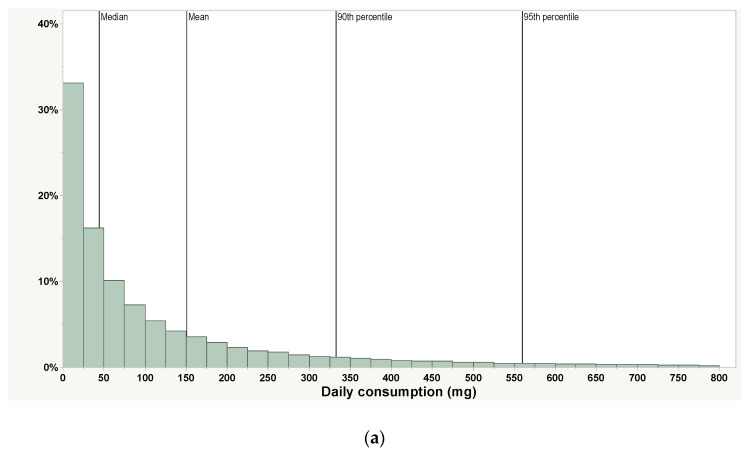
Source: Holt et al. (2022), Toxics, CC-BY 4.0
What does the chart show? This graph compares different consumption methods. Dosing capsules enable precise, repeatable dosing – unlike freely filling the chamber, where amounts often vary. The consistent bars with capsule usage show: every session delivers consistent results.
The adjacent graph from a study with over 54,000 PAX Era users shows: Daily consumption varies enormously between individuals. Dosing capsules help you track and optimize your own usage.
Mobility: Several pre-filled capsules in a small case are discreet and practical for on-the-go use.
Quick Swapping: Capsule out, new one in – no handling material in public.
Compatibility
Not every vaporizer supports dosing capsules. Storz & Bickel offers capsules for the Mighty+, Crafty+, and Volcano Hybrid, with a 40-capsule magazine available. Arizer supports capsules in the ArGo, Air series, and Solo series when used with stems. The Xmax V3 Pro and Starry work with universal capsules, while Fenix Pro and Mini use their own capsule system.
Tips for Optimal Use
Do not pack capsules too tight – air needs to flow through, so fill loosely and press lightly. For best flavor, grind fresh and fill capsules shortly before use. Many manufacturers offer keychain holders or cases for 4-8 capsules, which are perfect for transport. And remember to clean your capsules regularly with an occasional isopropyl alcohol bath to maintain performance and taste.
Dosing capsules aren’t a must, but for many users they’re a game-changer – especially for those who use their vaporizer on the go or at work.
Frequently Asked Questions
How much material fits in a dosing capsule?
Most dosing capsules hold about 0.1 to 0.15 grams of finely ground material. Storz & Bickel capsules (Mighty/Crafty) fit approximately 0.1g, while larger capsules like those for the Arizer ArGo can hold up to 0.15g.
Can I reuse dosing capsules?
Yes, dosing capsules are reusable. After use, simply empty them, soak in isopropyl alcohol if needed, let dry, and refill. With proper care, they last for several hundred cycles.
Do dosing capsules affect vapor quality?
Vapor quality is nearly identical. Some users report slightly less vapor since capsule walls absorb some heat. The difference is barely noticeable in practice, and the benefits far outweigh this minor drawback.
Which vaporizers are compatible with dosing capsules?
Official capsule systems exist for: Storz & Bickel (Mighty, Crafty, Volcano), Arizer (Solo, Air, ArGo with stems), Xmax/Starry, Fenix Pro/Mini, PAX (with accessories), and Boundless (CF/CFX). Universal capsules often fit multiple devices.
Types of Dosing Capsules
Metal capsules (typically stainless steel or aluminum) are the most common type. They conduct heat well and are extremely durable. The Storz & Bickel capsules for the Mighty/Crafty series are the industry standard, holding approximately 0.15g of material.
Ceramic capsules offer potentially purer flavor as they dont conduct heat as aggressively as metal. However, they are more fragile and less common. Some boutique manufacturers offer ceramic options for specific vaporizers.
Capsule magazines or holders let you pre-load multiple capsules for a day or trip. The Mighty+ comes with a capsule magazine holding 8 capsules, and third-party options offer even more capacity.
Best Practices for Capsule Use
Grind consistency matters even more with capsules due to the limited space. A medium-fine grind works best for most capsule systems. Too coarse and you waste space; too fine and airflow becomes restricted.
Dont overpack the capsules. Leave a small gap at the top for air circulation. Tightly packed capsules restrict airflow and lead to uneven extraction. Fill to about 80-90% capacity for optimal results.
Cleaning is straightforward – soak used capsules in isopropyl alcohol, rinse thoroughly, and let dry completely before reuse. Many users have two sets and rotate them for continuous availability.
Capsule Compatibility Guide
The Storz & Bickel Dosing Capsule System is the most widely adopted, compatible with the Mighty, Mighty+, Crafty, and Crafty+. Third-party manufacturers also produce compatible capsules at lower prices, though quality varies.
Other vaporizers with capsule systems include the Volcano (with the dosing capsule adapter), PAX (half-pack lid serves similar function), and various units from Boundless, XVape, and others. Always verify compatibility before purchasing third-party capsules.
Related Articles: Session vs. On-Demand · Heating Methods · Best Session Vaporizers · Best for Microdosing
Frequently Asked Questions
Which vaporizer do you recommend for beginners? The Arizer Solo 2 and Crafty+ offer an excellent balance of ease of use and vapor quality. For budget-conscious beginners, the XMAX V3 Pro is a good choice with surprising quality at its price point.
How often should I clean my vaporizer? Basic cleaning after each session (brushing out the chamber) and thorough cleaning with isopropyl alcohol once a week keeps your device in top condition and ensures optimal performance.
Can I use my vaporizer on the go? Yes, portable vaporizers are designed for exactly that. Look for discrete models like the PAX 3 and always carry charged spare batteries or pre-loaded dosing capsules for convenience.
What is the ideal temperature for beginners? Start around 180°C (356°F). This temperature provides a good entry point with pleasant flavor and moderate effects. You can adjust temperature later based on preference and experience.
How long does a typical vaporizer last? High-quality devices from brands like Storz & Bickel or Arizer can last 5-10 years or longer with proper care. Less expensive models often have a lifespan of 1-3 years before issues arise.
Conclusion
Choosing the right vaporizer and accessories depends on your personal preferences and usage habits. Invest in quality – a good vaporizer makes a real difference in flavor, efficiency, and longevity. Use our price comparison tool to find the best deals on your desired device.
Important Safety Summary
Always use manufacturer-recommended chargers, avoid extreme temperatures, and never use visibly damaged batteries. When in doubt, replace old batteries with quality cells from reputable vendors. Your safety is worth the investment in proper battery care.Detailed Safety Guidelines for Lithium-Ion Batteries
Chemistry and Hazard Potential
Lithium-ion batteries store significant amounts of energy in a compact form. This high energy density makes them ideal for portable devices but also carries risks. The chemical reactions inside are exothermic and can get out of control under certain circumstances. The most dangerous scenario is “thermal runaway” – an uncontrolled chain reaction where the cell heats itself and, in the worst case, catches fire or explodes. Triggers can include mechanical damage, overcharging, deep discharge, extreme temperatures, or internal defects.Safe Charging Practices
Never charge unattended: Especially with older or damaged batteries, you should stay nearby during the charging process. Don’t charge overnight or when leaving the house. Use original chargers: Each battery has specific charging requirements (voltage, current, charging protocol). Original chargers are tuned to these parameters and have protective circuits. Mind the surface: Charge on non-flammable surfaces. Avoid beds, sofas, or carpets where heat can accumulate. Control temperature: The optimal charging range is between 10°C and 30°C. Cold batteries should be brought to room temperature before charging. Never charge at temperatures below 0°C.Transport Guidelines
Short circuit protection: Loose batteries can short circuit through contact with metal objects (keys, coins). Always use transport cases or covers. Air travel: Lithium-ion batteries over 100Wh require approval in carry-on luggage, over 160Wh are prohibited. They are generally prohibited in checked luggage. Devices with built-in batteries belong in carry-on luggage and should be switched off. Damaged batteries: Never transport damaged batteries. If a battery is swollen, deformed, or leaking, it must be safely disposed of immediately.Storage and Long-term Storage
Optimal charge level: For longer storage (over 2 weeks), batteries should be kept at 40-60% charge. Fully charged or discharged batteries age faster. Temperature: Cool, dry storage at 15-25°C is ideal. Avoid places with direct sunlight, heaters, or frost. Regular checks: Check stored batteries monthly for charge level and visible changes.Recognizing Battery Problems
Swelling: A swollen battery is a serious warning sign. Swelling occurs due to gas formation inside, often from overcharging or aging. Excessive heat: If a battery becomes unusually hot during charging or discharging (>50°C on the surface), there could be a problem. Capacity loss: Drastic capacity loss (e.g., halving of runtime) may indicate internal damage. Unusual odors: Sweet or chemical smell from the battery indicates leaking electrolytes.Emergency Measures
In case of smoke or fire: Leave the room immediately and close doors. Call the fire department. Lithium battery fires can be extinguished with water (contrary to popular belief), but a lot of water is needed. Special extinguishing agents like metal fire extinguishers or extinguishing sand are more effective. In case of leakage: Avoid contact with leaked liquid. Immediately rinse affected skin areas with Plenty of water. For eye contact, rinse for at least 15 minutes and seek medical attention.Proper Disposal
Lithium-ion batteries are hazardous waste and must not be disposed of in household waste. Drop-off points can be found in supermarkets, electronics stores, and recycling centers. Defective batteries should be submitted with taped terminals to prevent short circuits. Many manufacturers offer take-back programs. Proper disposal enables recycling of valuable raw materials such as lithium, cobalt, and nickel.Battery Management Systems
Modern vaporizers incorporate Battery Management Systems (BMS) that monitor and protect the battery. These systems prevent overcharging, over-discharging, and short circuits. However, BMS protection has limits and cannot prevent all hazards, especially from physical damage. Understanding your device’s BMS indicators (LED patterns, app notifications) helps you identify potential issues before they become dangerous.Prevention and Precaution
Prevention is best protection. Buy quality batteries from known manufacturers. Use original chargers or certified alternatives. Regular visual inspection for damage. At first sign of problems: stop use immediately.
Safe While Traveling
Extra caution when traveling. Never carry batteries loose in bags or backpacks. Transport cases prevent short circuits. Air travel: follow carry-on regulations.
Scientific Sources
- Holt, A. K. et al. (2022). A First-Tier Framework for Assessing Toxicological Risk from Vaporized Cannabis Concentrates. Toxics. PMC
- Hazekamp, A. et al. (2006). Medicinal Cannabis: In Vitro Validation of Vaporizers. PLOS ONE. PMC