- Conduction: Direct contact, fast, dense vapor
- Convection: Hot air, even heating, better flavor
- Hybrid: Combines both methods
- Session vs On-Demand: Conduction for sessions, convection for single hits
Heating Methods Explained: Conduction, Convection, Hybrid
Understanding Vaporizer Heating Methods: A Comprehensive Guide
Why Heating Method Matters
The way heat is applied to your material determines how evenly it heats throughout and the resulting flavor profile from first draw to last. It affects how efficiently active compounds are extracted and the risk of combustion. Heat-up time and session dynamics vary between methods, as does battery consumption for portable devices. The required technique and learning curve differ too, along with maintenance requirements.
Conduction Heating: Direct Contact Method
How Conduction Works
Conduction heating transfers thermal energy through direct physical contact between the heating element and the material. The material sits directly on or is surrounded by heated surfaces, typically made of stainless steel, ceramic, or aluminum. Heat moves from the hot surface into the material by molecular collision – the same principle that makes a frying pan cook food. Think of it like a frying pan: the food touching the pan surface gets heated directly. In a conduction vaporizer, the herb in contact with the heated chamber walls vaporizes first, then heat gradually conducts inward to the center material.Advantages of Conduction
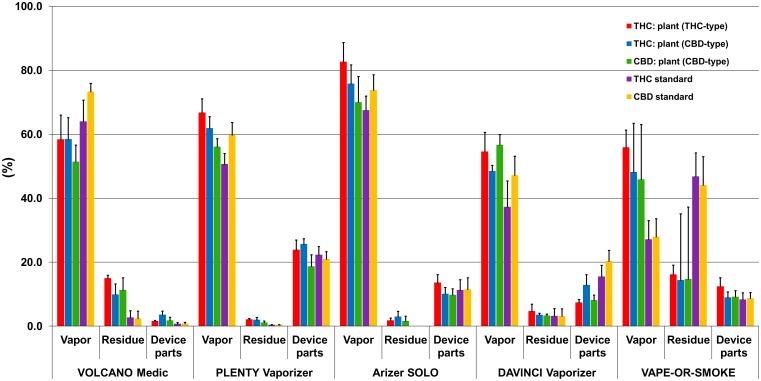
Source: Lanz et al. (2016), PLOS ONE, CC-BY 4.0
Considerations with Conduction
Uneven Heating: Material touching the heated surfaces vaporizes faster than material in the center. This can lead to inconsistent extraction – the outer layer may be fully extracted while the center remains relatively fresh. Stirring Required: To achieve even extraction, users often need to stir the chamber between draws. Some devices include stir tools for this purpose. Without stirring, you may waste the center material. Potential for Combustion: If the heating element gets too hot or material is left in contact too long, there’s a higher risk of combustion, especially with dry material. This is particularly true at temperatures above 210°C. Continuous Heating: Even between draws, the material continues to heat, potentially wasting active compounds or leading to over-extraction of outer layers. This makes conduction less ideal for users who prefer to take single hits and return later. Flavor Degradation: Because material is in constant contact with hot surfaces, flavor tends to degrade faster compared to convection. The first few draws are typically the tastiest, with flavor diminishing as the session progresses.Best Practices for Conduction
Grind your material to a medium consistency for better heat distribution and pack the chamber moderately — not too tight, not too loose. Stir every 2-3 draws to ensure even extraction, and stick to moderate temperatures between 180-200°C to reduce combustion risk. Do not leave the device on between sessions. Clean the chamber regularly to maintain good thermal contact, and consider using dosing capsules for consistent packing.
Convection Heating: Hot Air Flow Method
How Convection Works
Convection heating uses hot air to vaporize material. A heating element heats air, which then passes through the material, extracting active compounds. The material never directly touches the heating element, reducing combustion risk significantly. Think of it like a convection oven: hot air circulates around the food, cooking it evenly from all sides. In convection vaporizers, hot air flows through the herb, vaporizing compounds evenly throughout the entire load.There are two types of convection. Active convection uses a fan to push hot air through the material, which is common in desktop units. Passive convection relies on your draw to pull hot air through, which is the approach used in most portable devices.
Advantages of Convection
Superior Flavor: Convection provides the purest, cleanest flavor because the material isn’t in contact with hot surfaces. Terpenes are preserved better, resulting in more nuanced taste throughout the session. The flavor remains consistent from first draw to last. Even Extraction: Hot air penetrates throughout the material, heating it uniformly. This results in consistent extraction without hot spots, and you typically don’t need to stir the chamber. On-Demand Heating: Many convection vaporizers only heat when you draw, meaning no vapor is wasted between hits. This is especially valuable for micro-dosing or users who prefer single hits throughout the day. Reduced Combustion Risk: Since material doesn’t contact direct heat, the risk of combustion is significantly lower, even at higher temperatures. This makes convection safer for beginners. Better for Light Users: The on-demand nature means you can take one draw, set the device down, and return later without wasting material. The bowl stays fresh until you heat it again. Efficient Material Use: Because of even extraction and on-demand heating, convection vaporizers often extract more from less material, making them more economical long-term.Considerations with Convection
Longer Heat-Up Time: Convection vaporizers typically take 1-3 minutes to reach temperature because they need to heat the air rather than just a surface. Some users find this wait inconvenient. Higher Power Consumption: Heating air requires more energy, which means shorter battery life in portable devices. Many convection portables only achieve 3-5 sessions per charge. More Complex Design: The air path and heating system add complexity, often resulting in larger devices. True convection in a pocket-sized form factor is engineering-challenging. Technique Dependent: Draw speed affects vapor production significantly. Too fast cools the air; too slow may not produce enough airflow for proper extraction. There’s a learning curve to find the sweet spot. Higher Cost: The more complex engineering typically means higher prices. Quality convection vaporizers rarely cost less than €150, with premium units ranging €250-400+. Maintenance Complexity: More components and air paths mean more areas to clean and maintain. The vapor path can be longer and harder to access.Best Practices for Convection
Use a medium-coarse grind to allow airflow through the material, and avoid overpacking since air needs space to flow. Draw slowly and steadily for 8-15 seconds for best results, and always allow full heat-up before your first draw. Experiment with your technique to find the sweet spot for vapor production. Pack loosely for better air penetration, and clean the air paths regularly to keep airflow unobstructed.
Hybrid Heating: Best of Both Worlds
How Hybrid Heating Works
Hybrid vaporizers combine conduction and convection heating to leverage the advantages of both methods. Typically, the chamber provides some conduction heating while hot air (convection) flows through during draws.This approach can take various forms. In conduction-dominant designs, the chamber heats the material while hot air adds extraction power during draws. Convection-dominant hybrids let hot air do most of the work, but heated chamber walls prevent temperature drops. Some devices use balanced 50/50 systems where both methods contribute equally.
Advantages of Hybrid
Faster Heat-Up Than Pure Convection: The conduction element preheats the material while convection is warming up, reducing overall wait time to 30-60 seconds typically. Better Extraction Than Pure Conduction: Hot air helps vaporize material in the center that conduction alone might miss. This results in more thorough extraction with less waste. Balanced Performance: Users get decent flavor, good efficiency, and reasonable heat-up times – a versatile middle ground that works well for most people. Flexibility: Some hybrid devices allow users to adjust the balance between heating methods via temperature or airflow controls, customizing the experience. Consistent Results: The combination of heating methods provides more forgiving performance across different packing techniques. You don’t need perfect technique to get good vapor. Session Versatility: Hybrid units work reasonably well for both session-style use and occasional hits, adapting to different usage patterns.Considerations with Hybrid
Complexity: More components can mean more potential points of failure and more areas requiring cleaning. Compromise: While hybrids offer balanced performance, they may not match the pure flavor of high-end convection or the instant heat of pure conduction. Learning Curve: Understanding how the two heating methods interact may require experimentation to optimize your technique. Higher Cost: Quality hybrid vaporizers tend to be premium-priced, typically €200-350+.Comparing the Three Methods
Heat-Up Time
Fastest: Conduction (15-45 seconds)Middle: Hybrid (30 seconds – 1.5 minutes)
Slowest: Convection (1-3 minutes)
Flavor Quality
Best: Convection (cleanest taste, best terpene preservation)Middle: Hybrid (good flavor with slight contact taste)
Variable: Conduction (can be excellent initially but degrades faster)
Efficiency
Most Efficient: Convection (on-demand means minimal waste)Middle: Hybrid (moderate efficiency)
Least Efficient: Conduction (continuous heating wastes some material)
Battery Life (Portables)
Longest: Conduction (lower power requirements)Middle: Hybrid
Shortest: Convection (high power demands)
Ease of Use
Easiest: Conduction (simple operation, pack and go)Middle: Hybrid (fairly intuitive)
Most Technique: Convection (draw speed matters significantly)
Price Range
Most Affordable: Conduction (€50-200)Middle: Hybrid (€150-350)
Most Expensive: Convection (€150-450)
Which Heating Method Is Right for You?
Choose Conduction If:
Conduction works well if you want quick sessions with minimal wait and value portability in a compact size. It is the better choice when you are on a budget and do not mind stirring occasionally. If you typically finish sessions in one sitting, prefer session-style use, and want longer battery life, conduction is a strong match.
Choose Convection If:
Convection suits users who place flavor quality above all else and prefer on-demand use — a hit here, a hit there. It is worth the wait if you want the lowest combustion risk and care about even extraction. Comfort with learning proper technique helps, and convection excels for effective micro-dosing.
Choose Hybrid If:
Hybrid is the way to go if you want balanced performance across all categories and value versatility. These devices heat faster than pure convection while delivering better results than pure conduction. If you are unsure which method you prefer, hybrid is a safe bet — it delivers forgiving, consistent results and adapts well whether you switch between session and on-demand use.
Notable Devices by Heating Type
Renowned Conduction Vaporizers
The PAX 3 and PAX Plus stand out with their sleek design, smartphone app control, and excellent portability. The DaVinci IQ2 offers precision temperature control with dosage tracking and quality vapor. For those on a budget, the Boundless CF/CFX delivers reliable performance with good vapor production. The XMAX V3 Pro rounds out the field with excellent value and a replaceable battery.
Renowned Convection Vaporizers
The Storz & Bickel Volcano remains the desktop gold standard with balloon or whip delivery. The Firefly 2+ is a portable on-demand option that delivers premium flavor. The Tinymight impresses with powerful on-demand heating and generous vapor production. For affordable desktop convection, the Arizer Extreme Q offers strong performance at a reasonable price.
Renowned Hybrid Vaporizers
The Storz & Bickel Mighty and Crafty+ serve as industry benchmarks with medical certification. The Arizer Solo 2 and Air 2 deliver glass path purity and excellent flavor. The Venty represents the modern flagship hybrid with rapid heating. The Boundless Tera brings powerful hybrid performance with the convenience of replaceable batteries.
Conclusion
Understanding the differences between conduction, convection, and hybrid heating empowers you to choose a vaporizer that matches your priorities. Whether you prioritize speed, flavor, efficiency, or balanced performance, there’s a heating method – and a device – that’s right for you. Consider your typical use patterns, patience for heat-up, flavor expectations, and budget when making your decision. Many experienced users eventually own multiple devices with different heating methods for different situations. The best heating method is ultimately the one that fits your lifestyle and delivers the experience you’re looking for. Take time to understand your preferences, and you’ll find the perfect match.Advanced Conduction Principles
Heat Transfer in Detail
In conduction, heat transfer occurs through direct contact between two materials at the molecular level. The kinetic energy of molecules in the warmer material is transferred to molecules in the cooler material. This type of heat transfer is most efficient when good physical contact exists. In a conduction vaporizer, this means the plant material must directly touch the heated surface. The quality of this contact largely determines the efficiency of heat transfer. Therefore, packing the chamber is particularly important with conduction devices.Thermal Conductivity of Different Materials
Different materials have different thermal conductivities. Aluminum leads with 205 W/(m·K), providing very good heat conduction. Stainless steel falls in the moderate range at 15-25 W/(m·K). Ceramic conducts heat slowly at 1-5 W/(m·K), while glass brings up the rear at just 0.8-1 W/(m·K). These differences explain why different chamber materials have different heating characteristics. Aluminum chambers heat quickly and evenly, while ceramic reacts slower but retains heat longer.Heat Distribution in the Chamber
A common problem with conduction vaporizers is uneven heat distribution. Material in direct contact with the heated wall reaches vaporization temperature first. Material in the center of the chamber is heated indirectly through surrounding material. High-quality conduction vaporizers address this problem in several ways. Thin-walled, narrow chambers allow better heat penetration into the center. Multiple heating elements at different positions distribute warmth more evenly, while special chamber geometries minimize hotspots. Materials with high thermal conductivity, like aluminum, also help.Optimizing the Conduction Experience
The Importance of Grind Consistency
Grind consistency has greater significance with conduction than convection. A finer grind increases contact surface with the heated surface, improving heat transfer. However, material that’s too fine can impede airflow. The ideal grind for conduction vaporizers is fine to medium-fine, with consistent particle size and no large pieces. Avoid a powdery grind, which can clog screens and restrict airflow.Pack Density and Technique
Pack density affects both heat transfer and airflow. Too loose means poor contact with the heating surface and inefficient extraction. Too tight restricts airflow and causes uneven heating. The sweet spot is firm enough for good thermal contact yet loose enough for air to circulate. A proven technique is “layered packing”: add material in small amounts and lightly press, then repeat. This creates even density without excessive compression.Temperature Management During Sessions
Conduction vaporizers tend to exhaust material at the surface faster than in the center. To compensate, start at a lower temperature and gradually increase it during the session. Stir the material between draws when possible, and use longer intervals between draws to let the chamber recover.Hybrid Approaches
The Evolution to Hybrid Systems
Many modern vaporizers combine conduction and convection in so-called hybrid systems. The conduction component provides fast heat-up times and vapor production, while the convection component enables more even extraction. Well-known examples include the Storz & Bickel Mighty and Crafty, which use a conduction chamber supplemented by hot air during draws. The PAX 3 is primarily conduction-based but incorporates airflow through the material. The Arizer ArGo places a glass stem in a conduction oven with a convection component.Advantages and Disadvantages of Hybrid Systems
The advantages of hybrid systems include combining fast heat-up time with even extraction, offering more flexibility, and often delivering better vapor quality than pure conduction. On the other hand, the construction is more complex, the price is often higher, and there are more potential failure points to consider.
Care and Maintenance of Conduction Devices
Cleaning Intervals
Conduction vaporizers require more frequent cleaning than convection devices. Direct contact between material and heating surface leads to stronger residue buildup. The chamber should be brushed after every session to remove loose residue. A thorough cleaning with isopropyl alcohol is recommended every 5-10 sessions. Monthly deep cleaning, or whenever you notice flavor changes, keeps performance at its best.Wear Parts in Conduction
In conduction vaporizers, certain parts wear faster than others. The chamber coating gradually degrades over time, if one is present. Seals and O-rings near the heating chamber can become brittle from constant heat exposure. Screens and filters also need periodic replacement to maintain proper airflow. Regular inspection and timely replacement of these parts maintains device performance.Conduction in Different Device Categories
Portable Conduction Vaporizers
Portable devices benefit most from conduction heating due to its simplicity and compact design requirements. The direct heating approach requires less complex airflow engineering, making it easier to create small, pocketable devices. Popular portable conduction vaporizers come from brands like PAX, DaVinci, and Boundless. These devices typically feature all-in-one designs with simple user interfaces. They are quick to reach session temperature and use their batteries efficiently — exactly what you need on the go.Desktop Conduction Applications
While less common in desktop units, conduction still plays a role in some designs. Desktop conduction units typically offer larger chambers and more precise temperature control than their portable counterparts.Pen-Style Conduction Vaporizers
The smallest category of conduction vaporizers, pen-style devices prioritize portability above all else. These devices often sacrifice chamber size and battery capacity for discretion and convenience.Special Application Scenarios for Conduction
Microdosing with Conduction Vaporizers
Conduction vaporizers are particularly well-suited for microdosing. Direct heat transfer enables precise control over extraction. With small chamber fills and low temperatures, very small doses can be effectively vaporized. For microdosing, look for devices with small chambers under 0.1g capacity and precise temperature control in 1°C steps. Fast heat-up times suit short sessions, and an on-demand function with instant shutoff prevents wasting material between draws.Concentrates and Conduction
Many conduction vaporizers can be retrofitted with concentrate inserts. These special pads or cups absorb waxes and oils and prevent direct contact with the heating chamber. When using concentrates with conduction vaporizers, always use the recommended insert. Start with very small amounts to avoid waste and mess, and clean the insert regularly. Keep in mind that concentrates need higher temperatures than dry herbs.Session vs. On-Demand in Conduction
Most conduction vaporizers are designed as session devices. They maintain constant temperature after heating and are suited for longer sessions. Some newer models offer on-demand modes that turn off heating between draws.Session conduction provides constant vapor production with simple operation and even extraction throughout. On-demand conduction preserves flavor better, offers more flexible use patterns, and extends battery life since the heater only runs when you draw.
Historical Development of Conduction
The Pioneers of Conduction
The first commercial vaporizers used conduction exclusively. Devices like the BC Vaporizer and early models relied on simple metal chambers that were directly heated. The technology was simple but effective. Over time, designs were steadily refined. Better materials improved heat distribution, and more precise temperature controls gave users finer adjustment. Shapes became more ergonomic for comfortable handling, and battery life grew longer with each generation.Modern Innovations
Current conduction vaporizers use advanced materials and manufacturing techniques. Ceramic-coated chambers, multilayer heating plates, and intelligent temperature sensors significantly improve efficiency and quality. Particularly noteworthy are 3D-printed heating structures that achieve optimal heat distribution, and app-controlled temperature profiles that let users fine-tune their sessions. Haptic feedback provides improved guidance during use, and induction heating has emerged as an alternative to classic conduction.Troubleshooting Common Conduction Issues
Uneven Heating Problems
Uneven heating is the most common complaint with conduction vaporizers. You might notice one side of the material appearing more extracted than the other, or inconsistent vapor production throughout the session. In some cases, hot spots develop that can cause localized combustion. To fix this, stir the material more frequently during sessions and make sure you pack evenly without excessive compression. Check for damaged or degraded heating elements if the problem persists, and verify that the temperature sensor is reading accurately.Poor Vapor Production
If your conduction vaporizer produces weak vapor despite proper temperature settings, start by checking the material moisture — too dry or too moist both hurt performance. Verify the chamber is making good thermal contact with the material, clean any residue from the heating surface, and ensure screens are not clogged.Battery and Power Issues
Conduction vaporizers draw significant power during heating. This can lead to rapid battery drain during sessions, slower heat-up times when the battery is low, and inconsistent temperature maintenance. Using high-quality replacement batteries helps, and you should avoid using the device while charging unless pass-through is supported. If battery life is a constant issue, consider upgrading to a device with larger capacity.Future of Conduction Heating
New Material Developments
Research on new heating materials promises further improvements. Graphene-based heating elements could revolutionize heat distribution. These ultra-thin carbon layers conduct heat extremely evenly and efficiently. New ceramic compounds are also being researched. Zirconium dioxide coatings offer excellent temperature stability and can be heated very evenly. Silicon carbide ceramics enable even faster heat-up rates while maintaining high durability.Integrated Sensor Technology
Future conduction vaporizers will be equipped with advanced sensor technology. Multiple temperature sensors in the chamber enable real-time monitoring of temperature distribution. Humidity sensors could automatically adjust temperature to the material’s condition.Smart Learning Systems
Machine learning algorithms are beginning to appear in premium vaporizers. These systems learn from user behavior and automatically optimize temperature curves for individual preferences. Over time, the device adapts to provide consistently optimal sessions.Sustainability Considerations
Environmental concerns are driving innovation in conduction technology. Manufacturers are exploring recyclable materials for heating chambers and reducing energy consumption through more efficient designs. Some companies now offer take-back programs for worn components.Comparing Conduction Brands and Models
Premium Conduction Vaporizers
The high-end conduction market features several standout devices: The PAX 3 represents the pinnacle of pure conduction design. Its compact form factor and polished user experience set the standard for portable conduction vaporizers. The haptic feedback and app control add premium functionality. DaVinci IQ2 offers precision temperature control with a focus on airflow customization. The removable 18650 battery provides flexibility for extended sessions.Budget-Friendly Options
Entry-level conduction vaporizers have improved significantly. Devices under 100 euros now offer features that were premium just a few years ago: precise temperature control, decent battery life, quality vapor production, and durable construction. Popular budget options include devices from XMAX, Boundless, and Flowermate.Conduction Buying Guide Summary
Key Features to Consider
When purchasing a conduction vaporizer, prioritize these features: Chamber material: Look for anodized aluminum, stainless steel, or ceramic. Avoid cheap plastics near the heating area. Temperature control: Prefer devices with precise, adjustable temperature settings over preset modes. Build quality: Metal bodies typically indicate better heat management and durability than plastic housings. Warranty: Quality manufacturers offer at least 2-year warranties on heating elements.Price Ranges and Expectations
Entry level (€50-100): Basic functionality, simpler temperature controls, shorter battery life. Good for beginners exploring vaporization. Mid-range (€100-200): Better build quality, more precise temperature control, improved vapor quality. Suitable for regular users. Premium (€200+): Best materials, advanced features like app control, superior vapor quality and efficiency. For enthusiasts seeking the best experience.Conduction Summary
Conduction heating offers fast heat-up times and reliable performance. For many users, it represents the ideal balance between ease of use and vapor quality. With proper understanding of the technology, you can get the most out of any conduction vaporizer.Final Recommendations
When choosing a conduction vaporizer, prioritize build quality and precise temperature control. These factors have the greatest impact on your daily experience and the longevity of your device.Getting Started with Conduction
If you’re new to conduction vaporizers, start with lower temperatures and work your way up. This helps you understand how your specific device performs and find your preferred settings. Keep notes on what works best with different materials.Maximizing Your Conduction Experience
To get the most from your conduction vaporizer, develop a consistent routine. Use the same grind, pack density, and temperature progression for predictable results. Once you find your optimal settings, sessions become effortless and satisfying. Regular maintenance ensures your device performs at its best every time.Scientific Sources
- Lanz, C. et al. (2016). Medicinal Cannabis: In Vitro Validation of Vaporizers for the Smoke-Free Inhalation of Cannabis. PLoS ONE, 11(1), e0147286. PubMed 26784441
- Hazekamp, A. et al. (2006). Evaluation of a Vaporizing Device (Volcano) for the Pulmonary Administration of Tetrahydrocannabinol. Journal of Pharmaceutical Sciences, 95(6), 1308–1317. PubMed 16637053
- Pomahacova, B. et al. (2009). Cannabis Smoke Condensate III: The Cannabinoid Content of Vaporised Cannabis sativa. Inhalation Toxicology, 21(13), 1108–1112. PubMed 19852551
Related Articles: Best Convection Vaporizers · Best Conduction Vaporizers · Best Hybrid Vaporizers · Best Session Vaporizers
Frequently Asked Questions
Is conduction or convection better?
Convection delivers better flavor and more even extraction. Conduction is cheaper and simpler. Hybrid combines both — the choice depends on budget and priorities.
Which heating method for beginners?
Conduction or hybrid. Conduction vaporizers are straightforward: turn on, wait, vape. Pure convection requires draw technique.
Why are convection vaporizers more expensive?
The technology is more complex. Hot air must be precisely directed through the material, requiring more sophisticated engineering.
{“@context”:”https://schema.org”,”@type”:”FAQPage”,”mainEntity”:[{“@type”:”Question”,”name”:”Is conduction or convection better?”,”acceptedAnswer”:{“@type”:”Answer”,”text”:”Convection delivers better flavor and more even extraction. Conduction is cheaper and simpler. Hybrid combines both — the choice depends on budget and priorities.”}},{“@type”:”Question”,”name”:”Which heating method for beginners?”,”acceptedAnswer”:{“@type”:”Answer”,”text”:”Conduction or hybrid. Conduction vaporizers are straightforward: turn on, wait, vape. Pure convection requires draw technique.”}},{“@type”:”Question”,”name”:”Why are convection vaporizers more expensive?”,”acceptedAnswer”:{“@type”:”Answer”,”text”:”The technology is more complex. Hot air must be precisely directed through the material, requiring more sophisticated engineering.”}}]}