Butane vs Desktop Vaporizer — Which one fits your life?
Two worlds, one goal: great vapor from your herb. On one side you have butane devices like the DynaVap M7 or the Sticky Brick Junior — small, no battery, extremely direct. On the other side, desktop vaporizers like the Volcano Hybrid or the Arizer Extreme Q — stationary, precise, often designed around balloon use or long sessions.
Which type works for you depends less on vapor quality (both can be excellent) than on your daily routine, your budget, and how you like to session. This article shows you where the real differences are — without the marketing spin.
How butane devices work (quick recap)
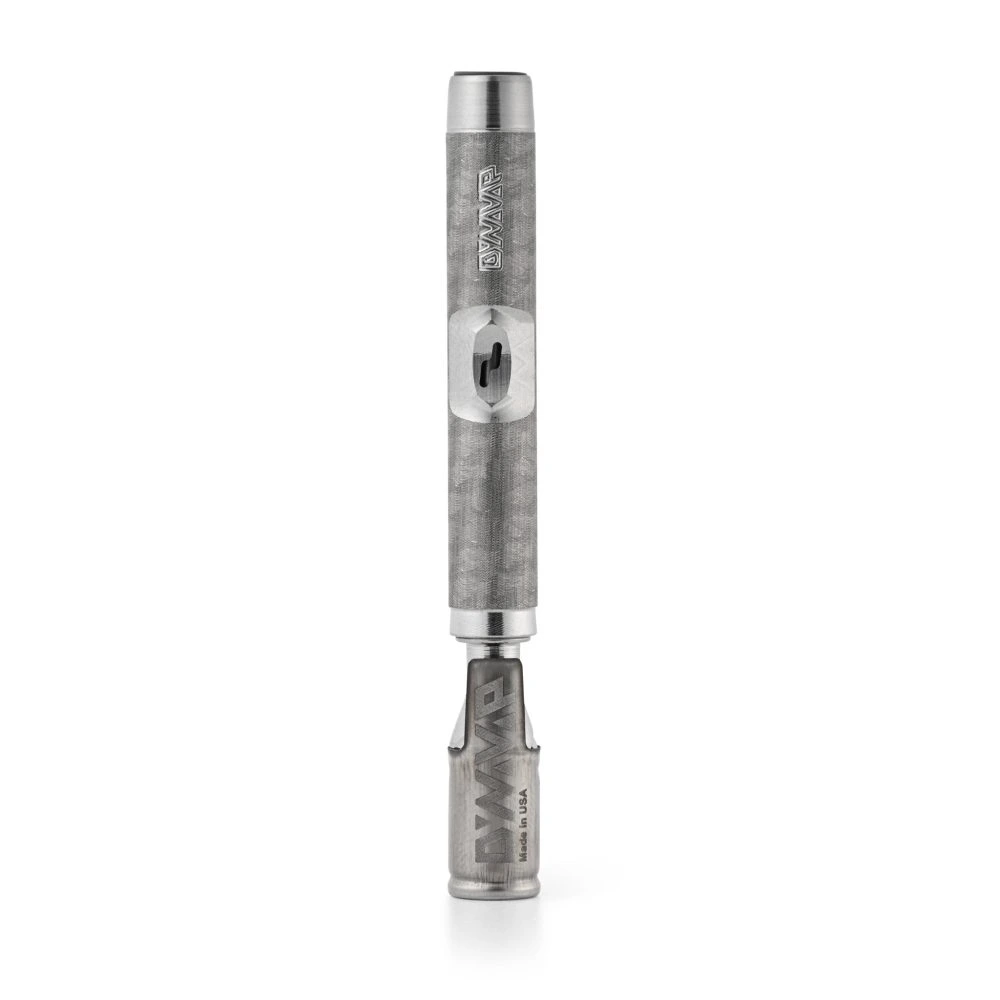
Butane vaporizers don’t heat electrically — they use a gas flame. You hold a lighter to the device, and the herb gets brought up to temperature through convection or conduction in 5 to 20 seconds.
With the DynaVap M7 (~35 EUR), a bimetallic spring clicks to tell you you’ve hit the right temperature. With the Sticky Brick Junior (~110 EUR), you aim the flame of a torch lighter into a small hole — the airflow heats the herb through pure convection. The Vapman goes one step further: your herb sits in a small copper bowl that you warm from below with a regular lighter.
What they all share: no electronics, no charging cables, no battery. What you’ll always need is butane gas or a good lighter.
How desktop vaporizers work
Desktop devices run on mains power. That’s their defining feature — and their biggest advantage. No recharging breaks, no dips in performance, and they can hold a constant temperature for hours.
Devices like the Volcano Hybrid (~480 EUR) pump heated airflow through your herb and fill a balloon. You inhale from the bag at your own pace — ideal for groups or relaxed evening sessions. The Arizer Extreme Q (~150 EUR) does the same thing cheaper, with a little less power and precision, but perfectly adequate for many users.
Other desktop devices use direct inhalation: the Mighty+ (~250 EUR) is technically a portable, but because of its size, long battery life, and vapor output it’s often used like a semi-desktop. The Arizer Solo 3 (~180 EUR) is smaller and more compact, also designed for direct draw.
The strength of all desktop devices: consistent heat, low effort, repeatable sessions.
Head-to-head at a glance
| Feature | Butane (DynaVap M7) | Butane (SB Junior) | Desktop (Arizer EQ) | Desktop (Volcano Hybrid) |
|---|---|---|---|---|
| Price | ~35 EUR | ~110 EUR | ~150 EUR | ~480 EUR |
| Needs power outlet | No | No | Yes | Yes |
| Portable | Yes | Yes | No | No |
| Heat-up time | 5–10 sec. | 3–8 sec. | 3–5 min. warm-up | 3–5 min. warm-up |
| On-demand | Yes | Yes | No | No |
| Balloon use | No | No | Optional | Yes (core feature) |
| Learning curve | Medium | High | Low | Low |
| Herb consumption | Low | Low | Medium | Medium–high |
| Maintenance | Easy | Easy | Medium | Medium |
Vapor quality: who wins?
Honest answer: both can be excellent, but in different ways.
With the DynaVap the vapor is direct and intense. You take short, hot hits — the result is thick, aromatic, immediately felt. The convection in the Sticky Brick Junior produces a particularly pure, flavor-rich vapor that many connoisseurs rate among the best available. The reason: no heating elements, no plastic in the airpath — just air, glass, and wood.
Desktop devices like the Volcano Hybrid produce more consistent vapor over longer periods. The balloons cool the vapor down, making it smoother — helpful for occasional users or sensitive lungs. The Arizer EQ delivers solid, aromatic vapor, even if it falls slightly behind the Volcano in a direct comparison.
In short: butane devices win on freshness and density. Desktop devices win on consistency and convenience.
Session style: on-demand vs. session device
This is the biggest practical difference, and it’s often underestimated.
Butane = on-demand. You heat up, take one or two hits, done. No device stays hot, no herb vaporizes unused. You control exactly how much you use. That’s efficient and flexible — perfect for solo sessions on the fly.
Desktop = session-oriented. The Volcano needs a few minutes to reach temperature. Then you fill the balloon, inhale at your leisure, and can reload. That’s ideal for relaxed evenings with one or two friends, but less suited when you want to be quick and efficient. If you don’t empty the balloon, you lose vapor — and herb.
The Mighty+ is an interesting middle ground: it starts in about 60 seconds and works well for both short and longer sessions. For a lot of people it’s exactly the right compromise.
Portability: no contest
Butane devices win this one outright. The DynaVap M7 fits in any pocket, weighs almost nothing, and only needs a lighter. The Sticky Brick Junior is a bit larger, but still backpack-friendly.
Desktop devices aren’t made for the road. The Volcano weighs nearly two kilograms and needs a power outlet. The Arizer EQ is lighter, but still not designed for the park.
If you want one device for home and for out and about, butane is the obvious choice — or you go with both: a small butane device for outside, a desktop for home.
Cost comparison: upfront and ongoing
It’s worth looking more closely here, because the purchase price isn’t the whole story.
Upfront costs:
- DynaVap M7: ~35 EUR
- Sticky Brick Junior: ~110 EUR
- Arizer Extreme Q: ~150 EUR
- Arizer Solo 3: ~180 EUR
- Mighty+: ~250 EUR
- Volcano Hybrid: ~480 EUR
Ongoing costs:
Butane gas for a lighter costs a few cents per session — negligible. Electricity for desktop devices too. The real difference is in herb consumption. On-demand devices like the DynaVap only vaporize what you’re actively inhaling. Session devices keep running even when you’re not drawing.
Experienced users report using noticeably less herb per day with on-demand devices — which, over months, can easily offset or even surpass the higher purchase cost of a desktop.
Durability: A DynaVap is made from titanium or stainless steel and will last literally decades. With the Volcano, the balloons are consumables (~10–15 EUR every few months). With the Mighty+, the battery can lose capacity after a few years.
Maintenance and care
Butane devices are generally easy to clean. With the DynaVap you unscrew everything, drop it in isopropyl alcohol, done. With the Sticky Brick Junior you clean the glass parts separately — also straightforward.
Desktop devices need a bit more attention. With the Volcano you change the balloons regularly and clean the valve unit. With the Arizer EQ you clean tubes and glass parts. All doable, but more parts means more work.
Overall, maintenance for butane devices is simpler and cheaper — a Plus for anyone who doesn’t have much patience for regular device routines.
Who should go with what?
Butane vaporizers are right for you if…
- you’re often out and about
- you prefer on-demand sessions
- you want to get started on a smaller budget
- you care about low herb consumption
- you enjoy the hands-on side of vaping
Desktop vaporizers are right for you if…
- you mostly vape at home
- you like sharing sessions with friends
- you value convenience and repeatability
- you’d rather skip the learning curve
- you’re ready to invest more
The middle ground: people who want both often go for the Mighty+ — not quite a desktop, not quite portable, but very versatile. Or: a DynaVap for outside and an Arizer EQ for home — together cheaper than a Volcano, and each optimized for a very different situation.
Wrap-up
Butane and desktop aren’t competitors — they solve different problems. The DynaVap M7 at 35 EUR is unbeatable for price and size, and still delivers excellent vapor. The Volcano Hybrid at 480 EUR is the opposite: comfortable, consistent, built for home use.
If you’re just getting started, a budget butane device is hard to go wrong with — low entry point, high quality. If you mainly sit at home and want convenience, take a look at the Arizer EQ or the Mighty+.
In the end, the best device isn’t the most expensive one — it’s the one you actually use.
Price comparison at vapochecker.com
Frequently Asked Questions
What is the main difference?
Butane vaporizers use a flame (portable, instant), desktops use wall power (precise temperature, larger chambers, balloons/whips). Butane is ritual, desktop is convenience.
Which is better for groups?
Desktop vaporizers are ideal for groups with larger chambers, balloon filling and whip systems. Butane devices are single-user oriented with smaller chambers.
Current Prices
{“@context”:”https://schema.org”,”@type”:”FAQPage”,”mainEntity”:[{“@type”:”Question”,”name”:”What is the main difference?”,”acceptedAnswer”:{“@type”:”Answer”,”text”:”Butane vaporizers use a flame (portable, instant), desktops use wall power (precise temperature, larger chambers, balloons/whips). Butane is ritual, desktop is convenience.”}},{“@type”:”Question”,”name”:”Which is better for groups?”,”acceptedAnswer”:{“@type”:”Answer”,”text”:”Desktop vaporizers are ideal for groups with larger chambers, balloon filling and whip systems. Butane devices are single-user oriented with smaller chambers.”}}]}