Which Accessories Do You Really Need?
Vaporizer Accessories: What’s Actually Worth It?
The market for vaporizer accessories is vast and confusing. Distinguishing between useful upgrades and unnecessary gimmicks isn’t always easy. This guide helps you recognize worthwhile investments.
Essential Accessories
Grinder: A good grinder isn’t optional extra – it’s basic equipment. Evenly ground material ensures better extraction and vapor production. Recommended are 4-piece metal grinders with pollen catch.
Cleaning kit: Isopropyl alcohol (90%+), cleaning brushes, cotton swabs and pipe cleaners belong in every vaporizer drawer. Most manufacturers include basic sets.
Replacement screens: Screens wear out and clog. A supply of fitting replacement screens costs little and keeps your vaporizer functional.
Worthwhile Upgrades
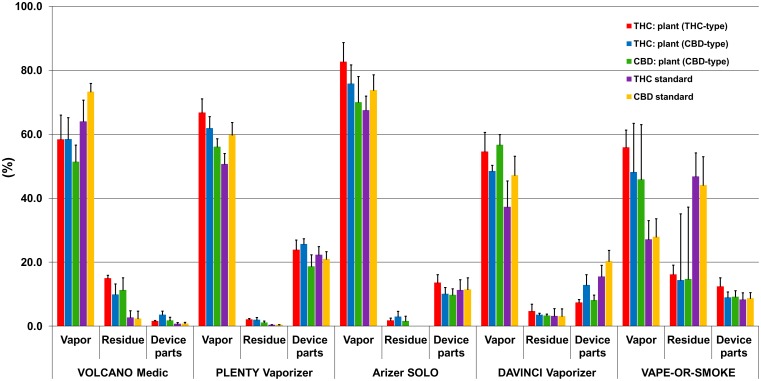
Source: Hazekamp et al. (2006), PLOS ONE, CC-BY 4.0
What does the chart show? This chart compares how much active compound different vaporizers extract from the material. High-quality devices with good accessories (grinders, dosing capsules) achieve significantly better values. A good grinder alone can increase efficiency by 15-20% because finely ground material offers more surface area for vaporization.
Water pipe adapters: Many portable vaporizers can be connected to water pipes (bongs). The vapor is cooled and humidified – more comfortable for the airways at higher temperatures.
As the graph shows, some of the active compounds end up in the device itself or as residue. Good accessories – particularly fitting mouthpieces and adapters – can improve vapor quality.
Dosing capsules: For session vaporizers like the Mighty+, dosing capsules are a real upgrade. They keep the chamber clean and enable precise dosing. More in our dosing capsules article.
External chargers: For vaporizers with replaceable batteries (18650), an external charger with battery care functions is a good investment. It protects the batteries and allows charging spares.
Situationally Useful
Carrying cases: Protect the vaporizer from bumps and scratches during transport. Sensible for expensive devices or frequent travel.
Mouthpiece upgrades: Glass or wood mouthpieces instead of plastic can improve flavor and feel more premium.
Concentrate pads: For using extracts in herb vaporizers. Only useful if you use both.
Usually Unnecessary
“Smell-proof” bags: Sound good, but a closed vaporizer hardly smells anyway. Mostly marketing.
Cheap no-name grinders: Saving in the wrong place. Metal shavings in your material are a health risk.
Overpriced manufacturer spare parts: Screens and O-rings are often available cheaper from third-party suppliers in identical quality.
Frequently Asked Questions
What accessories do I need as a beginner?
As a beginner, you only need a good grinder and cleaning supplies (isopropyl alcohol, brushes, cotton swabs). Everything else is optional and can be added later once you know what you’re missing.
Are expensive brand-name grinders worth it?
Yes, quality matters with grinders. Cheap grinders made of soft metal can shed shavings into your material – a health risk. A $50 Santa Cruz Shredder lasts a lifetime; a $10 no-name product maybe months.
Do I need a water pipe adapter?
Not essential, but recommended if you vape at higher temperatures (190°C+) or have sensitive airways. The vapor becomes smoother and less irritating. For low temperatures under 180°C, it’s usually unnecessary.
Where should I buy vaporizer accessories?
Specialized shops like Planet of the Vapes, Sneaky Pete, or the official manufacturer store offer original parts with warranty. Amazon often has lower prices, but beware of counterfeits for branded items.
Grinders: Types and Recommendations
Two-piece grinders are simple but effective. They produce a consistent grind without the need for kief collection. Good for users who want straightforward operation without extra compartments.
Four-piece grinders with kief catchers let you collect the fine, potent particles that fall through a screen during grinding. The collected kief can be sprinkled on top of regular material for enhanced sessions.
Premium options like the Santa Cruz Shredder, Brilliant Cut, or SLX offer superior build quality and precision machining. While expensive, they last for years and deliver consistently excellent results.
Storage Solutions
Smell-proof containers are essential for discretion. Products like Tightvac, Herb Guard, or RYOT offer various sizes with odor-sealing gaskets. Test any container before trusting it with fragrant material.
Humidity packs (like Boveda) maintain optimal moisture levels in stored material. The 62% packs are ideal for vaporization – not too dry, not too moist. Replace them when they become rigid.
Carrying cases protect your investment when traveling. Many manufacturers offer custom cases, but universal options work well too. Look for padding, smell resistance, and compartments for accessories.
Enhancement Accessories
Water pipe adapters (WPAs) Connect portable vaporizers to standard water pipes. The water cools and humidifies vapor for smoother hits. Most popular vaporizers have compatible WPAs available from manufacturers or third parties.
External chargers for vaporizers with removable batteries offer faster, safer charging than built-in systems. Chargers like the Nitecore D2 analyze cell health and apply optimal charging profiles.
Must-Have vs Nice-to-Have
Essential accessories: A quality grinder is non-negotiable – it dramatically improves vapor quality and efficiency. Cleaning supplies (isopropyl alcohol, brushes, swabs) keep your device performing optimally.
Highly recommended: Extra screens for your specific vaporizer. These are consumables that need regular replacement. Buying in bulk saves money and ensures you’re never without a fresh screen.
Nice-to-have: Water pipe adapters transform the experience for high-temperature sessions. Smell-proof storage is essential for discretion. Carrying cases protect your investment during transport.
Factors Affecting Heat-Up Time
Battery Charge Level and Performance
The battery charge level directly impacts heat-up time. At full charge, many vaporizers can deliver their maximum heating power, resulting in faster heat-up times. As the charge decreases, some devices reduce heating power to conserve remaining energy. Lithium-ion batteries deliver consistent voltage across most of their capacity. Only in the last 20-30% does voltage noticeably drop. For devices using 18650 cells, a high-quality battery with higher discharge rates can enable faster heat-up times than standard batteries.Ambient Temperature
Ambient temperature affects both battery performance and the time needed to reach target temperature. In winter, at low outdoor temperatures, the heating element must expend more energy to bridge the temperature difference. Cold lithium-ion batteries can also deliver less current. Those who want to use their vaporizer outdoors in winter conditions should first warm the device in a jacket pocket close to the body.Chamber Fill Level and Material
A full chamber requires more energy to heat than a half-filled one. The plant material itself has thermal capacity and absorbs some of the supplied energy. With on-demand vaporizers that directly heat the material, this effect is more noticeable. Material moisture also plays a role. Dry material reaches the desired vaporization temperature faster than moist material, as no additional energy is needed for water evaporation.Heat-Up Time vs. Energy Consumption
Trade-offs in Heating Power
Faster heat-up times generally require higher heating power. This means higher power consumption per unit time, which depletes battery capacity faster. Manufacturers must therefore find a compromise between speed and battery life. Some devices offer a “boost mode” or “quick heat” that temporarily increases heating power. This is practical for occasional quick sessions but shouldn’t be used constantly if battery life is important.Efficiency of Different Heating Methods
Conduction vaporizers typically have faster heat-up times since the heating elements have direct contact with the chamber. Heat transfer occurs immediately with high efficiency. Convection vaporizers must first heat the air, which then flows through the material. This requires an additional energy transfer step but often leads to more even heating of the material.Practical Optimization Tips
Pre-Warming for Better Sessions
Many experienced users let their vaporizer heat beyond the displayed “ready” notification. This additional pre-warm time ensures that not only the heating element but also the chamber and material have reached the desired temperature. With convection vaporizers, a short “warm-up hit” – a gentle draw without inhalation – can help bring the entire air path to temperature. This improves vapor production from the first “real” draw.Pre-Heating the Chamber
Some users briefly heat their devices without material to pre-warm the chamber. In the subsequent session with a filled chamber, the device is already at operating temperature. This technique can be particularly effective with vaporizers having thick-walled ceramic or metal chambers.Temperature Stepping Strategies
Starting at a lower temperature and gradually increasing allows the material to heat evenly throughout. This can result in better flavor extraction initially and more complete vaporization as the session progresses. Many users find this approach more satisfying than starting at high temperatures.Technological Advances in Heat-Up Times
Induction Heating
One of the most revolutionary developments is induction heating. Instead of heating an element, induction generates heat directly in the metal of the chamber or a special cap. This enables heat-up times under 5 seconds. Well-known examples of induction vaporizers are the DynaVap series with compatible induction heaters. These reach operating temperature almost instantly.High-Performance Ceramic Heaters
Modern ceramic heaters can heat up significantly faster than older generations. Through improved material compositions and thinner heating elements, heat-up times of 15-20 seconds are possible.Predictive Heating Algorithms
Some intelligent vaporizers use algorithms that preheat based on usage patterns. The device learns when the user typically starts a session and begins preheating proactively.Impact of Design on Heat-Up Time
The physical design of a vaporizer significantly affects heat-up time: Chamber size: Smaller chambers require less energy and heat faster. Micro-chambers can reach temperature in seconds, while large chambers may take longer. Insulation: Well-insulated heating chambers retain heat better and can maintain temperature with less energy. This also reduces the time needed to return to temperature between draws. Material mass: The total mass of metal and ceramic near the heating element affects thermal inertia. Less mass means faster temperature changes.Heat-Up Time in Daily Life
Morning Use
For many users, heat-up time is particularly important in the morning. In the Rush of starting the day, every second counts. Devices with quick-heat function allow a session before leaving the house without disrupting the schedule.Outdoor and Travel Scenarios
When using a vaporizer outdoors or while traveling, heat-up time becomes even more critical. Cold weather slows the heating process, and inconvenient locations make waiting uncomfortable. Portable vaporizers with fast heat-up times excel in these situations.Heat-Up Time Summary
Fast heat-up times enhance the vaporizer experience significantly. When choosing your next device, consider heat-up time alongside other factors like vapor quality and battery life.Technology Outlook
Heat-up times will continue decreasing as battery and heating technology improves. Future vaporizers may offer near-instant heat-up while maintaining efficiency and vapor quality.User Experience Considerations
Beyond pure speed, consider how heat-up time affects your daily routine. A device that heats in 20 seconds versus 40 seconds might not seem different in specs, but in practice it changes when and how you use your vaporizer.Choosing by Heat-Up Time
When heat-up time is your priority, focus on devices specifically marketed for fast performance. Check user reviews for real-world heat-up times, as manufacturer claims sometimes differ from actual experience.Accessory Recommendations
For an optimal vaporizer experience, we recommend quality accessories. Look for materials like borosilicate glass and medical-grade stainless steel for best results.Scientific Sources
- Hazekamp, A. et al. (2006). Medicinal Cannabis: In Vitro Validation of Vaporizers. PLOS ONE. PMC
- Lanz, C. et al. (2016). Medicinal Cannabis: In Vitro Validation of Vaporizers. PLOS ONE. PMC
Compare Accessory Prices
Find the best prices for vaporizer accessories from over 50 shops across Europe. Mouthpieces, dosing capsules, adapters, spare parts and more — updated daily.
Go to Price Comparison →