PAX Plus vs PAX Flow: Which PAX Is Worth It in 2026?
Price gap today: PAX Flow costs 97.07 € more than PAX Plus.
* Total price incl. shipping to US, with a coupon code where needed. You’ll find the code in the partner box or on the product page.
Key Takeaways
- PAX Plus (from 98.85 € incl. shipping): Conduction, 22s, battery capacity not confirmed by the manufacturer, 10-year warranty
- PAX Flow (from 195.92 € incl. shipping): Hybrid, 45s, 2000 mAh, 135g, 2-year warranty
- Crafty+ (from 161.84 € Code VAPOCHECKER5 · incl. shipping): Hybrid, 60s, 135g, 2-year warranty
- PAX Flow uses hybrid heating (conduction + convection). More even extraction and less waste compared with the conduction-only PAX Plus.
- For the PAX Flow, PAX states up to about 30 minutes or about 3 sessions per charge; for the Plus, PAX does not state a battery capacity.
- PAX Plus from 98.85 € incl. shipping, PAX Flow from 195.92 € incl. shipping.
- The manufacturer has not confirmed the Plus’s battery capacity (Flow: 2000 mAh); both have the same warranty: 10 years. The difference is in the heater.
PAX launched the PAX Flow in 2024, marking a genuine change of direction for the company. Since the original PAX 1 in 2012, the San Francisco brand had consistently relied on conduction-only heating. Twelve years straight. Now a hybrid option sits alongside the PAX Plus, which remains in the lineup as a conduction model at a significantly lower price. Two PAX devices, two fundamentally different heating methods, and a clear price difference. Which one makes more sense for you?

This comparison covers the differences that genuinely matter in everyday use, not just what looks good on a spec sheet.
How does the heating differ?
The PAX Flow uses hybrid heating (conduction + convection), while the PAX Plus relies exclusively on pure conduction. This single design decision determines everything else — flavor, efficiency, heat-up time, and battery life.
PAX Plus: Pure Conduction
The PAX Plus uses conduction. The oven walls heat up and transfer heat to the herb through direct contact. It works, but it has one drawback: The material touching the walls gets significantly hotter than the material in the center. After a session, you will find dark, almost charred herb around the outside and greenish remnants in the middle. Stirring between draws helps, but it is inconvenient.
PAX Flow: Hybrid Heating
The PAX Flow combines conduction with convection. In addition to contact heat, hot air flows through the material. Extraction is more even, and the spent herb comes out consistently light brown rather than patchy black. Less waste.
How quickly do they heat up?
The Flow takes 45 seconds. If you only want a quick draw, those additional seconds can feel quite long.
Why is the Flow slower? In addition to the oven walls, the hybrid heater also has to bring the convection airflow path up to temperature. More components, more heat-up time. About 45 seconds is still fast in absolute terms, but it is noticeable in a direct PAX-to-PAX comparison.
How does the heating affect the vapor?
The hybrid heater also uses convection: Hot-air extraction preserves volatile aromatic compounds better, as they break down more quickly with direct contact heat alone.

How long does the battery last?
For the Flow, PAX states up to about 30 minutes or about 3 sessions per charge, and the manual lists 2,000 mAh. The manufacturer does not specify a capacity for the Plus.
According to PAX, the PAX Flow fully charges via USB-C in less than 40 minutes. For the PAX Plus, PAX states about 2.5 hours using the magnetic USB charging cable.
How do their size and weight compare?
There is hardly any difference. Both PAX models share the minimalist, flat design the brand has used since the PAX 2. The Flow weighs 135g. Both fit in any pocket, and both look more like small tech gadgets than vaporizers.
They are controlled using the mouthpiece button and LED petals. The heating modes are selected directly on the device using the mouthpiece button.
How are the heating modes selected?
The devices are operated using their built-in heating modes:
- PAX Plus with four Experience Modes
- PAX Flow with five heating modes, including Bong Mode
- Mode selection using the mouthpiece button
- LED indicator providing feedback on the selected mode
The PAX Plus offers four Experience Modes. The PAX Flow offers four standard heating modes plus the additional Bong Mode. Selection takes place directly on the device.
What is the best temperature?
For most people, 185–200°C is the sweet spot — balanced flavor and effects without irritation. Both PAX models cover this range well, but thanks to convection, the Flow extracts more at lower temperatures. Here is a rough guide:
| Temperature | Effect |  PAX Plus 98.85 € incl. shipping | 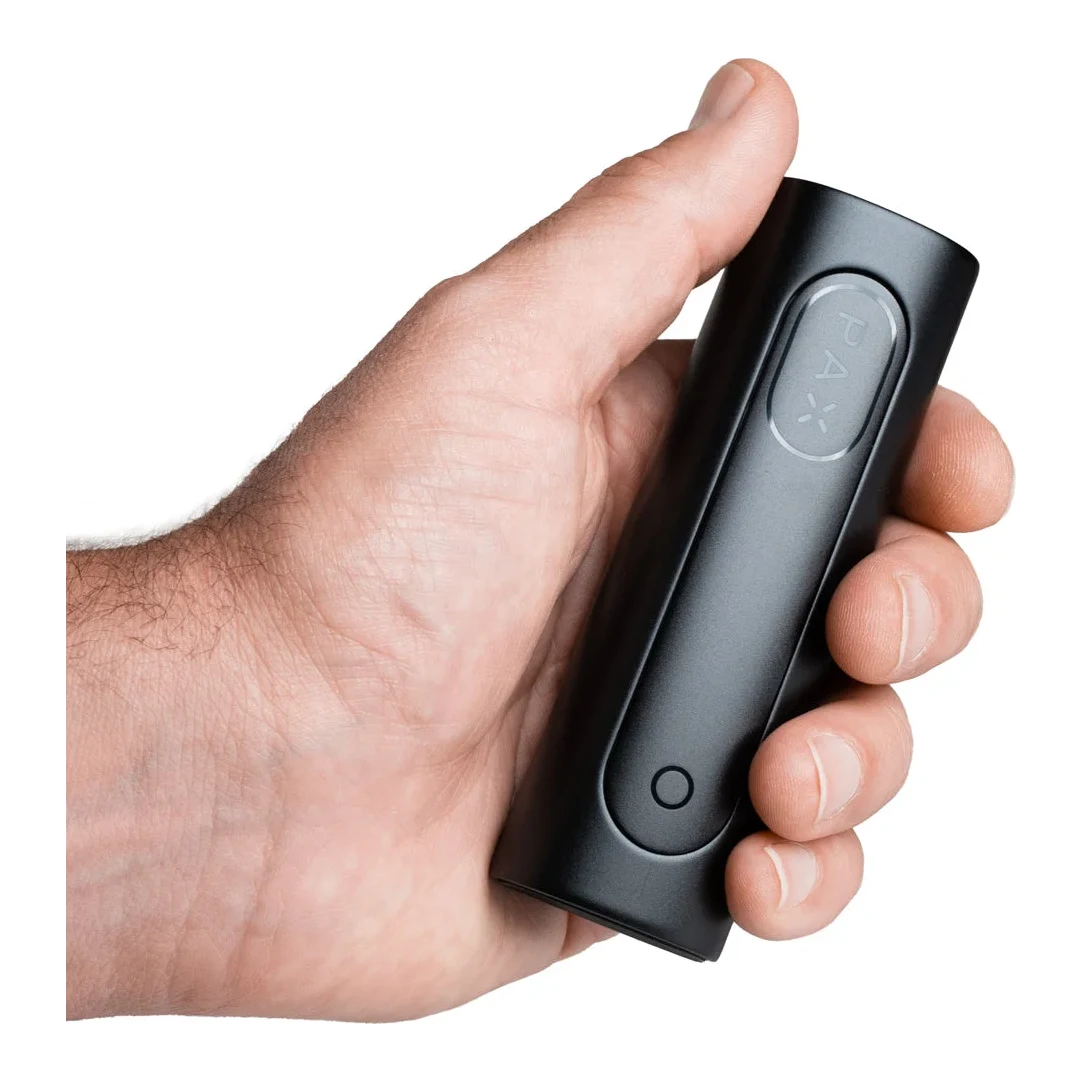 PAX Flow 195.92 € incl. shipping |
|---|---|---|---|
| 175-185°C | Light, aromatic, clear-headed | ✓ | ✓ |
| 185-200°C | Balanced flavor and effects | ✓ | ✓ |
| 200-215°C | Strong effects, more vapor, less flavor | ✓ (max) | ✓ |
| 215-225°C | Maximum extraction, harsher | — | ✓ (max) |
All technical specifications are based on manufacturer information
Ten additional degrees may not sound like much, but they unlock cannabinoids and terpenes that only vaporize above 215°C. If you want complete extraction, that matters.
Comparison Table: PAX Plus vs. PAX Flow
| Feature | PAX Plus 98.85 € incl. shipping | PAX Flow 195.92 € incl. shipping |
|---|---|---|
| Heating | Conduction | Hybrid (cond. + conv.) |
| Heat-up time | – | 45 s |
| Max. temperature | – | – |
| Battery | Not confirmed by the manufacturer | 2000 mAh |
| Weight | – | 135 g |
| Pass-through charging | Yes | Not confirmed by the manufacturer |
| App control | No | No (5 modes) |
| Water pipe adapter (WPA) | Yes | Yes |
| Efficiency | Good | Better |
| Warranty | 10 years | 2 years |
| Price | from 98.85 € incl. shipping | from 195.92 € incl. shipping |
How does cleaning work?
It is identical and straightforward for both. Remove the mouthpiece, scrape out the herb chamber with the included tool, and run a cotton swab soaked in isopropyl alcohol through the vapor path. Let it dry for five minutes, and you are done.
PAX recommends cleaning every 5-10 sessions. In reality, you will notice it from the draw resistance: When airflow becomes more restricted, it is time. Because of its additional convection channels, the PAX Flow accumulates residue slightly faster. Expect roughly one additional cleaning cycle per month compared with the Plus.
One thing both devices do well: The mouthpiece is made of silicone and can be soaked in isopropyl alcohol without any issues. There are no glass parts that could break. Ideal for use on the go.
What about materials and build quality?
Both have a matte-finished, anodized aluminum body.
Inside the vapor path, you get stainless steel and ceramic. There are no plastics or adhesives near the heating element. The Flow’s convection component is also made from stainless steel. These are materials you would also expect from medically oriented vaporizers, even though neither PAX model has medical certification.
Do both work with a bong?
Yes. Both PAX models are compatible with water pipe adapters. Official and third-party WPAs are available that slide onto the flat mouthpiece. They cost between 10 and 25 EUR.
Water filtration makes the vapor cooler and smoother. It is an easy recommendation for home use. On the go, both are compact enough for a pants pocket even without a WPA.
What do other users say?
Opinions in vaporizer communities such as r/vaporents and FC are fairly clear: The Flow is the better device, while the Plus is the better deal. Frequently mentioned points include:
- Flow owners praise its flavor and efficiency but wish it had longer battery life
- Plus owners appreciate its value for money and fast heat-up time
- Both receive praise for discretion and build quality
- The heating modes are selected on the device
PAX describes the Flow as a model with hybrid heating and a widened airflow path.
One common criticism of both devices is the lack of a replaceable battery. When the cell loses capacity after 2-3 years, there is no easy way to replace it. However, PAX offers a 10 years warranty on the Plus and 2 years on the Flow, which provides some peace of mind.
Are there alternatives in this price range?
Absolutely. There is strong competition in this price range:
- Storz & Bickel Crafty+ (from 161.84 € Code VAPOCHECKER5 · incl. shipping) — Hybrid heating and dosing capsules. Larger and heavier than both PAX models.
- XMAX V4 Pro (from 102.41 € Code VAPOCHECKER5 · incl. shipping) — Convection, glass vapor path, replaceable battery. Significantly cheaper, with a different approach.
- Arizer Air MAX (from 147.38 € incl. shipping) — Hybrid, glass stem, replaceable battery. Larger.
What sets both PAX models apart from these alternatives is their size. If portability and a discreet design are your top priorities, the PAX devices are a good choice.
Who should choose which one?
The PAX Plus is right for you if you…
- want to keep costs low. You get a mature PAX device at a lower price. The value for money is strong.
- are already familiar with PAX and are satisfied with conduction heating.
The PAX Flow is right for you if you…
- prefer hybrid heating (conduction + convection).
- want more efficient extraction. Less material waste and more even browning.
- are upgrading from a PAX 2 or PAX 3.
- can afford the extra cost of the Flow.
Current Price Comparison
Street prices vary depending on the shop and current deals. The easiest way to check is through our price comparison:
98.85 € incl. shipping
195.92 € incl. shipping
- PAX Plus
- PAX Flow
Conclusion: Is the Flow worth the extra money?
Yes, if efficiency matters to you. The PAX Flow offers hybrid heating, a higher maximum temperature, and less material waste.
The PAX Plus is still a solid choice. You get a PAX device that costs less and heats up faster. It is the smarter buy if budget matters or you simply need a reliable everyday vaporizer without unnecessary extras.
Both devices offer directly selectable heating modes from PAX.
How does the heating differ?
How quickly do they heat up?
How does the heating affect the vapor?
How long does the battery last?
How do they differ in size and weight?
What can the PAX app do?
What is the best temperature?
How do you clean the PAX models?
What about materials and build quality?
Do both work with a bong?
Current prices compared
PAX Plus
116 shops worldwide · 6 ship to US
from 98.85 € incl. shipping
Compare pricesPAX Flow
160 shops worldwide · 18 ship to US
from 195.92 € incl. shipping
Compare prices
* Total price incl. shipping to US, with a coupon code where needed. You’ll find the code in the partner box or on the product page.