Butane vs Battery Vaporizer
Lighter or charging station? This question divides the vaporizer community like few others. On one side, devices like the DynaVap M7 or the Sticky Brick Junior that run on a butane flame. On the other, battery vaporizers like the Mighty+ or the Venty that fire up at the press of a button. Both approaches have their merits — but they suit very different users and situations.
This comparison looks at both categories honestly. No blind praise for either side, no artificial equalization. Instead: concrete differences, real costs and a clear breakdown of when each type makes sense.
The Basic Principle: Flame vs Electronics
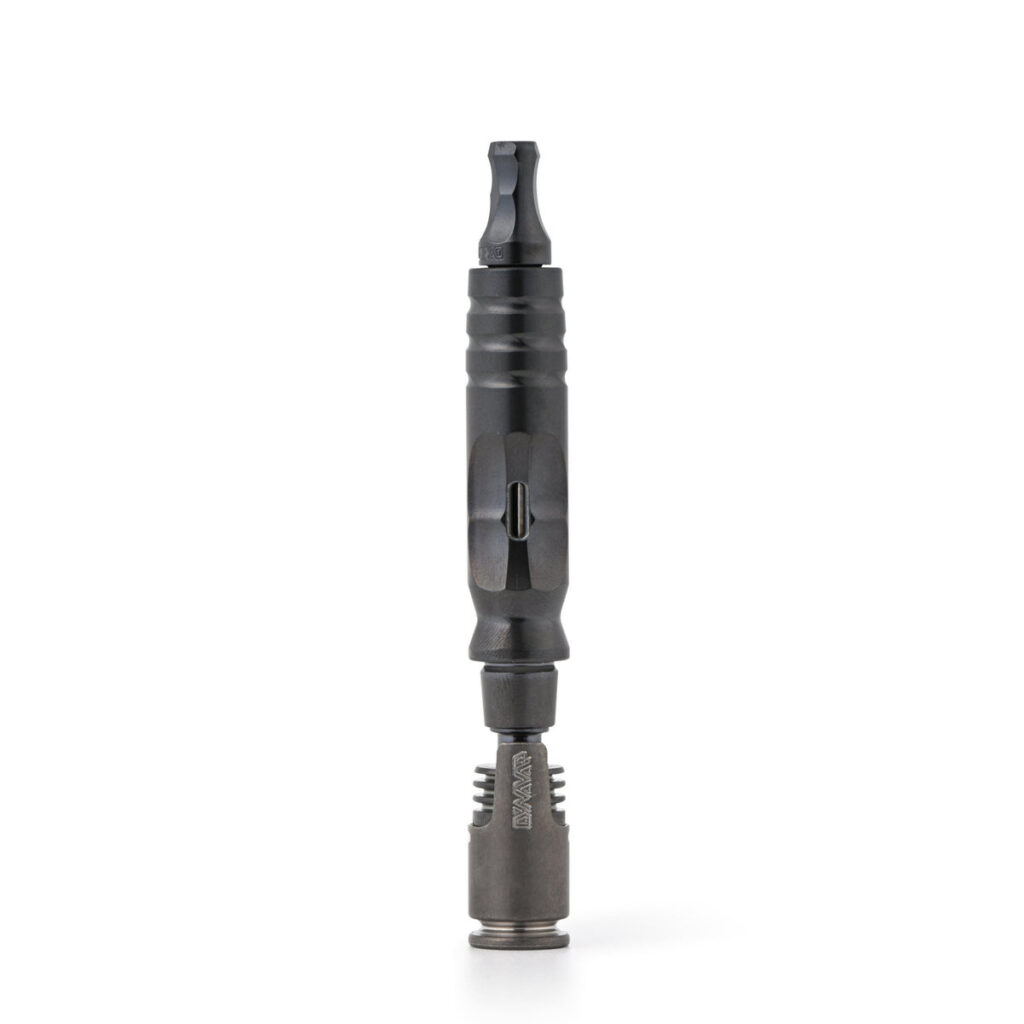
Butane Vaporizers — You Are the Controller
With a butane vape, you heat the chamber using a torch lighter. How that works varies by device. With the DynaVap M7 (~€75), you rotate the metal tube in the flame until an audible click signals the right temperature. With the Sticky Brick Junior (~€110), you aim the flame directly into an air intake and control the heat through distance and draw technique. And with the Vestratto Anvil (~€230), you combine flame technique with a sophisticated titanium design.
What they all share: no battery, no electronics, no software. Your skill determines the result. If you see that as a drawback, battery vapes are the better fit. If you see it as part of the appeal, you’ll discover a world of its own.
Battery Vaporizers — Switch On and Go
A battery vape like the Mighty+ (~€250) or the Venty (~€350) follows a simple workflow: set the temperature, turn the device on, wait for the indicator to turn green, inhale. The electronics handle everything. Sensors measure the chamber temperature, an algorithm controls the heater, and you get a reproducible result with every draw.
Getting started couldn’t be easier. Even someone who has never used a vaporizer gets decent vapor on their first try. Whether it’s a Crafty+ (~€200) or an Xmax V3 Pro (~€90) — the principle stays the same: unbox, charge, vape.
Heat-Up Time: Seconds vs Minutes
This is probably the most noticeable difference in everyday use. A DynaVap M7 is ready in 3 to 7 seconds. Flame to cap, rotate, click — done. The Sticky Brick Junior doesn’t even need that: flame in, draw simultaneously, and the first vapor comes almost instantly.
A Mighty+ takes around 60 seconds to reach 180°C. The Venty manages it in about 20 seconds, which is extremely fast for a battery vape. The Crafty+ falls somewhere in between. Doesn’t sound like a huge difference — but you notice it in daily use. A quick draw on the balcony: with a butane vape, that’s two minutes including packing. With a battery vape, more like five.
On the flip side: if you’re planning a relaxed 15-minute session, 30 seconds of heat-up time is irrelevant.
Portability: Both Portable, But Different
The DynaVap M7 is barely larger than a pen. It fits in any pants pocket, weighs almost nothing and is virtually indestructible. However, you also need a torch lighter — and that stands out. Pulling out a jet flame lighter in public draws attention.
The Mighty+ is considerably larger. It barely fits in a pants pocket — a jacket pocket or small backpack is more realistic. But you don’t need anything else. No lighter, no butane gas. Switch on, done. Out in the city, on trips, while hiking: the independence from external heat sources is a genuine advantage.
The Venty sits between the Crafty+ and Mighty+ in terms of size but has the benefit of USB-C charging. In a pinch, 20 minutes on a power bank gets you a few sessions. Try that with an empty gas lighter.
Costs: Purchase Price and What Comes After
Purchase Costs
Butane vapes are generally cheaper up front. A DynaVap M7 costs around €75, a Sticky Brick Junior about €110. Even the premium Vestratto Anvil sits at roughly €230. Add a decent single-flame lighter for €10 to €25.
Battery vapes start at about €90 with the Xmax V3 Pro, which is surprisingly affordable. The Crafty+ runs around €200, the Mighty+ around €250 and the Venty around €350. The top-tier devices cost three to five times more than an entry-level butane vape.
Running Costs
This is where things get interesting. A butane vape needs gas. A can of butane for €5 to €8 lasts — depending on usage — about two to four weeks. That works out to €60 to €150 per year. Lighter flints wear out, you’ll occasionally need a new lighter. On the other hand, there’s no electronics to break. A stainless steel DynaVap can theoretically last decades.
A battery vape uses electricity, which is cheaper on paper — a few cents per charge. The hidden costs lie elsewhere: batteries degrade. After 300 to 500 charge cycles, typically two to three years, the capacity drops noticeably. The Mighty+ and Crafty+ have non-removable batteries. A battery replacement costs €30 to €60 from the manufacturer or requires DIY skills. The Xmax V3 Pro, by contrast, has a swappable 18650 battery — a replacement costs €8.
5-Year Cost Breakdown
Surprisingly, over five years the Mighty+ isn’t more expensive despite its higher purchase price. The butane gas adds up. However, the DynaVap still works flawlessly after five years, while the Mighty+ will need a second battery replacement.
Learning Curve: Vape Right Away or Practice First?
Battery vaporizers are plug-and-play. Pick a temperature, switch on, wait, draw. Even complete beginners don’t need instructions. The Mighty+ delivers the same result on the first try as on the hundredth.
With butane vapes, it’s a different story. The DynaVap M7 is still relatively beginner-friendly thanks to its click mechanism — the click tells you when to stop heating. Still, it takes three to five sessions to get the hang of flame position and rotation speed.
The Sticky Brick Junior has a significantly steeper learning curve. Flame distance, draw strength, angle — getting everything right at once takes practice. The first sessions often end with combusted material. After a week the technique clicks, but the initial frustration is real.
The Vestratto Anvil sits in between. Its design forgives mistakes better than the Sticky Brick but demands more finesse than the DynaVap.
If you have no interest in a learning phase, go for a battery vape. There’s nothing to debate.
Vapor Quality: On-Demand vs Session
Butane: Full Control, Instant Results
Butane vapes work “on-demand.” You heat only when you draw. Nothing happens between draws — the material doesn’t off-gas or continue cooking. This means: the first draw from a fresh load tastes just as good whether you take it immediately or wait five minutes. This saves material and gives you the freedom to vape at your own pace.
The Sticky Brick Junior delivers particularly flavorful clouds thanks to pure convection. Many experienced users say no portable battery vape matches this vapor quality — at least not in terms of density and flavor per draw.
Battery: Consistent and Reliable
Most battery vapes operate as “session” devices. Once switched on, the chamber heats continuously, typically for 5 to 10 minutes. The material is extracted evenly, draw by draw. The vapor is consistent — not as dense as from a Sticky Brick, but predictable.
Newer devices like the Venty or the Tinymight 2 also offer on-demand modes. This increasingly blurs the line between categories. Still, most battery vapes remain session devices. And session means: when you switch on, you should actually want to vape for the next five minutes, otherwise you’re wasting material.
Discretion: Which Draws Less Attention?
The battery vape wins here, hands down. A Mighty+ or Crafty+ looks like a small electronic gadget. No flame, no hissing, no torch lighter. A quick draw on a side street — barely noticeable.
A butane vape with a torch lighter is the opposite of discreet. The flame is loud, bright and attracts stares. Even if few people know what a DynaVap is — a jet flame lighter in public looks suspicious. This limits everyday use, at least outside your own home.
Exception: a DynaVap with an induction heater. No lighter, no noise, no flame. But at that point, you’ve essentially arrived at a powered device — and the cost equation shifts upward.
Longevity: Decades vs Battery Cycles
Butane vapes have a structural advantage: no electronics. A stainless steel DynaVap M7 has no circuit board, no sensor, no battery. The moving parts are limited to the cap and the O-ring. Storz & Bickel offers a two-year warranty on the Mighty+. DynaVap offers a lifetime warranty on the metal parts.
That’s not marketing speak. There are DynaVap users who have been vaping with the same device since 2018. New O-ring every few months, new cap every one to two years — that’s it. Total cost for wear parts: under €20 per year.
Battery vapes have a built-in expiration date: the battery. Lithium-ion cells lose noticeable capacity after 300 to 500 full charge cycles. With daily use, that means: after two to three years, a charge no longer lasts for a full session. The Mighty+ and Crafty+ have non-removable batteries. Storz & Bickel offers a repair service, but €50 plus shipping and waiting time isn’t nothing.
Devices with swappable batteries — like the Xmax V3 Pro or the Tinymight 2 — sidestep this problem elegantly. Pop in a new 18650 battery and you’re good to go.
Temperature Control: Feel vs Precision
Battery vapes offer exact temperature control, often to a single degree. 185°C for flavor, 210°C for denser clouds — you set what you want and the device holds the temperature. The Venty can even be controlled via app, with temperature curves and profiles.
With butane vapes, temperature control is indirect. With the DynaVap, the position of the flame on the cap roughly determines the temperature. Heating lower = hotter, higher up = milder. The click provides a guideline, but not a number. With the Sticky Brick, you control via flame distance and draw strength — surprisingly precise with practice, but never accurate to a single degree.
Who needs precision? Medical users who want to release specific compounds at specific temperatures. For everyone else, the butane method is often sufficient in practice. But the comfort of a digital display telling you “now at 190°C” — only the battery vape has that.
Comparison Table
Who Should Choose What?
Go with a butane vaporizer if you…
- want to spend less money while still getting good vapor quality
- want heat-up time to be as short as possible
- enjoy tinkering and see manual control as part of the experience
- want a device that still works in ten years
- primarily vape at home or in private settings
- want to be efficient with material (DynaVap = microdosing king)
Go with a battery vaporizer if you…
- don’t want a learning curve and want to start vaping right away
- want to vape discreetly on the go, without flame and lighter
- need precise temperature control (medical or personal preference)
- prefer longer sessions with consistent vapor
- don’t want to buy butane gas or replace lighter flints
- want a device that friends can easily use too
Or the Combo Solution
Many experienced users have both. A DynaVap M7 for a quick draw on the balcony and on the go, a Mighty+ or Venty for relaxed evening sessions. The devices complement rather than replace each other. A DynaVap M7 plus an Xmax V3 Pro cost about €165 together — less than a single Venty.
If you’re on the fence between the two worlds, compare current prices on vapochecker.com. The price comparison covers over 77 shops in 23 countries, with daily price updates. That way you’ll find the best deal, whether butane or battery.
Conclusion
Butane and battery isn’t a better-or-worse question. They’re two different approaches for two different types of users. Butane vapes reward you with instant heat, manual control and devices that last practically forever. Battery vapes score with convenience, discretion and precision.
If you’re just starting out and simply want to vape, a battery vape is the safer bet. If you appreciate the ritual, enjoy fine-tuning your technique and want the most robust device possible, you’ll feel at home in the butane world.
More on the topic of butane vaporizers in our guide to the best butane vapes 2026 and in the direct comparison DynaVap vs Sticky Brick. Daily-updated prices for all mentioned devices are on vapochecker.com — Europe-wide, from 77 shops in 23 countries.
Last updated: February 2026. Prices and availability may vary by shop.
Price History: Popular Butane Vaporizers
Related Articles: Vaporizer Types · Butane vs Electric
Frequently Asked Questions
Which is cheaper: butane or battery?
Butane vaporizers like the DynaVap M start at ~€70 with no wear parts. Battery devices cost €100–400, and batteries need replacing after 2–3 years. Long-term, butane devices are often cheaper.
Which type is better for on the go?
Battery vaporizers are more discreet and easier to use. Butane vaporizers work without power outlets but require a torch lighter and practice to heat properly.
{“@context”:”https://schema.org”,”@type”:”FAQPage”,”mainEntity”:[{“@type”:”Question”,”name”:”Which is cheaper: butane or battery?”,”acceptedAnswer”:{“@type”:”Answer”,”text”:”Butane vaporizers like the DynaVap M start at ~€70 with no wear parts. Battery devices cost €100–400, and batteries need replacing after 2–3 years. Long-term, butane devices are often cheaper.”}},{“@type”:”Question”,”name”:”Which type is better for on the go?”,”acceptedAnswer”:{“@type”:”Answer”,”text”:”Battery vaporizers are more discreet and easier to use. Butane vaporizers work without power outlets but require a torch lighter and practice to heat properly.”}}]}