The Ultimate Guide to Thermal Ball Vaporizers
Ball Vapes are desktop vaporizers that use hundreds of small balls made of ruby, titanium, zirconia, quartz, or ceramic as heat storage. When you draw through the device, air flows through these super-hot balls and is instantly brought to the ideal vaporization temperature. The result: extremely dense vapor clouds with maximum flavor – an experience that puts even high-end desktops like the Volcano in the shade.
Quick Overview: What Makes Ball Vapes Special?
Ball Vapes stand out because of their enormous thermal mass: 200 to 1000 balls store huge amounts of heat energy and release it evenly when you draw. Since air only flows through the heated balls and never touches the herb directly, the heating is pure convection. The extraction happens extremely fast — full compound release in just 1 to 3 draws. However, Ball Vapes are desktop-only devices that require a stationary power supply via a PID controller or E-Nail system.
History of Ball Vapes
The idea of using balls as heat storage originated in the DIY community around 2018–2019. Pioneers experimented with different ball materials and discovered that ruby balls offer an excellent combination of heat retention, heat resistance, and flavor neutrality. The first commercially successful Ball Vape was the Flowerpot from NewVape (now Cannabis Hardware), followed by the Qaroma series from QaromaShop. In a short time, numerous variants emerged – from budget setups around €100–200 to high-end solutions beyond €500.
The names of QaromaShop models reveal the material used: Qaroma stands for Quartz, Taroma for Titanium, Ceroma for Ceramic, Staroma for Stainless Steel, and Baroma for Brass.
Operating Principle: How Ball Vapes Work
Unlike classic convection vaporizers, air in Ball Vapes doesn’t simply flow over a heating element. Instead, it passes through a bed of heated balls – typically between 200 and 1000 pieces. These balls have an enormous surface area and store heat extremely efficiently. This ensures that the air already has exactly the desired vaporization temperature when entering the herb chamber.
The principle is called Injector or Diffuser:
| Type | Function | Usage |
|---|---|---|
| Injector | Hot air is pushed through the herb from above | For water pipe adapters (WPA) |
| Diffuser | Hot air is distributed evenly from below | For direct inhalation |
The balls are typically heated to 200–260°C. When you inhale, each individual ball releases part of its stored heat to the passing air. Since hundreds of balls release heat simultaneously, the air is brought to the target temperature almost instantly – regardless of how hard you draw.
Technical Details: Physics of Heat Transfer
Convection, Conduction, and Radiation
In thermodynamics, there are three types of heat transfer: Conduction, Convection, and Radiation. Ball Vapes primarily rely on Convection, supplemented by some Conduction at material contact points.
Convection transfers heat through moving air — drawing creates “forced convection,” which is particularly efficient. Conduction adds heat transfer through direct contact, for example on the bowl wall or screen. Radiation from the hot metal head contributes a small amount but plays only a minor role overall.
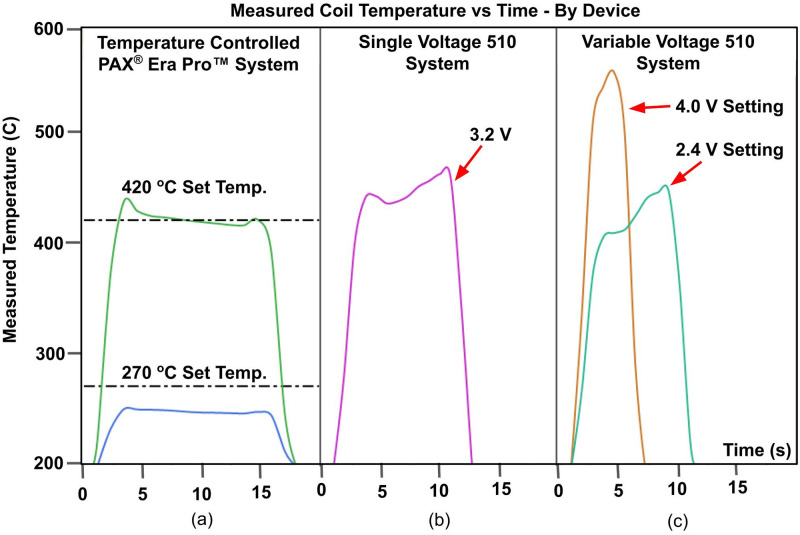
Thermal Mass and Heat Capacity
Heat capacity describes how much energy a body can store before its temperature changes. The formula is: Q = m · c · ΔT (Energy = Mass × Specific Heat Capacity × Temperature Change). Ball Vapes maximize this principle: The greater the total mass of the balls, the more stable the temperature remains during a draw. A large ball stack reacts more slowly but delivers extremely consistent heat – ideal for strong, even extraction.
Thermal Conductivity (W/mK)
Thermal conductivity determines how quickly heat is transported within a material. High thermal conductivity means fast energy transfer and aggressive hits, while low values mean gentler heat and often more “flavor.” Important: Values vary depending on alloy and production process. Below you’ll find realistic reference values at room temperature.
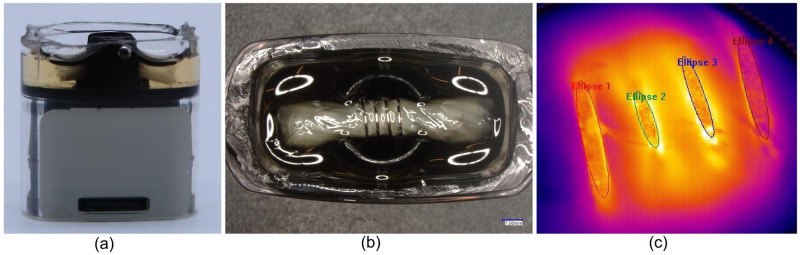
Laminar vs. Turbulent Flow: The Core Principle
The decisive advantage of Ball Vapes comes down to a fundamental physics principle: the difference between laminar and turbulent flow.
In a hollow tube — as found in many conventional vaporizers — air flows in orderly, parallel layers (laminar flow). Only the air touching the tube wall contacts hot metal. The result: roughly 90% of the air passes through cold and reaches the herb unheated.
Fill that same tube with hundreds of small balls, and everything changes. The air is forced to wind around every single obstacle — like navigating a labyrinth. This creates turbulent flow: air molecules slam into hot balls, swirl around each other, and absorb heat in the process. Air temperature jumps from room temperature (~20 °C) to over 200 °C in milliseconds, before it even reaches the herb.
The key term is surface-to-volume ratio: the more balls, the more hot surface area the air contacts. This is precisely why Ball Vapes achieve an air heating capacity that no battery-powered portable with its limited heating power can ever match.
Material Comparison: Which Balls Are Best?
The choice of ball material significantly affects heat-up time, heat retention, heat transfer, and flavor:
| Material | Heat Retention | Heat-up Time | Flavor | Thermal Conductivity (≈ W/mK) | Price |
|---|---|---|---|---|---|
| Ruby/Sapphire (Corundum) | Excellent | Slow (3–5 min) | Purest | ≈ 35–45 | $$$ |
| Titanium | Very good | Fast (1–2 min) | Neutral | ≈ 20–23 | $$ |
| Quartz | Good | Medium (2–3 min) | Pure | ≈ 1–2 | $ |
| Ceramic (Alumina) | Good | Medium (2–3 min) | Very pure | ≈ 20–30 | $ |
| Stainless Steel (SS316) | Medium | Fast (1 min) | Slightly metallic | ≈ 15–20 | $ |
| Zirconia | Very good | Medium (2–3 min) | Pure | ≈ 2–3 | $$ |
| SiC (Silicon Carbide) | Excellent | Fast (1–2 min) | Neutral | ≈ 120–170 | $$$$ |
| Borosilicate Glass | Low | Very fast (< 1 min) | Clean | ≈ 1 | $ |
Additional materials: SiC Pearls (Silicon Carbide) have by far the highest thermal conductivity of all ball materials and are popular with low-temp fans because they heat air more aggressively, allowing lower PID temperatures. However, they are expensive, and there are occasional reports of abrasion from lower-quality products. Borosilicate glass is the cheapest option but stores very little heat — better for experimenting than daily use.
Important: Only use synthetic balls! Natural rubies or sapphires may contain air inclusions, cracks, or scratches. At high temperatures, such balls could shatter — and fragments in the vapor path pose a serious health risk. Synthetically produced corundum balls (ruby/sapphire) are free from these defects and guarantee consistent quality.
Recommendation: For the purest flavor, ruby or sapphire balls are the reference. Those who prefer faster heat-up times should choose titanium. Budget-conscious users can start with quartz or stainless steel. Zirconia offers an interesting balance with very clean flavor and good heat retention.
Coil Types, Heating Power, and Heat-up Time
The coil is the heart of ball heating. It determines how quickly the balls heat up and how stable the temperature remains.
Coil Sizes (20 mm, 25 mm, 30 mm)
The most common coil size is 20 mm — it sits inside all Flowerpot heads (B0, B1, B2, B-Zero) and delivers a solid balance of efficiency and heating power. Anyone who needs more heating surface and a bit of extra thermal mass steps up to the 25 mm coil, which is widely used in the E-Nail world. At the top end sits the 30 mm coil, found in models like the Qaroma XL: it offers the largest thermal reserve but heats up more slowly. As a general rule, a larger coil diameter transfers more heat energy to the balls, which keeps temperatures steadier during long or forceful draws — though it also demands a more capable controller.
Heating Power (Watts) and Heat-Soak
The higher the wattage, the faster the ball stack reaches the target temperature. High-performance models like Taroma 360 use coils with around 150 W and achieve heat-soak times of 15–90 seconds (model-dependent). Smaller heads are more energy-efficient but take a bit longer. Generally: More power = shorter heat-up time, but also higher demands on controller and safety.
PID Controllers Explained in Detail
A PID controller ensures temperature-stable performance. It continuously balances setpoint and actual values using three components:
The P (Proportional) component responds directly to current temperature deviations. The I (Integral) component sums past deviations and corrects long-term drift. The D (Derivative) component anticipates trends and stabilizes rapid changes before they can affect performance.
Why this matters: When drawing, the temperature at the ball stack temporarily drops. Without PID regulation, power would fluctuate. The controller compensates for these fluctuations and delivers consistent extraction – crucial for reproducible results.
Setup Guide: How to Set Up a Ball Vape
A Ball Vape setup consists of several components:
Required Components
At its core is the Ball Vape Head — the head containing the balls, functioning as an injector or diffuser. It is heated by a heating coil, typically a 20–30 mm E-Nail coil. A PID controller with display regulates the temperature. A glass adapter (WPA or whip) connects the head to the inhalation device. Optionally, a water pipe provides filtered, cool vapor.
Step-by-Step Setup
- Place coil on the Ball Vape head and tighten
- Connect coil to PID controller
- Set temperature (Start: 220°C for flavor, 250°C for thick clouds)
- Allow 3–5 minutes to heat up (depending on material and coil)
- Load herb into the bowl (0.1–0.3 g recommended)
- Draw slowly and evenly
Optimal Temperatures
| Goal | Temperature | Result |
|---|---|---|
| Flavor | 190–210°C | Light, aromatic vapor |
| Balance | 210–230°C | Good flavor + decent clouds |
| Clouds | 230–260°C | Thick clouds, less flavor |
Draw Techniques (Slow vs. Fast)
Draw speed has a huge effect on the vapor you get. A slow, steady draw gives the air more contact time with the hot balls, producing denser clouds and a more intense extraction. Drawing fast and briskly, on the other hand, delivers cooler vapor with stronger terpene flavor, because the lower temperatures preserve delicate aromatic compounds better. A third approach is the so-called pulse draw: you pull in short, rhythmic bursts, which stabilizes the temperature in the ball stack and helps produce even results when airflow is very strong.
Bowl Packing and Fill Amounts
When loading the bowl, density is what matters most. The material should sit loose and airy so hot air can flow through it evenly — that is the key to good convection. Packing too tightly risks “choking” the bowl: the air cannot find a path through, and extraction becomes uneven. For most setups, 0.1 to 0.3 grams is Plenty, since ball vapes work so efficiently that even small amounts produce serious vapor.
Cleaning and Maintenance
Ball Vapes are surprisingly low-maintenance. The balls themselves rarely need cleaning since they get so hot that residue usually burns off.
Burn-off Before First Use
Before loading your new Ball Vape with herbs for the first time, perform a burn-off: set the temperature to 350–400 °C and let the head heat for 10 to 20 minutes. This burns off factory residues like machine oil or packaging remnants. Smell the vapor path periodically — once no chemical or plastic-like odor is noticeable, the device is ready. This tip applies to every new vaporizer: run 2–3 heating cycles at maximum temperature before your first inhalation.
Regular Care
A consistent cleaning routine keeps your ball vape in top shape and preserves neutral flavor over time.
After each session, give the bowl a quick brush with a dry brush to remove loose residue — takes under 30 seconds and prevents buildup. Weekly, soak all glass parts and the adapter in isopropyl alcohol (90% or higher), then rinse with clean water to keep the vapor path clear and the taste clean. Monthly, you can optionally soak the balls themselves in isopropyl alcohol for 15 to 30 minutes. Residue usually burns off at operating temperatures, but with heavy use a thin film can still form.
What to Avoid
Never clean the balls with water — certain materials like stainless steel or brass can corrode or develop stains. Harsh cleaners such as acetone, bleach, or abrasives have no place in the vapor path; isopropyl alcohol is all you need. Do not heat the coil above 300 degrees Celsius, as beyond that threshold the heating coil suffers and there is a risk of material combusting rather than vaporizing.
Safety Considerations
Thermal Safety
Ball vapes reach extreme temperatures. The heater heads can reach 500°C and more – hot enough to cause severe burns. Treat the device with appropriate respect:
Never touch the heater head during or shortly after operation — the temperatures are high enough to cause severe burns. Always use a fire-resistant surface and allow at least 30 minutes of cooling time before cleaning. Keep the Ball Vape away from children and pets at all times, and do not operate it unattended.
Electrical Safety
Many ball vapes use powerful induction heaters or heating coils. Always follow manufacturer instructions for electrical installation. Use only recommended power supplies and avoid humid environments.
Material Safety
Pay attention to material quality of all components in the vapor path. Only food-grade materials should come into contact with hot air. Cheap knockoffs may use inferior materials – invest in quality from reputable manufacturers.
Pros and Cons
Advantages
Ball Vapes deliver maximum vapor density that no other heating method can match. Thanks to complete extraction, all active compounds are released in just a few draws, and the pure convection without contact to the heating element produces the purest flavor. Because they work so efficiently, you need significantly less material for the same effect. The balls themselves are extremely durable and last practically forever with proper care. On top of that, the setup is fully customizable — temperature, ball count, and material can all be adjusted to personal preference.
Disadvantages
As desktop-only devices without batteries, Ball Vapes are not portable. The entry price starts at around 200 euros, with high-end setups reaching 600 euros and beyond. They also require a PID controller or E-Nail for power. The optimal draw technique involves a learning curve that takes some practice, and the vapor intensity is often too strong for beginners. Heat-up time of 3 to 5 minutes also demands a bit of patience. Additionally, Ball Vapes work so efficiently that regular use can significantly increase tolerance — microdosing (0.05–0.1 g per bowl) helps keep consumption controlled.
Ball Vape Models in Price Comparison
Find these ball vapes in our price comparison:
QaromaShop (Reference for Ball Vapes)
| Model | Material | Type | Highlight |
|---|---|---|---|
| Qaroma | Quartz | Desktop | Purest flavor, entry model |
| Qaroma XL | Quartz | Desktop | Larger chamber for more vapor |
| Taroma 2.0 | Titanium | Desktop | Fast heat-up time |
| Taroma 3.0 | Titanium | Desktop | Improved heat retention |
| Taroma XL | Titanium | Desktop | XL version for groups |
| Taroma 360 | Titanium | Desktop | 360 degree design, rotatable |
| Taroma Lite | Titanium | Desktop | Budget-friendly |
| Ceroma | Ceramic | Desktop | Pure ceramic flavor |
| Staroma 2.0 | Stainless Steel | Desktop | Affordable entry option |
| Staroma 360 | Stainless Steel | Desktop | 360 degree design, budget |
| Baroma 2.0 | Brass | Desktop | Unique aesthetic |
| 360XLS | Stainless Steel | Desktop | Extra-Large 360 |
Cannabis Hardware / FlowerPot
| Model | Type | Highlight |
|---|---|---|
| FlowerPot B0 | Desktop | Entry model of B-series |
| FlowerPot B1 | Desktop | Medium size |
| FlowerPot B2 | Desktop | Largest B-series |
| FlowerPot Vrod | Desktop | Dual-use (flower + concentrates) |
| VMAX Ball Vape | Desktop | Hybrid heating |
| VMAX Injector | Desktop | Injector style |
Other Ball Vapes
| Model | Brand | Type | Highlight |
|---|---|---|---|
| Tempest 2 | MAD Heaters | Portable | Manual, no power needed |
| Camouflet Injector | Camouflet | Portable | Compact injector |
| JCVAP HerbCloud | JCVAP | Portable | Portable ball vape |
| Baller Series Heater | 7th Floor | Desktop | From SSV manufacturer |
| Adaptaball | Vices | Desktop | Wireless ball vape with integrated PID controller and battery |
| 420VAPE BALLZ | 420VAPE | Desktop | Budget option |
Other Important Platforms & Classics
Here you’ll find additional internationally known systems with typical configurations and price positioning (list prices, may vary by shop):
Flowerpot Series (B0, B1, B2, B-Zero)
The entry point into the Flowerpot world is the B0 (also called B-Zero): for around $52 you get a compact head with a 20 mm coil and 3 mm ruby balls that has established itself as the best bang for your buck. If you want more airflow and bigger draws, the B1 at roughly $105 is the next step — a flower-only head with a very open design, built for fast, powerful hits. At the top of the lineup sits The B2 at about $135: it is a dual-purpose design that handles both flower and concentrates, making it the most versatile all-rounder in the series.
Qaroma Series Expanded
Two models from the QaromaShop lineup deserve special mention. The Qaroma XL uses a 30 mm coil and around 500 ruby balls at 3 mm diameter, which creates an extreme thermal mass that barely drops in temperature even during long group sessions. The Taroma 360 takes a different approach: with its 150 W coil and a hybrid design combining convection and conduction, it reaches very fast heat-soak times. Both models target power users in the high-end segment.
Old Head
Old Head has made a name for itself with two specialized products. The Freight Train is a high-airflow head filled with ruby balls, offered as a complete kit for around $399.99 and designed for maximum vapor production. Alongside it, Old Head sells the Terp Hammer for roughly $199.99 — a cordless thermal extraction accessory that works without a fixed power connection, making it far more flexible than traditional desktop setups.
Elev8 Ball Mod
A mod kit that elevates classic desktop vapes like SSV/DBV with ruby balls to ball vape level. Usually priced around $87.99, ideal as a budget upgrade.
Comparison Tables
Ball Vape vs. Classic Desktop Vapes
| Criterion | Ball Vape | Classic Desktop |
|---|---|---|
| Heating Principle | Ball matrix convection | Heating core / wand |
| Vapor Profile | Very dense, fast | Gentler, longer |
| Setup Complexity | High | Medium |
| Airflow | High | Variable |
| Target Audience | Power users | All-round users |
Frequently Asked Questions (FAQ)
Are Ball Vapes suitable for beginners?
No, Ball Vapes are designed for experienced users. The vapor production is very intense and can overwhelm beginners. Better start with a classic session vaporizer like the Mighty+ or Arizer Solo.
Can I use a Ball Vape without a water pipe?
Yes, many Ball Vapes also work with a dry mouthpiece or whip. However, the vapor is then very hot. A water pipe cools and filters, making the experience more pleasant.
How much material do I need per session?
Significantly less than with other vaporizers. 0.1–0.2 g is often enough for a full session. Ball Vapes are extremely efficient.
How long do the balls last?
Practically indefinitely. Ruby balls are extremely hard and heat-resistant. Even after years of daily use, they show hardly any wear.
What’s the difference between Injector and Diffuser?
An Injector pushes hot air through the herb from above – ideal for water pipes. A Diffuser distributes heat from below – better for direct inhalation.
Why are Ball Vapes so powerful?
The high thermal mass of the balls ensures constant temperature, even with large draws. This keeps convection stable and powerful.
What ball size is optimal?
3 mm rubies are a common standard. Smaller balls provide more surface area (more heat), larger balls often offer somewhat more airflow.
Are there wireless Ball Vapes?
Yes, e.g., WOHW V2 or Terp Hammer offer wireless setups. However, these are usually more expensive and somewhat more specialized in use.
What’s better – ruby or quartz?
Ruby/sapphire conducts heat significantly faster. Quartz is thermally stable and is often preferred for neutral flavor.
Why do many systems use 20 mm coils?
20 mm is the standard for Flowerpot heads. It offers a good balance of efficiency and performance.
Can I also use concentrates with a Ball Vape?
Yes, some models like the Flowerpot B2 are dual-purpose and suitable for flower + concentrates.
How long does heating take?
Depending on the model, 15–90 seconds heat-soak for high-power heads, otherwise 2–5 minutes.
What is a Ball Mod?
A Ball Mod is a retrofit kit (e.g., Elev8) that makes classic desktop vapes significantly more powerful with ruby balls.
What’s the difference between B0, B1, and B2?
B0 is the entry-level, B1 is very airy (flower-only), B2 is dual-purpose with concentrate option.
Who Are Ball Vapes For?
Ball Vapes are best suited for experienced users who want maximum extraction and the purest possible flavor. Flavor enthusiasts with high standards will particularly appreciate the convection-only heating. They are ideal for home sessions where you have time for setup, for users who want to process larger amounts efficiently, and for collectors looking for the absolute best in desktop vaporization.
Ball Vapes are less suitable for beginners who may find the intensity overwhelming, for on-the-go use since they are not portable, for occasional users where the setup effort is hard to justify, and for budget-conscious buyers given the high entry costs.
Related Topics
For more background, explore our other glossary articles: Conduction vs. Convection vs. Hybrid compares the three heating methods in detail. Temperature Settings covers optimal temperatures for different effects. Vapor Quality explains what makes good vapor. Session vs. On-Demand clarifies why Ball Vapes are typical on-demand devices. And Cleaning & Maintenance offers general tips for vaporizer care.
Scientific Sources
- Lanz, C. et al. (2016). Medicinal Cannabis: In Vitro Validation of Vaporizers for the Smoke-Free Inhalation of Cannabis. PLoS ONE, 11(1), e0147286. PubMed 26784441
- Hazekamp, A. et al. (2006). Evaluation of a Vaporizing Device (Volcano) for the Pulmonary Administration of Tetrahydrocannabinol. Journal of Pharmaceutical Sciences, 95(6), 1308–1317. PubMed 16637053