Vapman vs DynaVap Microdosing Comparison 2026
The most important things at a glance
- Vapman Classic from 99
- M7 from 62
Price trend
What is microdosing when vaporising?
Microdosing means: small amounts, big effect. Instead of stuffing half a chamber full, you work with 0.05 to 0.1 grams of herbs per session. That saves material, delivers more intense flavour and gives more control over the dosage. Especially with butane vaporizers, meaning devices without a battery that are heated with a lighter, microdosing has become a popular method.
Key fact: The Vapman is a Swiss butane vaporizer, handmade from wood with a brass chamber from 99 EUR. The DynaVap M7 uses a stainless steel click system from 62 EUR at 58 shops. Neither requires batteries nor charging (Vapochecker, 2026).
Two brands dominate this segment: Vapman from Switzerland and DynaVap from the USA. Both rely on manual heating, both work without electricity, and both are excellently suited to small amounts. But the philosophy behind them could hardly be more different.
Who needs which vaporizer? This comparison helps with the decision.
The Vapman family: Swiss craftsmanship meets microdosing
Vapman is produced in a small workshop in Switzerland. Every device is handmade. The chamber is made of gold-plated copper, the body of selected wood. That sounds luxurious, and it feels that way too.
Vapman 2.0
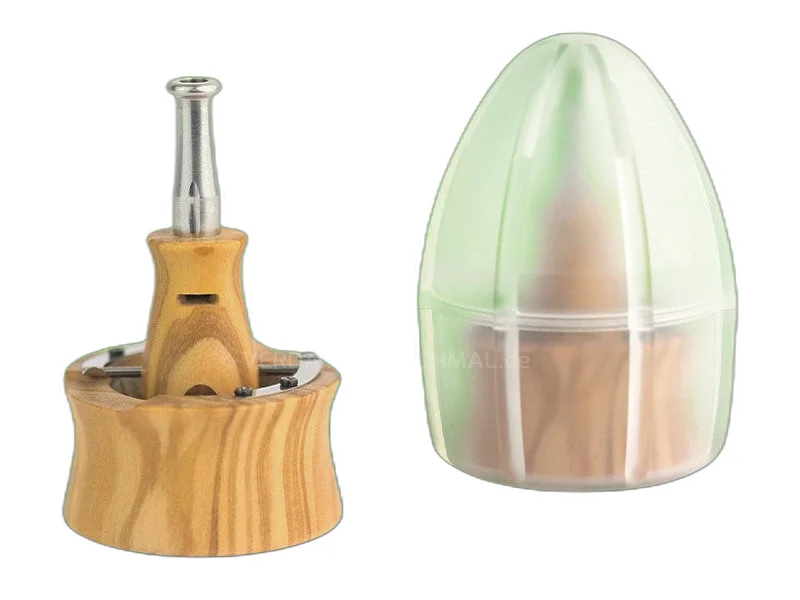
The flagship device. The gold-plated copper chamber holds about 0.1 grams and heats up in around 3 seconds. Yes, three seconds. That is faster than any battery-powered vaporizer on the market.
The heating works in hybrid mode, partly conduction, partly convection. The airflow can be regulated via a rotating ring. Set tighter, it gives denser draws; set open, it is more airy. The system also works with concentrates.
The downside: it takes practice. Anyone using a Vapman for the first time will probably heat either too cautiously or too aggressively. The learning curve is real. And the price? Significantly above what you pay for a DynaVap.
Vapman Click Classic
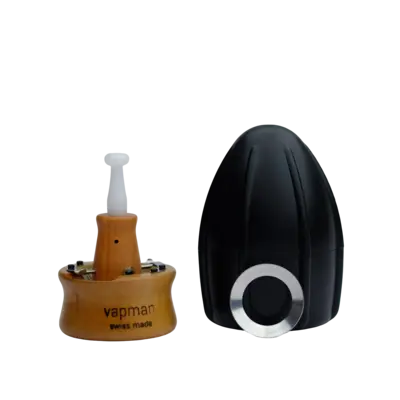
The Click version solves the biggest problem of the Vapman 2.0: guessing the temperature. A built-in click mechanism signals acoustically when the right temperature has been reached. Similar to the DynaVap, only Vapman has implemented the concept in its own way.
The chamber remains just as efficient. Hybrid heating, adjustable airflow, fast heat-up time. The Click Classic is suitable both for microdoses and for slightly larger fills. However, you do need a gentle jet lighter and a bit of finesse.
Vapman Click Pure
Made entirely from apple wood. No metal on the mouthpiece, no visible copper. In return, you get a pure, woody flavour — some describe a subtle charcoal note in the first sessions, which disappears after burn-in.
The click mechanism is identical to the Click Classic. Advantage of the Pure version: spare parts are available, the design is simple, and the price is slightly lower. Disadvantage: the wooden mouthpiece can become warm during longer sessions.
Vapman Pure
The collector’s edition among vaporizers. Natural wood meets a gold-plated copper chamber, often in limited runs with special wood types. Functionally identical to the Vapman 2.0, but very much a collector’s piece.
Anyone who owns a Vapman Pure usually does not just use it — they also put it on the shelf.
DynaVap for microdosing: the modular system
DynaVap takes a different route. Instead of craftsmanship, the focus here is on a modular kit system. Tip, stem, cap — every component can be swapped, upgraded or replaced.
DynaVap M7
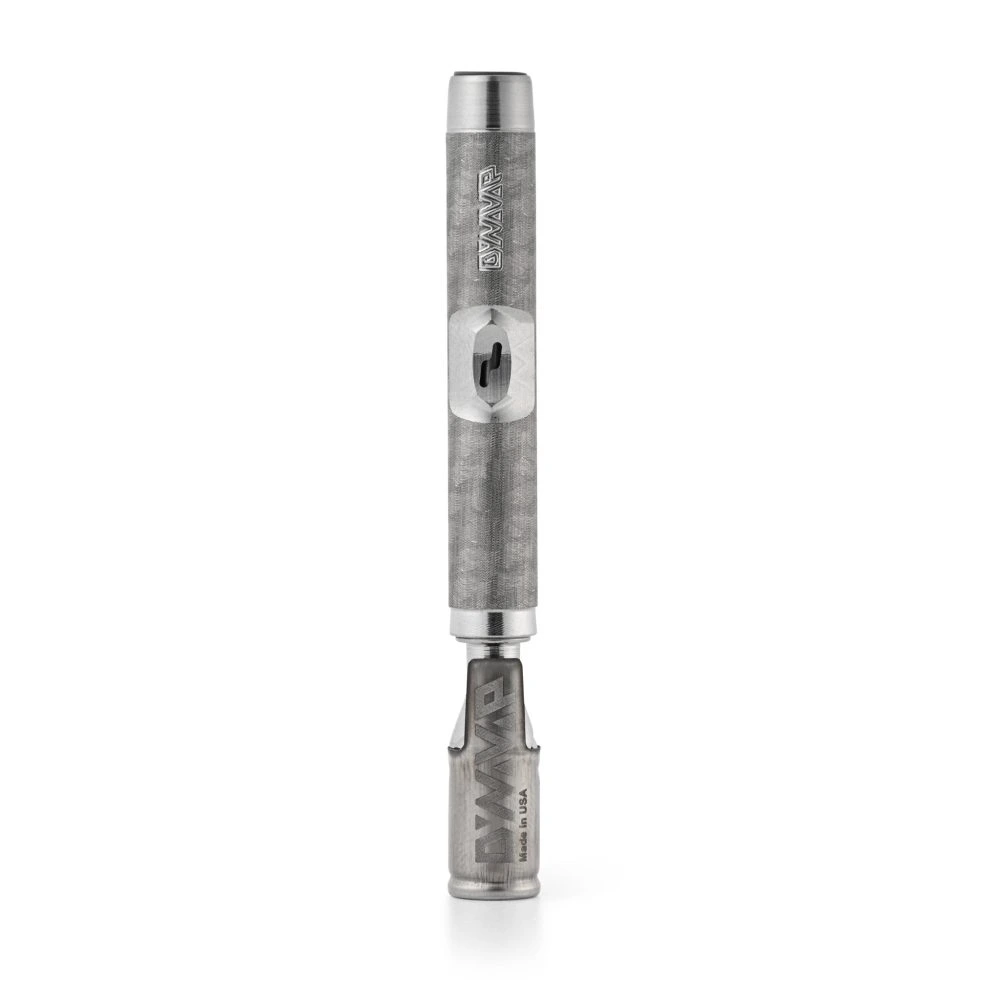
The current standard model. Stainless steel, robust, affordable. The highlight for microdosing: the Adjust-a-Bowl system. The chamber can be set to two sizes — full load or half load with around 0.05 grams. That is half of what a Vapman holds.
The well-known click mechanism indicates when it needs heating and when you should stop. Two clicks while heating, two while cooling. Simple, reliable, immediately understandable even for beginners.
DynaVap G3
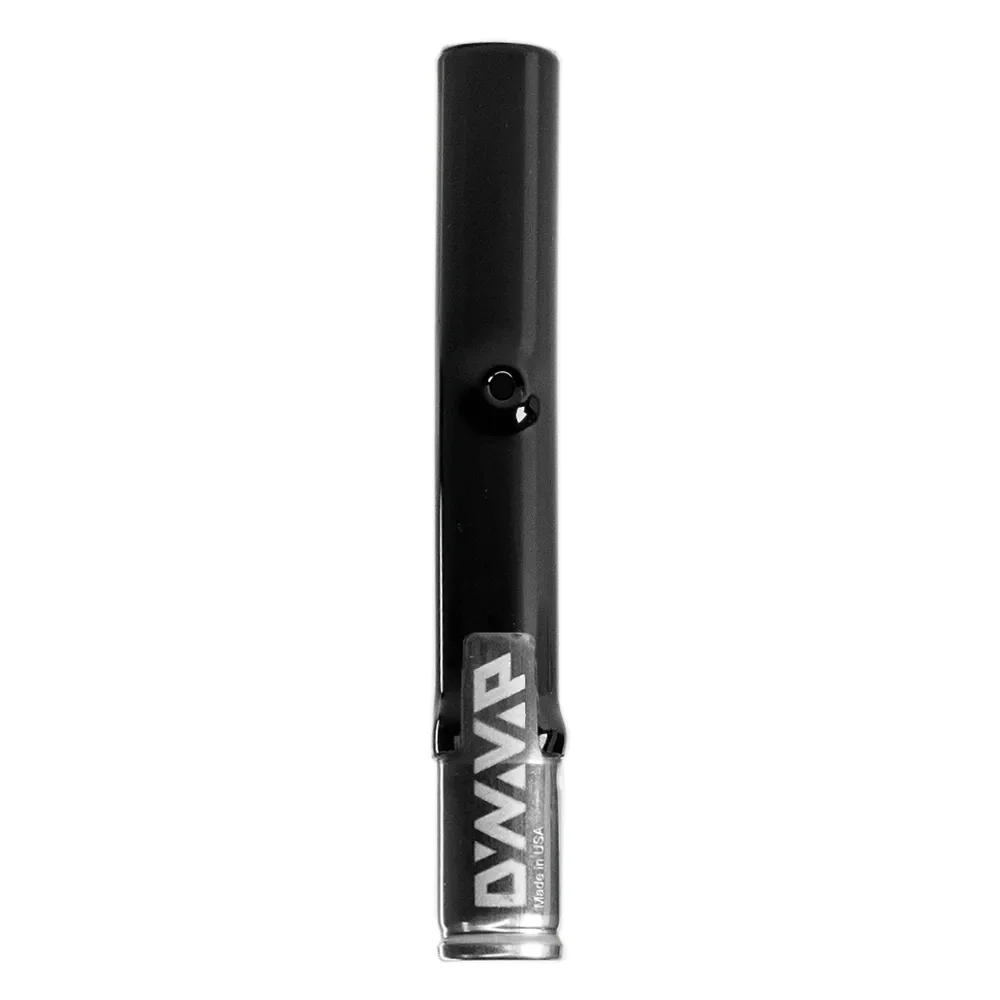
The budget option with a glass body. In terms of flavour, an upgrade over the stainless steel M7, and cheaper too. The G3 uses the same tip and cap as all other DynaVap models — if you want to upgrade later, you can keep the glass body and only swap the tip.
For newcomers to microdosing on a small budget, this is the first port of call.
The ecosystem
This is where DynaVap has its greatest advantage: there are dozens of compatible stems, tips, induction heaters and accessories from third-party manufacturers. If you start with an M7 today, tomorrow you can retrofit a titanium tip, next week fit a wooden stem from Simrell, and in three months buy an induction heater that replaces the lighter entirely.
This ecosystem does not exist for Vapman.
Flavour: copper-gold vs stainless steel
This is where it becomes subjective — but there are clear tendencies.
Vapman delivers a warm, rounded flavour. The gold-plated copper chamber transfers heat extremely evenly. The hybrid heating of conduction and convection extracts aromas gently. Many users describe the vapor as “creamy”. The Click Pure with its full-wood path adds an extra woody nuance on top.
DynaVap in the stainless steel setup tastes more direct, more metallic. Not bad, but different. The G3 with glass body comes closer to the Vapman in flavour. If you use a titanium tip, you get faster extraction with slightly less depth of flavour.
For pure flavour, the Vapman wins. That is not a matter of opinion — it is materials science. Gold-plated copper transfers heat more evenly than stainless steel. Full stop.
Handling: learning curve vs plug-and-play
DynaVap is the easier entry point. Fill the chamber, put on the cap, rotate with the lighter, wait for the click, inhale. After three sessions, you have got the hang of it. The click is unambiguous, the technique forgiving.
Vapman 2.0 (without click) requires patience. You have to hold the flame at the right distance, rotate the Vapman slowly and sense the right timing yourself. Heated too briefly: no vapor. Too long: combustion. It easily takes 10 to 15 sessions before it clicks.
The Vapman Click models partly close this gap. The click provides guidance, but the technique with the jet lighter remains more demanding than with the DynaVap.
DynaVap also has the edge when it comes to cleaning. Everything can be taken apart and soaked in isopropanol. With the Vapman you need to be more careful — wood and alcohol are a poor match.
Value for money: what do you get for your money?
The DynaVap M7 starts at around 35–40 euros. The G3 is even cheaper. For the price of a single Vapman 2.0, you can get two DynaVaps plus accessories.
Vapman models start at around 80 euros (Click Pure) and go to over 200 euros for limited editions. That is a lot of money for a butane vaporizer.
The question is: are you paying for function or for the experience? Functionally, both systems deliver vapor. The DynaVap does it more cheaply and more simply. The Vapman does it more beautifully, with better flavour and with the feeling of holding something special in your hand.
Current prices for all the models mentioned can be found at vapochecker.com — there you can compare offers from different shops directly.
Comparison table: Vapman vs DynaVap for microdosing
| Feature | Vapman 2.0 | Vapman Click Classic | DynaVap M7 | DynaVap G3 |
|---|---|---|---|---|
| Origin | Switzerland (handmade) | Switzerland (handmade) | USA (mass production) | USA (mass production) |
| Chamber material | Gold-plated copper | Gold-plated copper | Stainless steel | Stainless steel |
| Chamber size | ~0.1 g | ~0.1 g | 0.05–0.1 g (Adjust-a-Bowl) | 0.05–0.1 g (Adjust-a-Bowl) |
| Heat-up time | ~3 seconds | ~5 seconds | ~8–12 seconds | ~8–12 seconds |
| Heating method | Hybrid (conduction/convection) | Hybrid (conduction/convection) | Conduction (primarily) | Conduction (primarily) |
| Click signal | No | Yes | Yes | Yes |
| Adjustable airflow | Yes (rotating ring) | Yes (rotating ring) | Yes (airport) | Limited |
| Modular/spare parts | Limited | Yes | Very good | Good |
| Learning curve | Steep | Medium | Shallow | Shallow |
| Flavour | Excellent | Very good | Good | Very good (glass) |
| Price (approx.) | 130–200 € | 100–150 € | 35–45 € | 25–35 € |
Which vaporizer is for whom?
Vapman suits you if you:
- Value flavour and craftsmanship
- Enjoy experimenting with technique and do not shy away from a learning curve
- Are looking for a vaporizer that also looks the part
- Are willing to spend more money for a premium experience
- Like collector’s items
DynaVap suits you if you:
- Are looking for a straightforward introduction to butane vaping
- Appreciate flexibility and modularity
- Have a limited budget
- Want to upgrade later without having to buy everything again
- Need a vaporizer that can survive being dropped
Conclusion: two philosophies, one goal
Vapman and DynaVap achieve the same result in completely different ways. The Vapman is an instrument of enjoyment — handmade, superior in flavour, but also more expensive and more demanding to use. The DynaVap is a tool — modular, robust, affordable and ready to use straight away.
For pure microdosing, DynaVap has a real advantage with the Adjust-a-Bowl: 0.05 grams is hard to beat. Vapman counters with flavour quality and heat-up speed.
My tip: if you do not yet own a butane vaporizer, start with a DynaVap M7 or G3. If you already have a DynaVap and are looking for more flavour, try the Vapman Click Classic as a second device.
Both product lines are available from various European shops — the best prices can be found via the price comparison at vapochecker.com.
Last updated: February 2026. Prices and availability may vary depending on the shop.
Overview of all comparison articles – find the perfect device for you.
Has been testing and comparing vaporizers at VapoChecker since 2020. Over 800 devices, 274 shops, 51 countries.
Price comparison
Prices are updated daily