Vaporizer Temperature Settings
Temperature selection is one of the most important factors when vaporizing. Different temperatures release different compounds and have a major impact on flavor, intensity, and efficiency. Unlike smoking, vaporizing gives you full control over what you inhale – make the most of it!
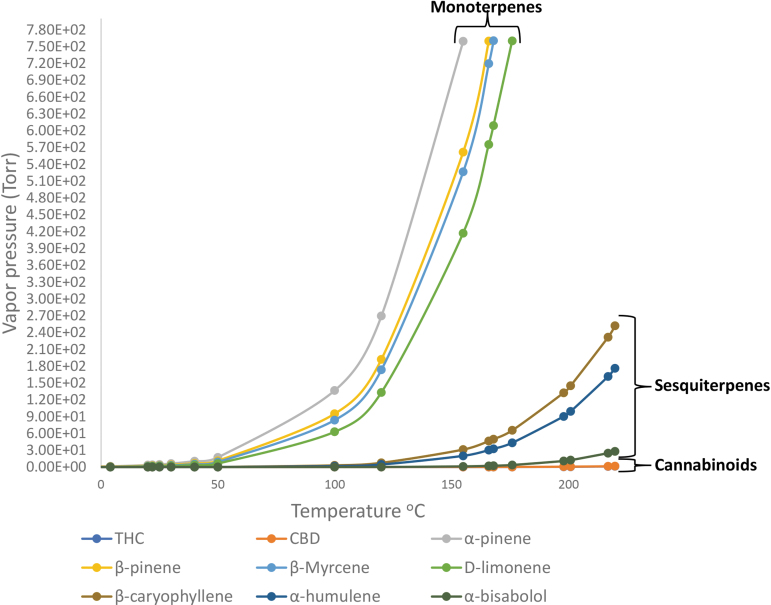
What does the chart show? The graph displays the boiling points of different terpenes (aromatic compounds) and cannabinoids. Each substance vaporizes at a different temperature. Limonene (citrus) vaporizes at ~175°C, THC at ~157°C, CBD at ~180°C. Practical tip: Start at 170-180°C for flavor, then increase to 200°C+ for full extraction.
The Optimal Temperature Range: 160-220°C
Most plant compounds vaporize between 160°C and 220°C. Below 160°C, very little is released – you’ll barely see any visible vapor and the effects are minimal. Above 220°C, combustion (pyrolysis) begins, producing harmful byproducts. Within this 60-degree window, you can fine-tune the experience to your preferences.
At low temperatures (160-180°C), you get light, flavor-rich vapor. The terpenes responsible for aroma vaporize optimally in this range. The effects tend to be clearer and less sedating – ideal for daytime use or when you want to stay productive.
Medium temperatures (180-200°C) offer the best compromise between flavor and intensity. Most experienced users end up in this range. You get denser clouds than at low temperatures without significantly compromising the taste. For the majority of sessions, this is the sweet spot.
At high temperatures (200-220°C), the material is fully extracted. The vapor is denser and more intense, but the flavor becomes less nuanced and can turn harsh. Many people use high temperatures at the end of a session as a “finishing temperature” to fully utilize the material.
Decarboxylation: Why Temperature Matters So Much
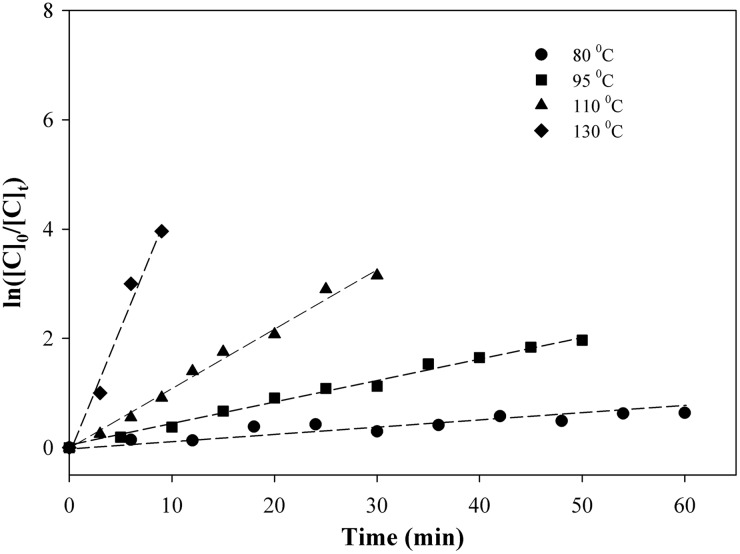
What does the chart show? The curves show how quickly THCA (inactive) converts to THC (active). Higher temperatures mean faster conversion. At 110°C it takes about 30 minutes, at 145°C only a few minutes. During vaporization (180°C+) it happens instantly – that’s why vaporized material takes effect right away.
In raw plant material, most active compounds exist in their acidic form (THCA, CBDA). These are not psychoactive. Only through heat are they converted to their active forms (THC, CBD) – a process called decarboxylation.
During vaporization, decarboxylation happens automatically and instantly. This is an advantage over consuming raw material. As the chart shows: at 180°C, the conversion is practically instantaneous. That’s why you feel the effects of vaporizing within seconds to minutes.
Temperature Control in Different Vaporizers
Modern vaporizers offer different types of temperature control. Stepless adjustment via a display allows degree-precise settings – the Mighty+, for example, can be set from 40-210°C in 1-degree increments. This gives you maximum control but can overwhelm beginners.
Preset temperature levels (usually 3-5) simplify operation. The PAX 3 offers four temperature settings (182°C, 193°C, 204°C, 215°C), which cover most scenarios. Some users prefer this simplicity – fewer decisions, faster ready to go.
Budget vaporizers and pen models often have no temperature control or just a switch for “low/medium/high” without exact degree readouts. Here you rely on the manufacturer’s factory settings, which generally works fine but offers less control.
The Combustion Threshold: When Does It Get Dangerous?
At around 230°C, plant material begins to combust (pyrolysis). This produces the same harmful combustion byproducts as smoking – tar, carbon monoxide, and carcinogenic substances. A good vaporizer prevents reaching these temperatures through precise regulation.
Some cheap conduction vaporizers have problems with “hot spots” – areas where the material overheats while the rest hasn’t vaporized yet. You’ll notice this from a burnt taste or black spots in the ABV (Already Been Vaped). Quality vaporizers avoid this through even heat distribution.
Practical Tips for Temperature Selection
Work your way up from the bottom: Start every session at a lower temperature (170-175°C) and increase gradually. This way you first enjoy the flavor terpenes and extract the remaining material at the end. A typical progression: start at 175°C, after a few draws increase to 190°C, finish at 205°C for complete extraction.
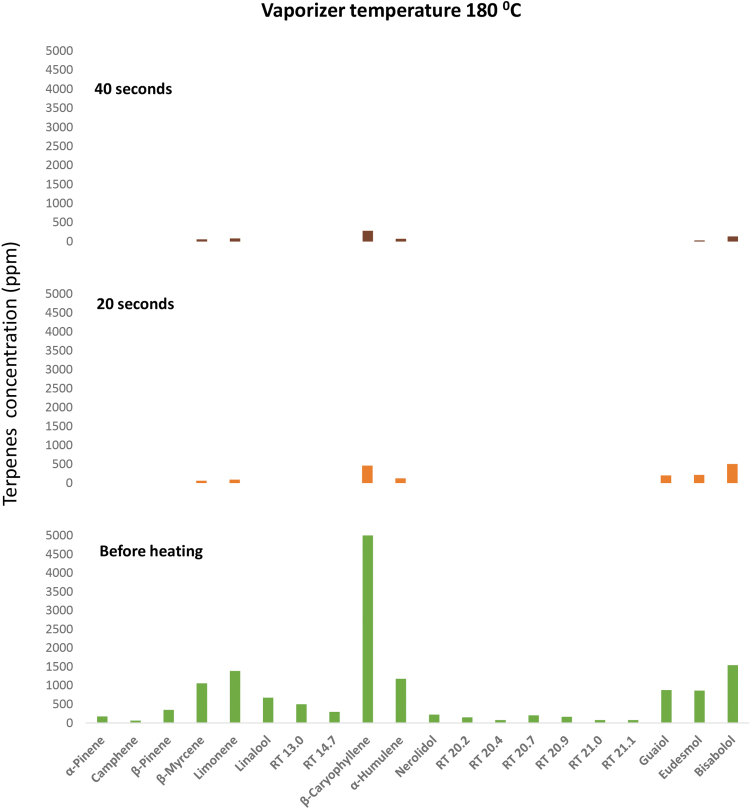
Source: Eyal et al. (2023), Molecules, CC-BY 4.0
Consider the material: Dry material vaporizes at lower temperatures than fresh material. If your material feels crispy, start a bit lower. Finely ground material offers more surface area and vaporizes more efficiently – you can achieve the same effect at a slightly lower temperature.
Experiment: The optimal temperature is a personal thing. Some prefer consistently low temperatures for maximum flavor, others want dense clouds and go straight to 200°C+. Try different settings across several sessions to find what works best for you.
Frequently Asked Questions (FAQ)
At what temperature do I get the best flavor?
170-185°C. In this range, most terpenes vaporize optimally without burning.
At what temperature is the effect strongest?
195-210°C. Higher temperatures extract more active compounds, but flavor suffers.
Can I damage my vaporizer at too high a temperature?
Quality vaporizers have safety limits and shut off when overheating. Cheap devices, however, can overheat and potentially become dangerous.
Temperature Strategies for Different Effects
Low temperatures (160-180°C) emphasize flavor and lighter effects. At these temperatures, primarily terpenes and THC are released, while heavier cannabinoids like CBD and CBN are not yet fully liberated. Ideal for daytime use and beginners.
Medium temperatures (180-200°C) offer a well-balanced mix of flavor and effect. Most cannabinoids and terpenes are efficiently extracted. This is the sweet spot for the majority of users.
High temperatures (200-220°C) maximize extraction but sacrifice some flavor. More CBD and CBN are released, which can lead to more relaxing effects. Caution: above 230°C, combustion begins.
Temperature Stepping
Many experienced users practice temperature stepping: they start at low temperatures for maximum flavor and gradually increase throughout the session. This way, you first enjoy the full aroma profile, then maximize extraction.
A typical stepping session might look like this: start at 175°C for the first draws, then 185°C, 195°C, and finish at 205°C. Each step offers a slightly different experience.
Temperature Table for Active Compounds
| Compound | Boiling Point | Effect |
|---|---|---|
| THC | 157°C | Psychoactive, pain relief |
| CBD | 160-180°C | Anti-anxiety, anti-inflammatory |
| CBN | 185°C | Sedative, sleep-promoting |
| CBC | 220°C | Antidepressant, anti-inflammatory |
| THCV | 220°C | Energizing, appetite suppressant |
| Pinene | 155°C | Alertness, bronchodilation |
| Myrcene | 168°C | Relaxing, sedative |
| Limonene | 176°C | Mood elevation, stress relief |
| Linalool | 198°C | Anti-anxiety, calming |
| Caryophyllene | 130°C | Anti-inflammatory, pain relief |
Temperature Zones Explained
Low (160-180°C): Light Effects
Ideal for beginners and microdosing. Mainly THC and light terpenes. Clear head, minimal body effects. Best flavor development.
Medium (180-200°C): Balanced Effects
The most popular zone. Good balance between head and body effects. Most cannabinoids and terpenes are released.
High (200-220°C): Strong Effects
Maximum compound release. Stronger body effects, more sedating. Denser vapor, less flavor. Good for evenings.
Practical Temperature Tips
The time of day plays a bigger role in temperature choice than many realize. In the morning, experienced users tend to go with 170-185°C for a clear, energetic effect that keeps the mind sharp. Afternoons suit 185-195°C, striking a balance between relaxation and alertness. Come evening, 195-210°C works well since the higher temperatures produce more relaxing, sleep-friendly effects.
For microdosing, stay at 160-170°C and take only short draws. You get a subtle effect without using up much material. With step-vaping, start at 170°C and bump it up by 5°C every two or three draws — a method that combines flavor with efficiency.
Temperature Zones in Detail
Low Temperatures (160-180°C)
In the flavor range between 160 and 180°C, your vaporizer produces barely visible vapor — what you inhale is almost pure aroma. The compounds released here are mainly THC, pinene, and caryophyllene. The effect is mildly euphoric with a clear head, and creativity can benefit. This zone works best for microdosing, first sessions, and anyone who prioritizes the pure terpene taste.
Medium Temperatures (180-200°C)
The golden middle delivers moderate, clearly visible vapor. Beyond THC, you now also get CBD, myrcene, and limonene. The effect is balanced — a good mix of head and body. For everyday use and medical applications, this range hits the mark.
High Temperatures (200-220°C)
Above 200°C, full extraction takes center stage. The vapor becomes dense and voluminous, while CBN, linalool, and CBC are additionally released. The effect is more sedating and body-focused, with noticeable pain relief. This zone suits evening use, pain patients, and sessions where you want to extract every last bit from the material.
Temperature Recommendations by Device
| Vaporizer | Recommended Start | Recommended Range | Max |
|---|---|---|---|
| Mighty+ | 175°C | 175-210°C | 210°C |
| Crafty+ | 175°C | 175-210°C | 210°C |
| PAX Plus | 182°C (Level 1) | 182-215°C | 215°C |
| Arizer Solo 2 | 185°C | 185-210°C | 220°C |
| DynaVap | Mid cap | Mid-end cap | Click |
| Volcano | Level 5-6 | 175-200°C | 230°C |
Step-by-Step Temperature Increase
The Step-Up Method
Many experienced users employ a step-by-step approach for maximum extraction:
- Start (170°C): 2-3 draws for flavor and light terpenes
- Level 2 (180°C): 3-5 draws, CBD and more cannabinoids
- Level 3 (190°C): 3-5 draws, full effects
- Level 4 (200-210°C): Final draws, complete extraction
Benefits of the Step-Up Method
The biggest advantage is that you get maximum flavor at the start, while the terpenes are still fresh. As the session progresses, cannabinoids are extracted step by step, so you experience different effect profiles within a single session. At the same time, your material is used much more efficiently because each temperature level only vaporizes the compounds that match it.
Temperature by Purpose
| Purpose | Recommended Temperature | Reason |
|---|---|---|
| Flavor | 165-175°C | Terpenes vaporize first |
| Balance | 180-195°C | Optimal mix |
| Strong effects | 200-210°C | More cannabinoids |
| Pain relief | 195-210°C | CBD, CBN released |
| Sleep | 200-220°C | CBN is sedative |
| Energy | 165-180°C | Only THC and terpenes |
Temperature and Material Moisture
Impact of Moisture
The moisture content of your material has a significant impact on the optimal vaporizer temperature:
| Moisture Level | Recommended Adjustment | Effect |
|---|---|---|
| Too dry (<50% RH) | Start 5-10°C lower | Faster extraction, risk of harsh vapor |
| Ideal (55-62% RH) | Standard settings | Optimal balance of flavor and vapor |
| Too moist (>65% RH) | Start 5-10°C higher | Water evaporates first, then active compounds |
Boveda Packs for Optimal Moisture
Boveda packs at 58% relative humidity are the standard choice for dedicated vaporizer use. The material stays neither too dry nor too moist at that level. Those who prefer more vapor production can opt for the 62% variant instead — slightly moister, which some users find more pleasant. Replace the packs every two to three months, or sooner if they start feeling hard.
Temperature for Concentrates
Optimal Temperatures by Concentrate Type
| Concentrate | Temperature | Notes |
|---|---|---|
| Wax/Budder | 180-200°C | Start low for flavor |
| Shatter | 190-210°C | Needs slightly more heat |
| LIVE Resin | 175-195°C | Keep low for terpene preservation |
| Rosin | 175-200°C | Step-up method recommended |
| Distillate | 200-220°C | Higher temps, as it’s pure |
Common Temperature Mistakes
Mistakes and Solutions
Starting too high burns the terpenes right away and leads to a harsh vapor experience. Always begin at 170-175°C instead. Another common mistake is staying at one temperature for too long. Extraction slows down over time, which is why the step-up method produces better results.
Preheating is often overlooked as well. The first draws contain barely any active compounds if you start pulling right after the heat-up signal. Wait 10 to 15 seconds instead. Also, clean your device regularly — residue clearly affects the flavor. Finally, keep in mind that a session rarely runs productively beyond 10 minutes. When vapor thins out, it is better to refill the chamber than to keep drawing.
Scientific Sources
- Hazekamp et al. (2006): Evaluation of a vaporizing device (Volcano)
- McPartland & Russo (2001): Cannabis and Cannabis Extracts
- Wang et al. (2016): Decarboxylation Study of Acidic Cannabinoids
Related Articles: Cleaning & Maintenance · Pass-Through Charging · Vaporizer Types · Vaporizers & Health
Frequently Asked Questions
What is the ideal vaporizing temperature?
Most users start at 180 °C (356 °F) and gradually increase to 210 °C (410 °F). Lower temperatures emphasize flavor, while higher temperatures deliver more intense effects and denser vapor clouds.
Why do heat-up times vary between vaporizers?
Heat-up time depends on the heating method and device size: convection vaporizers take 20–60 seconds, conduction devices 15–30 seconds. Butane vaporizers like the DynaVap heat up in 5–10 seconds.
Does temperature affect vapor taste?
Yes, temperature determines which terpenes and compounds are released. At 170–185 °C, lighter terpenes like linalool and limonene dominate. Above 200 °C, heavier cannabinoids are extracted for stronger effects.
{“@context”:”https://schema.org”,”@type”:”FAQPage”,”mainEntity”:[{“@type”:”Question”,”name”:”What is the ideal vaporizing temperature?”,”acceptedAnswer”:{“@type”:”Answer”,”text”:”Most users start at 180 °C (356 °F) and gradually increase to 210 °C (410 °F). Lower temperatures emphasize flavor, while higher temperatures deliver more intense effects and denser vapor clouds.”}},{“@type”:”Question”,”name”:”Why do heat-up times vary between vaporizers?”,”acceptedAnswer”:{“@type”:”Answer”,”text”:”Heat-up time depends on the heating method and device size: convection vaporizers take 20–60 seconds, conduction devices 15–30 seconds. Butane vaporizers like the DynaVap heat up in 5–10 seconds.”}},{“@type”:”Question”,”name”:”Does temperature affect vapor taste?”,”acceptedAnswer”:{“@type”:”Answer”,”text”:”Yes, temperature determines which terpenes and compounds are released. At 170–185 °C, lighter terpenes like linalool and limonene dominate. Above 200 °C, heavier cannabinoids are extracted for stronger effects.”}}]}