Sticky Brick — All Models Compared 2026
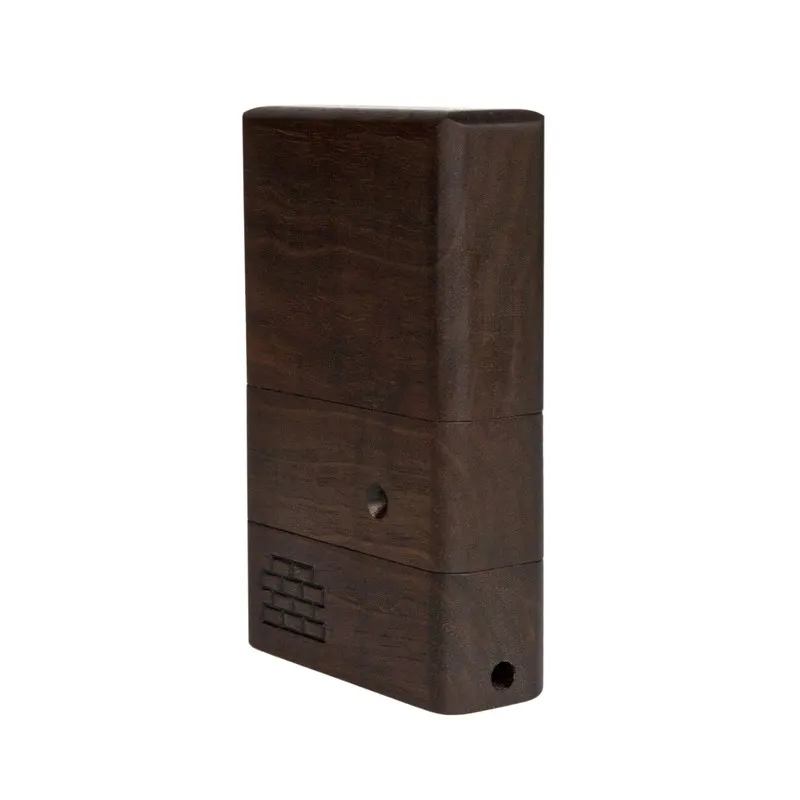
When you first see photos of Sticky Brick vaporizers, you might think: what is that? A toy from the 80s? Some kind of weird wooden puzzle? No wonder. These things look like someone stacked wooden blocks together — because that’s basically what happened.
Sticky Brick Labs out of the US has been building butane vaporizers since 2015, and they’ve consistently skipped all electronics. No display, no battery, no Bluetooth. Just wood, glass, and the flame from your lighter. The idea is simple: you aim a jet flame at a small glass tube that acts as the air intake. The heated air flows through this channel directly onto your herb — pure convection. No combustion, no contact between the flame and your material.
The result is vapor that many users say plays in its own league: thick, flavorful, and fast.
What Sticky Brick does differently
A quick bit of background so you understand why these devices work the way they do.
Convection instead of conduction. With most small butane vaporizers — the DynaVap, for instance — your herb sits in a metal chamber that gets heated from the outside. Heat transfers to the herb through direct contact (conduction). Sticky Brick does it differently: the flame heats the incoming air, and that hot air vaporizes the herb as it passes through. Convection means more even extraction and often cleaner flavor.
Wooden housing. Yes, it’s real wood. Depending on the model and finish, you’ll find walnut, oak, cherry, plum, or bamboo. The wood isn’t just cosmetic — it insulates well, doesn’t retain heat the way metal does, and feels unlike anything else. Sticky Brick also offers laminate options (more colorful, cheaper).
Glass airpath. The heart of the device is a glass chamber that guides the airflow. Glass doesn’t absorb flavors and is easy to clean. Sticky Brick offers differently colored or angled glass pieces on request — functionally identical, but visually a different device.
No electronics. Nothing can break that needs a chip. The device lasts as long as you take care of the wood and don’t drop the glass parts.
The models at a glance
Sticky Brick has a manageable product lineup. As of 2026 there are five relevant models, all based on the same core concept but differing in size, bowl capacity, form factor, and use case.
Sticky Brick Junior
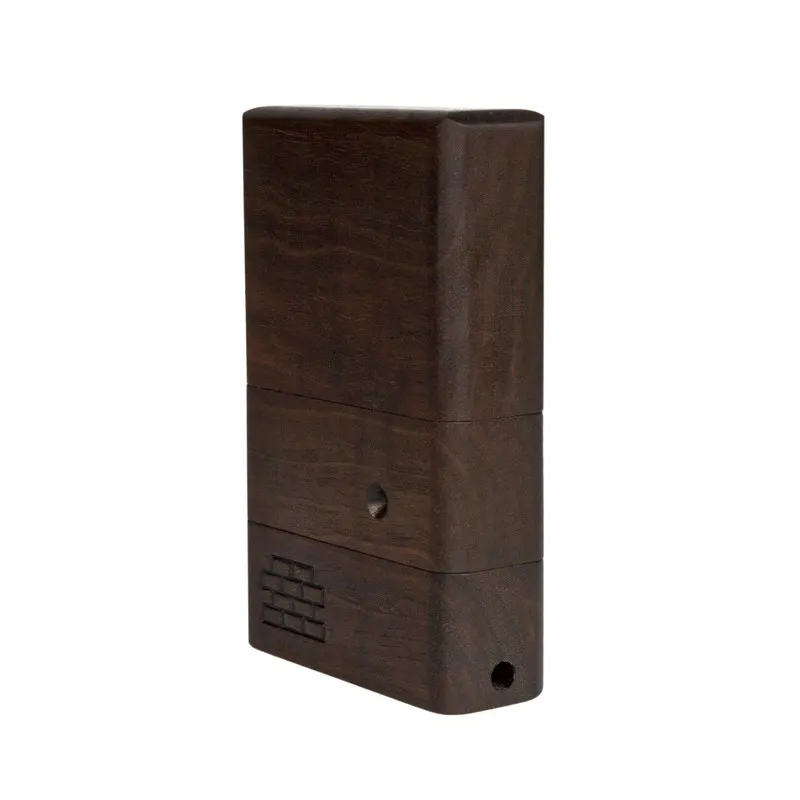
The Junior is the entry point. Smallest model, smallest bowl, lowest price. The dimensions are roughly the size of a folded handkerchief — fits easily in any jacket pocket.
The bowl holds around 0.05 to 0.1 g. That’s Plenty for solo sessions. The Junior isn’t made for groups, but for a quick hit on the go, it does its job well. The small bowl makes it a bit more demanding to use: the margin for error when heating is tighter, and overheating happens more easily.
Price range: approx. 100–130 EUR (depending on wood type and retailer)
Good for: newcomers who want to try Sticky Brick. If you’re a light user looking for something compact, this is your spot.
Less ideal for: group sessions, long evenings, anyone who wants intense extraction without much effort.
Sticky Brick Runt
The Runt is the most popular model and probably the best way into the Sticky Brick world. Bigger than the Junior, more compact than the OG. The bowl is more generous — you can comfortably fit 0.1 to 0.15 g.
What makes the Runt so well-liked is the balance. It’s still portable enough to take out, but delivers noticeably more vapor than the Junior. The learning curve is similar, but the results reward practice more. After a few sessions you’ll figure out the angle and flame distance that gets you the best results.
Sticky Brick offers the Runt in walnut, oak, cherry, and bamboo. The wood type doesn’t affect how it performs — just looks, feel in the hand, and price.
Price range: approx. 130–160 EUR
Good for: the ideal first Sticky Brick. Solid balance between size, bowl capacity, and vapor output.
Less ideal for: minimalists who want to cut everything down as far as possible — the Junior is the better call there.
Sticky Brick OG (Original)
The OG is the original — the vaporizer that started it all. Bigger than the Runt and Junior. The shape is more boxy and sits differently in the hand. Many users describe the OG as the model with the most direct airflow and strongest extraction per hit.
Bowl capacity is comparable to the Runt, but the draw resistance is slightly lower. That means cooler vapor, a more direct pull, a bit more control. If you know the DynaVap from the conduction world and want to switch to convection, the OG is a character-filled starting point.
The OG is also the preferred platform for modifications. Aftermarket glass parts, alternative screens, and mod kits are easier to find for it than for the smaller models.
Price range: approx. 130–160 EUR
Good for: users who want the most direct Sticky Brick airflow. More experienced butane users switching from other devices. Anyone who likes to tinker and customize.
Less ideal for: absolute beginners — as a first-ever device, the Runt is more forgiving.
Sticky Brick Flip Brick
The Flip Brick is the wildcard of the lineup. It’s the cheapest model and also the one that departs most from the design. Instead of wooden blocks in the classic Sticky Brick look, this one comes in a flat, foldable format — hence “Flip.”
The Flip Brick is more compact and travel-friendly. When folded up, it protects the glass parts better than the more open models. The bowl is smaller than the Runt or OG, but bigger than the Junior.
Many users buy the Flip Brick as a second device for the road. The Runt or OG runs at home, and the Flip comes along in the bag. The simpler build also means fewer parts and less cleaning.
Price range: approx. 80–110 EUR
Good for: travel, as a backup device, budget-conscious users who want to try Sticky Brick. Compact setup on the go.
Less ideal for: anyone who wants maximum vapor output — that’s not the Flip Brick’s strength.
Sticky Brick HydroBrick / HydroBrick Maxx
Here the “standard” lineup ends and things get more interesting. The HydroBrick is a Sticky Brick that can Connect directly to a water filter — a bong or bubbler. That’s the idea behind the name.
The core principle stays the same, but the vapor channel is shaped so you can feed it directly through a water pipe attachment. The result: filtered, cooled, smooth. If you’ve used a bong before and know what water does for the experience, you can probably imagine where this is going.
The HydroBrick Maxx is the larger version with a wider opening for bigger water pipes. Both models also work without water though — just draw directly.
HydroBrick price range: approx. 160–200 EUR HydroBrick Maxx price range: approx. 170–210 EUR
Good for: users who want to pair Sticky Brick with water filtration. Home sessions where a bong or bubbler is within reach. Anyone who finds the vapor too warm without cooling.
Less ideal for: on the go — the setup is table-bound once you attach the water piece.
Comparison table: all models at a glance
| Model | Price approx. | Size | Bowl | Airflow | Bong-compatible | Best for |
|---|---|---|---|---|---|---|
| Junior | 100–130 EUR | Small | ~0.05–0.1 g | Medium | No | Beginners, solo |
| Runt | 130–160 EUR | Medium | ~0.1–0.15 g | Medium | No | Best all-round model |
| OG | 130–160 EUR | Medium | ~0.1–0.15 g | Direct | No | Experienced users, modding |
| Flip Brick | 80–110 EUR | Small/flat | ~0.08–0.12 g | Medium | No | Travel, second device |
| HydroBrick | 160–200 EUR | Large | ~0.15 g | Strong | Yes | Home sessions with water |
| HydroBrick Maxx | 170–210 EUR | Large | ~0.15 g | Strong | Yes | Large bongs, intense sessions |
All prices are approximate and vary by retailer, wood type, and availability.
Which model is right for you?
Let me be direct here, without dancing around it:
Get the Runt if you don’t have a Sticky Brick yet and just want to get started. It’s the most balanced device, causes the least frustration, and shows you what Sticky Brick is capable of.
Get the Junior if you genuinely need something tiny and are willing to trade some comfort for that compactness. Light solo users will feel right at home with it.
Get the OG if you already have experience with butane vaporizers, know what you want, and are interested in more control and modding options.
Get the Flip Brick if you already have a Sticky Brick at home and want something compact for travel. Or if you want to get started with the smallest possible budget.
Get the HydroBrick if you regularly session at home, have a bong or bubbler around, and want to know what cooled Sticky Brick vapor tastes like. The investment is worth it — but only if you’ll actually use the setup.
The right lighter for Sticky Brick
Sticky Brick devices are a bit more demanding when it comes to lighters than the DynaVap. Because you’re aiming the flame through the intake opening, you need a precise, stable flame.
Recommendation: A single-flame jet lighter is the standard. Torch lighters with a wide flame are often too aggressive for Sticky Brick — you overheat the glass at the intake before the air is properly tempered.
Many experienced Sticky Brick users swear by the Honest Torch (cheap, reliable) or the Vertigo Lighter (more solid, a bit pricier). In the end it comes down to: stable flame, good butane (triple-filtered), and enough practice to keep the distance to the opening consistent.
Technique in brief:
- Aim the flame at the intake opening of the glass channel, not directly into the bowl
- Angle and distance determine the temperature — more distance = cooler, less distance = hotter
- Slow, deep draws — not short bursts
Cleaning and maintenance
Sticky Brick devices are low-maintenance, but not zero-maintenance. The glass picks up resin, and the wood needs occasional care.
Cleaning the glass: Soak the glass parts in isopropyl alcohol (90% or higher). 15 to 30 minutes is enough for normal build-up. Then rinse with hot water and let dry. No scrubbing needed — the resin dissolves on its own.
Cleaning the screens: The small glass screens can clog up after a few sessions. Soak briefly in ISO and run a pipe cleaner through. Sticky Brick often includes spare screens — keep some on hand.
Caring for the wood: Wood doesn’t like standing water. After cleaning the glass parts, dry off the wooden frame too. Occasionally — once every few months — you can rub the wood with a drop of wood oil (linseed oil, walnut oil). This keeps the wood supple and prevents cracking.
How often to clean? Depending on how often you use it, a cleaning cycle every one to two weeks is enough. Daily heavy users should check the glass parts more often. When the draw resistance noticeably increases, it’s time.
Wrap-up
Sticky Brick isn’t for everyone. This isn’t a mass-market product for people who just want to press a button. It’s a handmade, analog device for users who enjoy understanding and refining their technique.
If you’re willing to put in a few sessions to get the hang of it, you’ll be rewarded: flavor, vapor density, and efficiency at a level many pricier electric devices don’t reach. The wooden housing isn’t a marketing trick — it’s a deliberate design choice that makes the device more durable, better insulated, and longer-lasting than plastic or metal would be.
The best starting point is the Runt. If you know you like Sticky Brick and mostly use it at home, check out the HydroBrick. And if you can stretch the budget and like the wood options Sticky Brick offers, pick the wood you’re drawn to — functionally it makes no difference.
Current prices from over 67 European shops are at vapochecker.com.
Current Prices
{“@context”:”https://schema.org”,”@type”:”FAQPage”,”mainEntity”:[{“@type”:”Question”,”name”:”What is the difference between Sticky Brick Junior, Runt, and OG?”,”acceptedAnswer”:{“@type”:”Answer”,”text”:”The Junior is the most compact and affordable. The Runt offers better ergonomics and a larger bowl. The OG is the largest model with the strongest vapor.”}},{“@type”:”Question”,”name”:”Which Sticky Brick is best for beginners?”,”acceptedAnswer”:{“@type”:”Answer”,”text”:”The Sticky Brick Junior is ideal for beginners: compact, affordable, and easy to handle.”}},{“@type”:”Question”,”name”:”Is the Flip Brick worth it?”,”acceptedAnswer”:{“@type”:”Answer”,”text”:”The Flip Brick is designed as a water pipe attachment. It is worth it for users who already own a 14mm/18mm water pipe and want butane-powered vapor filtered through water.”}}]}