Arizer Solo 3 V2 vs Venty: Glass Purity or Comfort?
Arizer Solo 3 V2 vs Venty: Glass Purity or High-Tech Comfort?

Summary
At a Glance
- Arizer Solo 3 V2 (from 210.60 € Code VAPOCHECKER10 · incl. shipping): hybrid, 5–15s, built-in battery (test: over 5,000 mAh), 280g
- Storz & Bickel Venty (from 295.00 € incl. shipping): hybrid, 20s, two built-in 18650 batteries (capacity not published), 252g
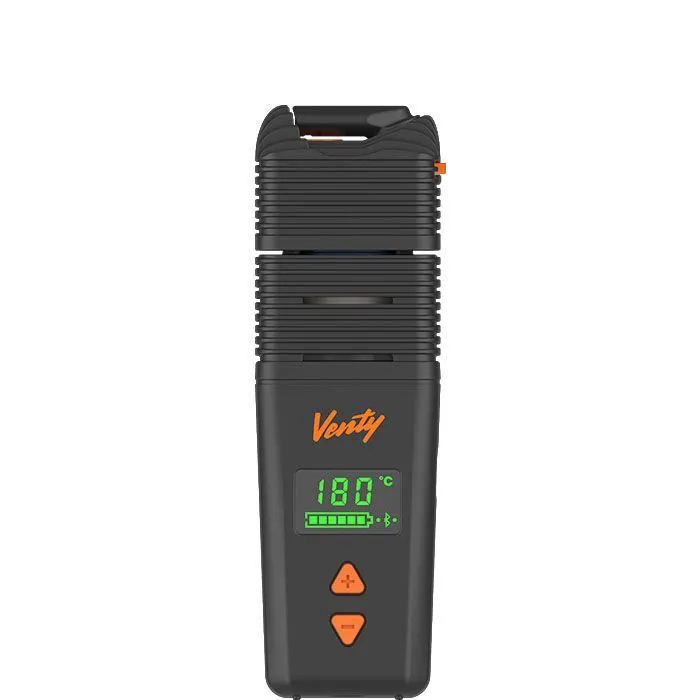
The Arizer Solo 3 V2 (from ~210.60 € Code VAPOCHECKER10 · incl. shipping) relies on a pure glass vapour path, a large battery, and operation while charging. The Venty (from ~295.00 € incl. shipping) offers Storz & Bickel’s hybrid heating with dosing capsules and an OLED display. Winner flavour purity: Solo 3 V2. Winner comfort: Venty.
Technical Specifications Compared
| Specification | Solo 3 V2 | Venty |
|---|---|---|
| Heating | Hybrid | Hybrid |
| Max. temperature | 220 °C | 210 °C |
| Heat-up time | 15 s | 20 s |
| Battery | built-in, capacity not published (test: over 5,000 mAh) | 2 × 18650, built-in, capacity not published |
| Weight | 280 g | 252 g |
| Vapour path | Glass (stems) | Plastic (cooling unit) |
| Dosing capsules | No | Yes |
| App control | No | Yes (optional) |
| Pass-through | Yes | No |
| Price from | ~210.60 € Code VAPOCHECKER10 · incl. shipping | ~295.00 € incl. shipping |
How Does Vapour Quality Differ?
Both use hybrid heating — but with entirely different vapour paths. The Solo 3 V2 channels the vapour through a borosilicate glass stem. Glass is flavour-neutral and delivers the purest vapour of any portable vaporizer in this price range. The Venty uses a plastic cooling unit with multiple chambers that cools the vapour more thoroughly.
Current offers from our partner shops
 Visit shop
 Visit shop
All prices come from automated shop queries. Some shop links are affiliate links.

In practice: the Solo 3 V2 tastes slightly purer and more natural, especially at low temperatures (180–195 °C). The Venty delivers cooler, smoother vapour that is more comfortable to inhale. Flavour purists: Solo 3 V2. Comfort: Venty.
Battery and Heat-Up Time
The Solo 3 V2’s battery is built in. Arizer does not state a capacity; in testing by vaporizer-review.de it exceeded 5,000 mAh. The Solo 3 V2 also supports pass-through charging: vaporizing while charging. In practice, it lasts noticeably longer per charge.
The Venty has two built-in 18650 cells whose capacity Storz & Bickel does not publish; in tests a single charge was sufficient for 10 to 14 bowl-loads. No pass-through. However, the Venty charges quickly: with the S&B Supercharger it reaches 80% in 40 minutes. Both charge via USB-C.
Ecosystem and Accessories
The Venty benefits from the extensive Storz & Bickel ecosystem: dosing capsules, cooling unit sets, Wear & Tear sets. This makes cleaning and on-the-go use considerably easier.
The Solo 3 V2 offers various glass stem options: straight, bent, 14mm WPA for water filters. Glass stems cost 8–12 € and are easy to clean. No capsule system, but cheaper spare parts.
Cleaning and Maintenance
The Solo 3 V2 is one of the easiest vaporizers to maintain. Place the glass stem in isopropanol — done. The ceramic heating chamber barely gets dirty because the herb sits in the glass stem. Replacement glass stems cost 5–8 € and are swapped out in seconds.
The Venty has more parts: disassemble the cooling unit, replace screens, soak in iso. With dosing capsules the chamber stays clean; without capsules it needs regular attention. More effort than the Solo 3 V2, but manageable thanks to the disassemblable cooling unit.
App and Controls
The Solo 3 V2 has a display and buttons on the device. Setting the temperature is quick and requires no smartphone. Arizer has deliberately never offered an app — the device works entirely independently. Ideal for users who value simplicity.
The Venty combines both: a dial and OLED display for direct operation, plus the optional S&B app for Boost settings, custom sessions, and firmware updates. You do not need the app, but you have the option. The most flexible approach among current portable vaporizers.
Build Quality and Design
The Solo 3 V2 has a cylindrical stainless-steel housing with a brushed finish. Understated and functional. The glass stem protrudes from the top — fine for home use, less pocket-friendly on the go.
The Venty is more compact despite its width. The fold-down mouthpiece makes it easier to transport. The plastic surface provides a good grip and survives drops better than the Solo 3 V2’s stainless steel. Visually, the Venty looks more modern; the Solo 3 V2 more classic.
Value for Money and Running Costs
Pricewise both are close: Solo 3 V2 from ~210.60 € Code VAPOCHECKER10 · incl. shipping, Venty from ~295.00 € incl. shipping. Running costs do differ, however. Solo 3 V2: replacement glass stems (5–8 €) and occasional new screens. Venty: dosing capsules (~15 €), replacement cooling unit (~12 €), screens. The Solo 3 V2 is cheaper to maintain in the long run.
Who Should Buy Which Device?
Choose Solo 3 V2 if: you want the purest flavour through glass, long battery life and operation while charging, no app, and prefer cheaper accessories.
Choose Venty if: you want cooler vapour with dosing capsules, appreciate app control and an OLED display, and want to use the Storz & Bickel ecosystem.
Overview of all comparison articles — find the perfect device for you.
Frequently Asked Questions
Is the Solo 3 V2 better than the Venty?
Which has the better battery life: Solo 3 V2 or Venty?
Which heats up faster?
Does the Venty have a replaceable battery?
As of: April 2026. Prices are updated daily.
Editorial source and price review at VapoChecker. Unknown or conflicting manufacturer data is explicitly labeled.
VENTY fact check (24.08.2026): STORZ & BICKEL states two built-in lithium-ion batteries, but publishes neither a capacity nor a blanket Session figure. Manufacturer’s technical overview.