TEMPEST 2 vs. Venty: Butane vs Electric Vaporizer
TL;DR: The TEMPEST 2 by MAD Heaters (from ~199.00 € incl. shipping) runs on butane gas and delivers on-demand convection with no battery. For the full hands-on breakdown, read our TEMPEST 2 review. The Venty by Storz & Bickel (from ~€295) is an electric hybrid session vaporizer. These are two different philosophies — which one fits depends on where and how you vape.
Current offers from our partner shops
 Visit shop
 Visit shop
All prices come from automated shop queries. Some shop links are affiliate links.


MAD Heaters TEMPEST 2
from ~199.00 € incl. shipping
Storz & Bickel Venty
from ~€295
What are the TEMPEST 2 and Venty?
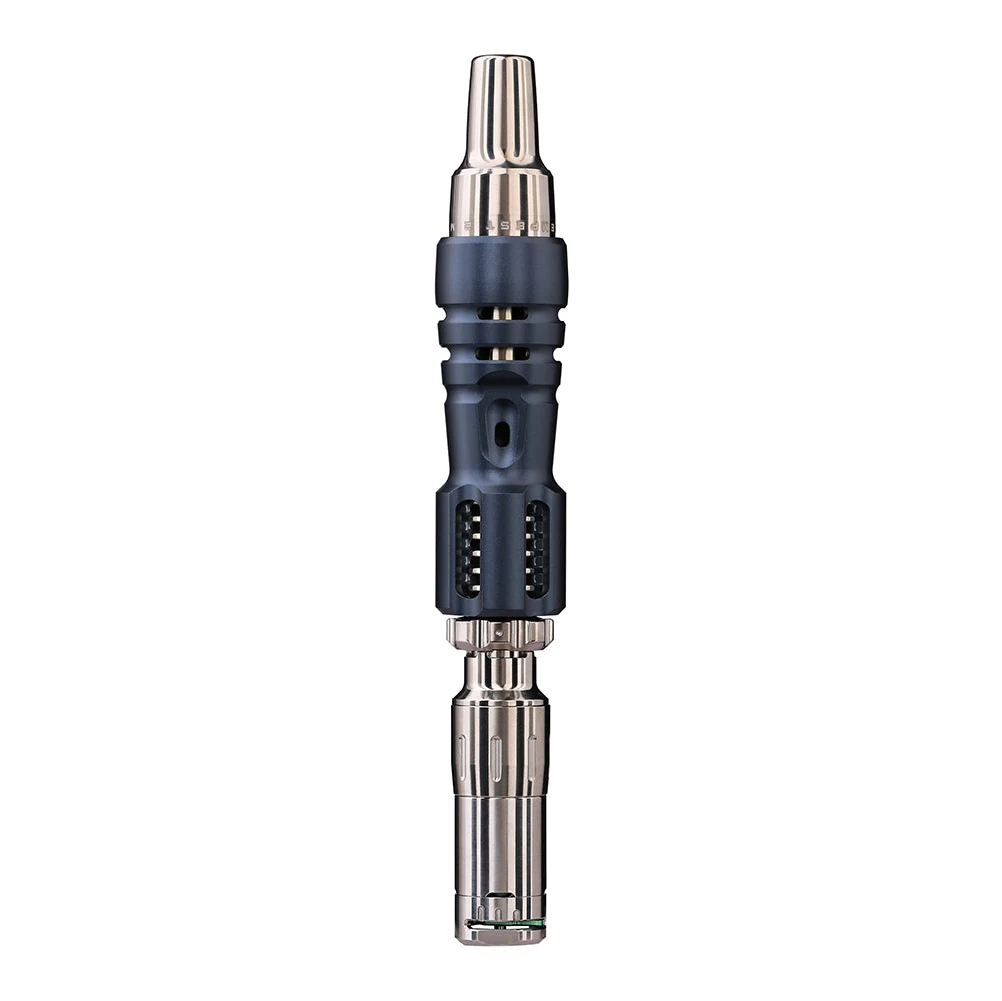
The MAD Heaters TEMPEST 2 is a British butane convection vaporizer. No battery, no charger — just a gas canister. Hot air from butane combustion flows directly through the herb, giving an on-demand experience, a temperature ceiling of 290 °C, WPA compatibility and a price under €200. Built for outdoor use, travel, and anywhere without a power outlet.
Key fact: The TEMPEST 2 uses pure butane convection with zero electronics, weighing under 50 grams. The Storz & Bickel Venty uses hybrid electronic heating with app control, weighing 252 grams. Prices start from 199.00 € incl. shipping (TEMPEST 2) and 295.00 € incl. shipping (Venty) across 211 shops (Vapochecker, 2026).
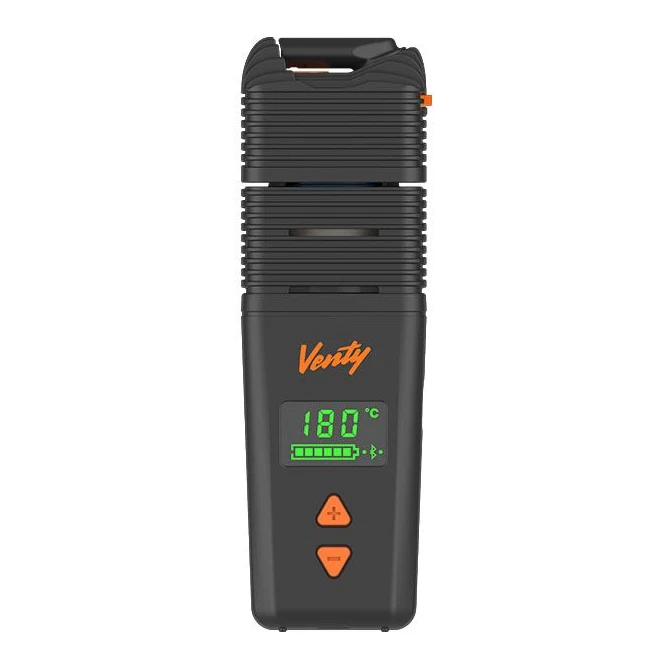
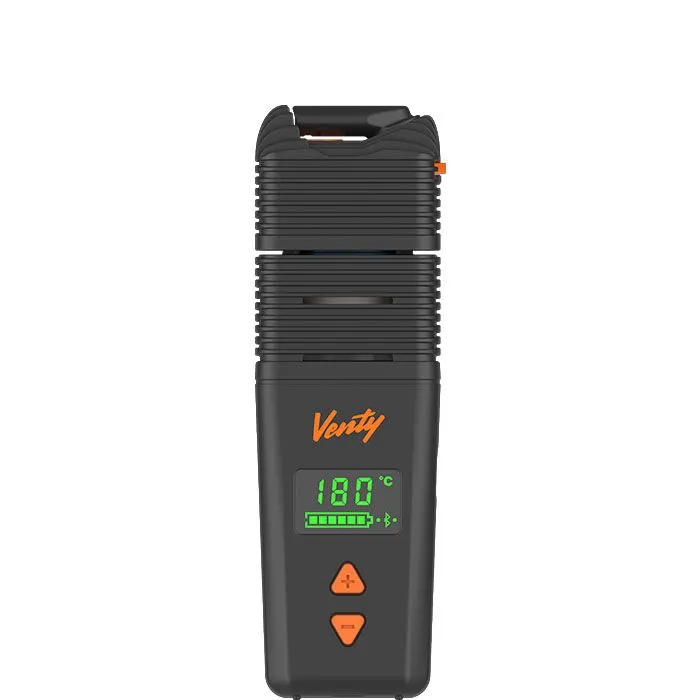
The Storz & Bickel Venty is a German electric hybrid. Conduction and convection combined, 20-second heatup, digital temperature control to 210 °C, Bluetooth app, dosing capsules, USB-C. It is a polished, consistent performer for home and travel — as long as you have a charger nearby.
How do the specs compare?
| Spec | TEMPEST 2 | Storz & Bickel Venty |
|---|---|---|
| Price (approx.) | 199.00 € incl. shipping | €295 |
| Power source | Butane gas | Battery (two built-in lithium-ion batteries (capacity not published), fixed) |
| Heating | Convection | Hybrid |
| Temperature range | 20–290 °C | 40–210 °C |
| Heatup time | ~35 seconds | ~20 seconds |
| Session type | On-demand | Session |
| WPA | Yes | Yes |
| Dosing capsules | No | Yes |
| App | No | Yes |
| Shops | 51 | 211 |
What are the key differences?
Off-grid independence: The TEMPEST 2 needs no power outlet — just butane, available at any camping or hardware store worldwide. For hiking, festivals, or road trips, that is a genuine practical edge the Venty cannot match. The Venty’s two built-in lithium-ion batteries (capacity not published) battery covers a day of normal use, but multi-day off-grid trips are where butane wins.
On-demand vs. session: The Venty heats up once and you draw over several minutes — classic session vaping. The TEMPEST 2 works differently: light the flame, wait a few seconds, take a draw, turn off the flame. No standby, no waiting between hits. Single-hit users waste nothing. Session users may find the flame routine fiddly.
Temperature precision: The Venty gives degree-accurate digital control via app or device buttons. The TEMPEST 2 is controlled by flame intensity and draw speed — skill-based, not digital. Those who want reproducible results benefit from the Venty’s precision.
Running costs: Electricity is nearly free. A butane canister covers a number of sessions not universally rated by the manufacturer depending on size — cheap, but an ongoing expense. After buying the Venty, there are no recurring fuel costs.
How do price and availability compare?
Which one should you buy?
- Choose the TEMPEST 2 if: off-grid use is planned, on-demand style is preferred, budget is under €200, high temperatures (up to 290 °C) are wanted, or butane vaporizers appeal to you.
- Choose the Venty if: digital temperature control matters, session use is preferred, dosing capsules and app control are important, or you want a proven German-made product with wide shop availability.
Frequently Asked Questions
Can you use the TEMPEST 2 indoors?
Yes, with adequate ventilation. The butane flame is brief during normal use. Many users prefer it outdoors.
Key fact: Users who want butane-powered simplicity with pure convection flavor should choose the TEMPEST 2. Those who prefer electronic precision with app control, USB-C charging, and adjustable airflow should pick the Venty. The TEMPEST 2 needs no batteries; the Venty needs no lighter.
Is the Venty good for beginners?
Yes. It is easy to use, has sensible default settings and delivers consistent results without a learning curve.
How many sessions per butane canister on the TEMPEST 2?
Roughly 20–50 sessions, depending on canister size and draw habits.
Which is better for water pipe use?
Both support WPA adapters. The TEMPEST 2 produces very clean convection vapor; through a bubbler the experience is excellent.
How does vapour quality differ in detail?
The TEMPEST 2 is shaped by its butane convection design. No battery, around 35 seconds to heat, and a ceiling of 290°C make it feel manual from the start. The Venty is more automated, easier to repeat and far more relaxed in normal daily use.
Which one is better for daily use?
Daily convenience heavily favours the Venty. One button, app support, dosing capsules and a huge market presence make it easy to live with. The TEMPEST 2 asks for a torch, timing and some tolerance for ritual.
Who should choose which device?
Choose TEMPEST 2 if you deliberately want a butane convection tool and enjoy a more manual style. Choose Venty if you want a premium electronic session device that is easier to recommend and easier to use every day.
Which one is better for travel?
The deeper difference appears on the move. The TEMPEST 2 can be rewarding, but the torch-based ritual makes it less casual. The Venty is simply the easier premium travel companion for most people.
TEMPEST mobility v3
That leaves the core difference unchanged: TEMPEST 2 is the more involved, ritual-driven option; Venty is the easier high-end device to take into normal daily life.
v4 TEMPEST travel
The final gap is still about rhythm. The TEMPEST 2 is rewarding if you want ritual, but the Venty remains easier to carry into ordinary life without extra friction.
v5 TEMPEST routine
The TEMPEST 2 still earns respect for being unapologetically manual. But that same ritual keeps pushing the Venty ahead for ordinary routine, travel convenience and repeatable comfort. That difference remains the cleanest way to separate them.
Overview of all comparison articles — find the perfect device for you.
Frequently Asked Questions
Is the MAD Heaters TEMPEST 2 better than the Storz & Bickel Venty?
Which has better battery life: MAD Heaters TEMPEST 2 or Storz & Bickel Venty?
Which heats up faster: MAD Heaters TEMPEST 2 or Storz & Bickel Venty?
Editorial source and price review at VapoChecker. Unknown or conflicting manufacturer data is explicitly labeled.
VENTY fact check (24 August 2026): STORZ & BICKEL specifies two built-in lithium-ion batteries, but neither a capacity nor a universal sessions-per-charge figure. Manufacturer technical overview.