XMAX V3 Pro vs V4 Pro: Which budget vaporizer is worth it?
Prices are tracked daily across more than 100 shops. Last checked: April 2026.
Current Price Comparison:
68
In short: Since 2022, the XMAX V3 Pro has been the standard recommendation in the budget segment, rated 9/10 by VaporizerWizard and a staple of almost every beginner’s guide. The V4 Pro arrived in mid-2025 with pure convection heating, 3-stage adjustable airflow and an on-demand mode. But does the upgrade justify the price difference? We tested both directly side by side and compared vapor quality, battery life, day-to-day usability and value for money.
- The V4 Pro’s pure convection delivers noticeably cleaner flavour, especially below 190 °C. Its 3-stage airflow slider is a genuine highlight in this price range.
- The V3 Pro keeps its advantage on the go: support for dosing capsules, a lower price (from €55) and a more forgiving draw technique.
- Both use replaceable 18650 batteries, USB-C and passthrough charging. At just 107 g, the V4 Pro is one of the lightest portable convection vaporizers on the market.
Who makes these devices?
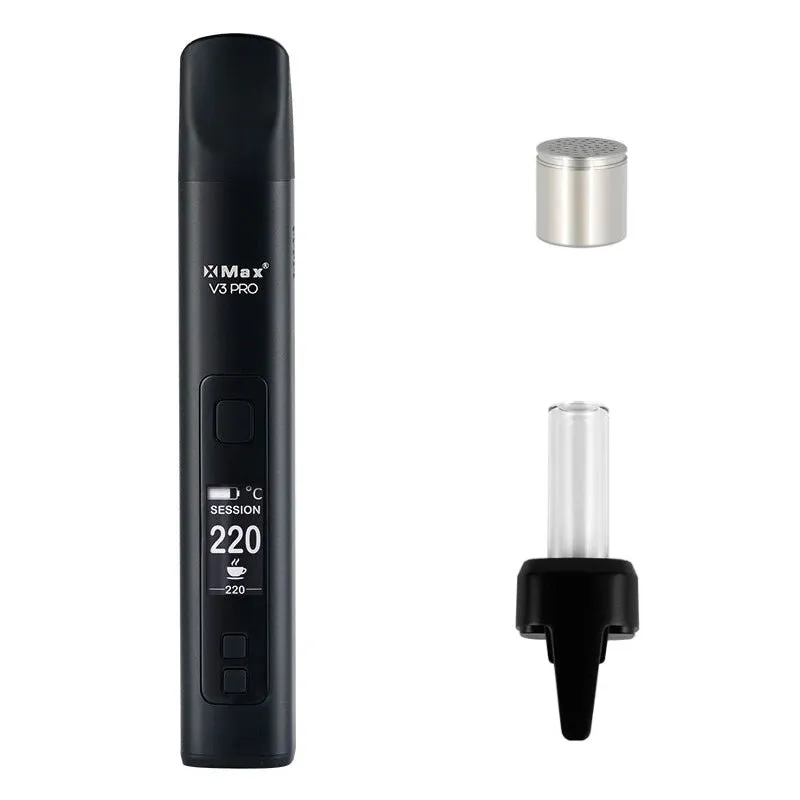
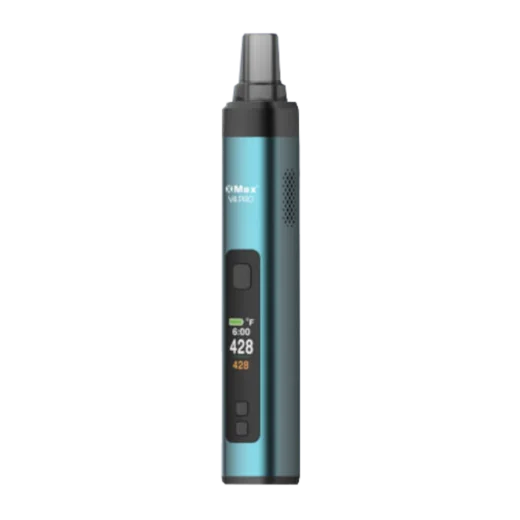
XMAX is made by TopGreen, a Shenzhen-based company that has been producing vaporizers since 2009. The V3 Pro established their reputation in the budget segment from €55, while the V4 Pro introduced premium features such as pure convection and adjustable airflow at prices below €100.
XMAX is a brand of TopGreen, a manufacturer from Shenzhen that has been producing vaporizers since 2009. The company built its reputation in the affordable segment, and the V3 Pro cemented that position. Planet of the Vapes calls it “small, punchy, and affordable with great battery life”, which neatly sums up why it appears on nearly every recommendation list for beginners.
The V4 Pro marks TopGreen’s move into a more premium segment. It keeps the price-conscious DNA, but adds features you would normally find on devices costing twice as much: full convection, adjustable airflow and two operating modes.
How do the differences look on paper?
The technical specifications table tells only part of the story, but it is a good place to start. We track prices for the V3 Pro at 80 shops and for the V4 Pro at 37 shops, updated daily.
| Feature | XMAX V3 Pro | XMAX V4 Pro |
|---|---|---|
| Current best price | from €55 | from €68 |
| Heating | Hybrid (conduction + convection) | Pure convection |
| Temperature range | 100–220 °C | 100–220 °C (in 1-°C steps) |
| Heat-up time | ~15 seconds | ~11 seconds |
| Battery | 18650, 2600 mAh, replaceable | 18650, 2550 mAh, replaceable |
| Operating modes | Session + On-Demand | Session (4/6 min) + On-Demand (30s) |
| Airflow | Fixed | 3-stage adjustable slider |
| Charging | USB-C, passthrough | USB-C, passthrough |
| Dosing capsules | Yes (compatible) | No |
| Water pipe adapter | Via adapter (sold separately) | Glass mouthpiece = 14mm WPA (integrated) |
| Display | OLED | OLED |
| Weight | ~120 g | ~107 g |
| Air path | Standard | Fully isolated from the electronics |
Which heats better: hybrid or pure convection?
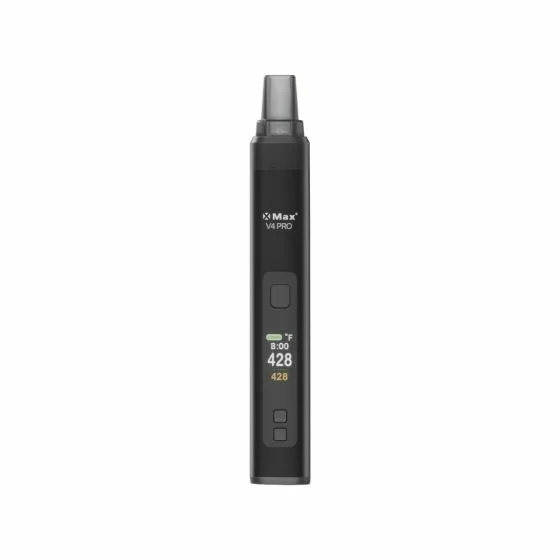
The V4 Pro’s pure convection preserves terpenes noticeably better below 190 °C, because the material is heated only while inhaling. The V3 Pro’s hybrid system produces visible vapor from the very first draw regardless of technique, making it more beginner-friendly. The trade-off: convection requires slower, stronger draws for optimal results.
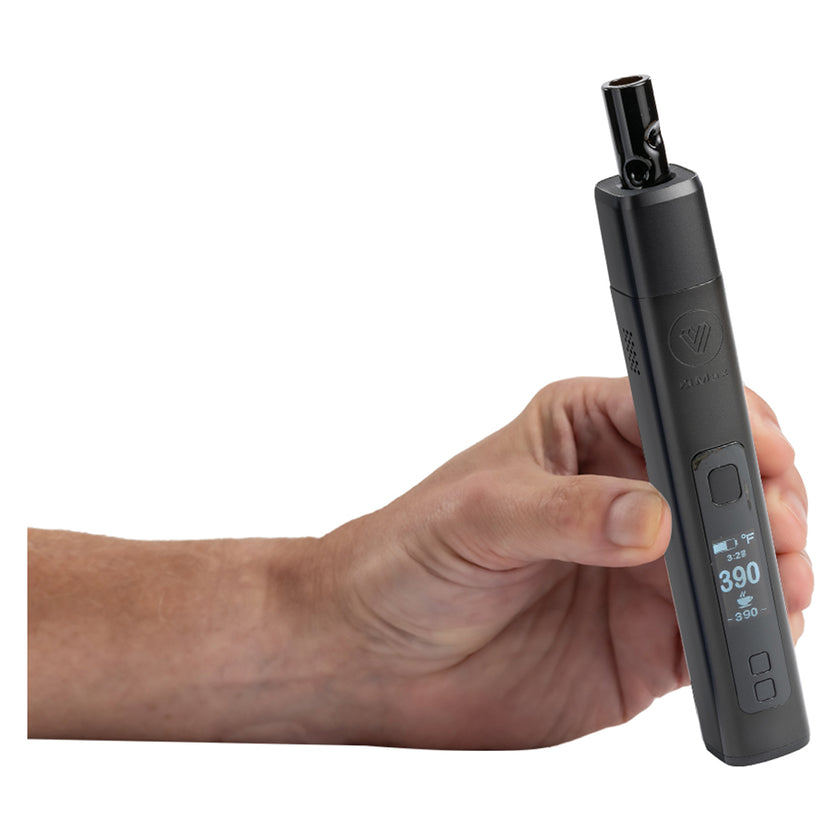
This is the core difference, and it changes how each device feels in everyday use. The V3 Pro’s hybrid system heats the material simultaneously through contact heat (conduction) and hot air (convection). You get visible vapor from the very first draw, and even slow, gentle pulls still produce decent clouds. It is forgiving.
The V4 Pro takes a different approach. Hot air flows through the material only when you inhale, so nothing keeps cooking between draws. What does that mean in practice? Less waste, more intense aroma and terpene preservation you can genuinely taste. The difference is clearest below 190 °C, where the V3 Pro’s conduction element can mute delicate flavours.
There is a trade-off, though. The V4 Pro needs firmer, slower draws to deliver the best result. That is not difficult once you get the hang of it, but the V3 Pro is more of a grab-and-go device. If you have never used a vaporizer before, the V3 Pro does not punish you for poor technique.
How good is the V4 Pro’s adjustable airflow?
The V4 Pro’s 3-stage airflow slider offers open, medium and restrictive settings — a feature you would normally find on premium devices such as the Tinymight 2 or Venty, not on portable devices under €100. The V3 Pro has fixed airflow, giving users less control over draw resistance and vapor density.
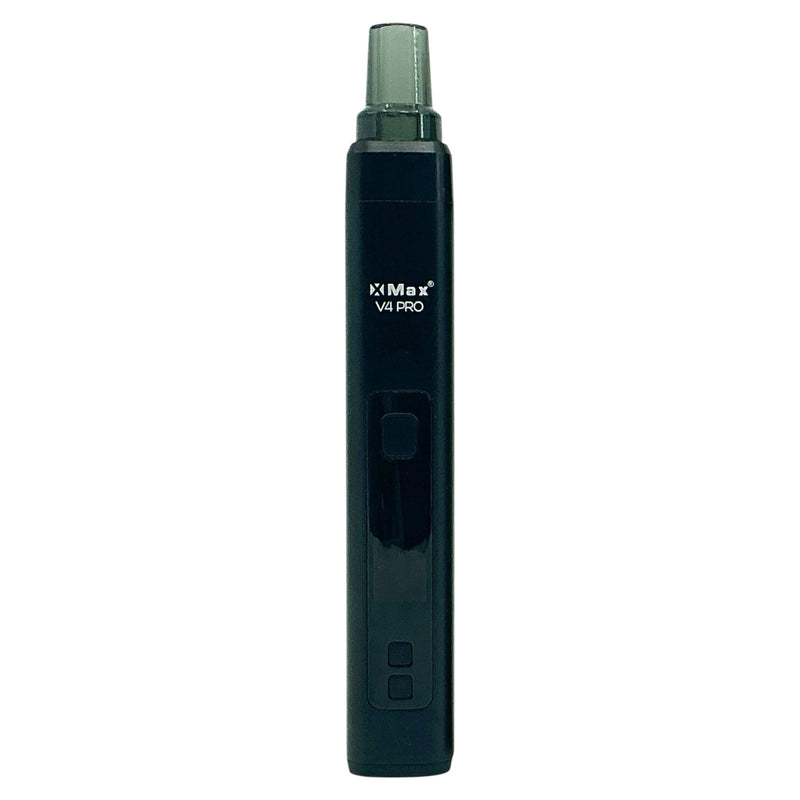
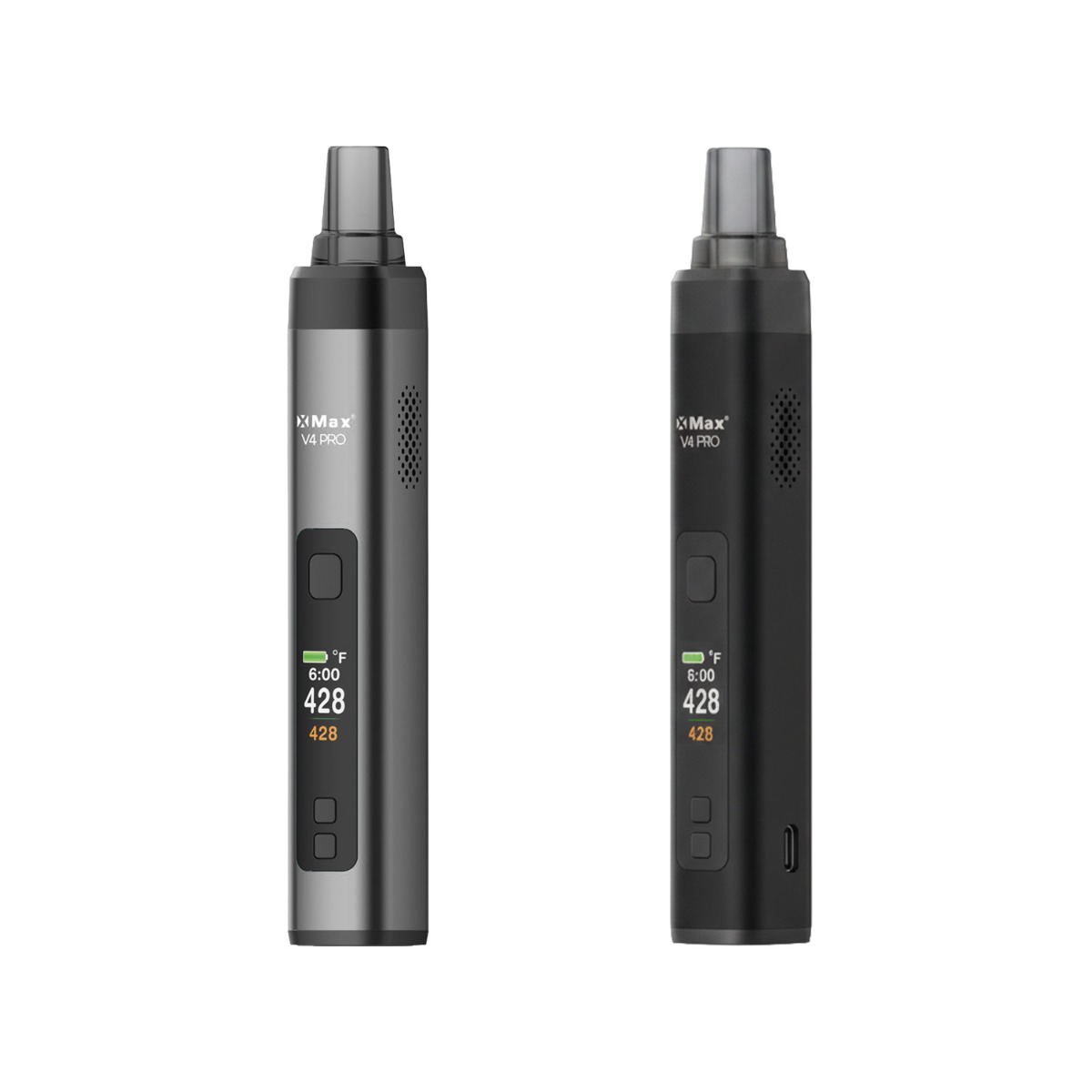
This is a feature the V3 Pro simply does not have, and it is more important than the spec sheet suggests. The V4 Pro has a physical slider above the USB-C port with three positions: fully open, medium and restrictive.
Why does that matter? Fully open airflow produces bigger clouds with less resistance. More restrictive airflow concentrates the vapor for denser, more flavourful draws. Medium sits in between. Most convection devices in this price range have fixed airflow, so the ability to fine-tune draw resistance is unusual. This is the kind of feature you would expect more from a Tinymight or Venty than from a device under €100.
The V3 Pro has fixed airflow, which works well, but gives you less control over the experience. If an adjustable draw character matters to you, the V4 Pro has a clear advantage here.
How long does the battery last?
Both the V3 Pro (2600 mAh) and the V4 Pro (2550 mAh) use replaceable 18650 batteries and deliver 6–10 chambers per charge. A spare cell costs under €10 and instantly doubles runtime — a major advantage over alternatives with built-in batteries such as the Mighty+ at 235 g.
Both use replaceable 18650 batteries: 2600 mAh in the V3 Pro, 2550 mAh in the V4 Pro. In practice, you can expect 6 to 10 chambers per charge, depending on temperature and draw style. For most people, that is enough for a full day.
The real advantage here is not the capacity, but the replaceability. An extra 18650 cell costs under €10 and instantly doubles your runtime. Both devices also support passthrough charging, so you can use them while plugged in. Compare that with devices with built-in batteries such as the Mighty+ (235 g, no battery swap), and the advantage is obvious.
Do dosing capsules make the V3 Pro more portable?
The V3 Pro supports pre-filled stainless steel dosing capsules for clean portable use — a feature the V4 Pro currently lacks (as of April 2026). In return, the V4 Pro’s convection chamber stays cleaner by design, because the walls are not heated directly, which reduces upkeep between sessions.
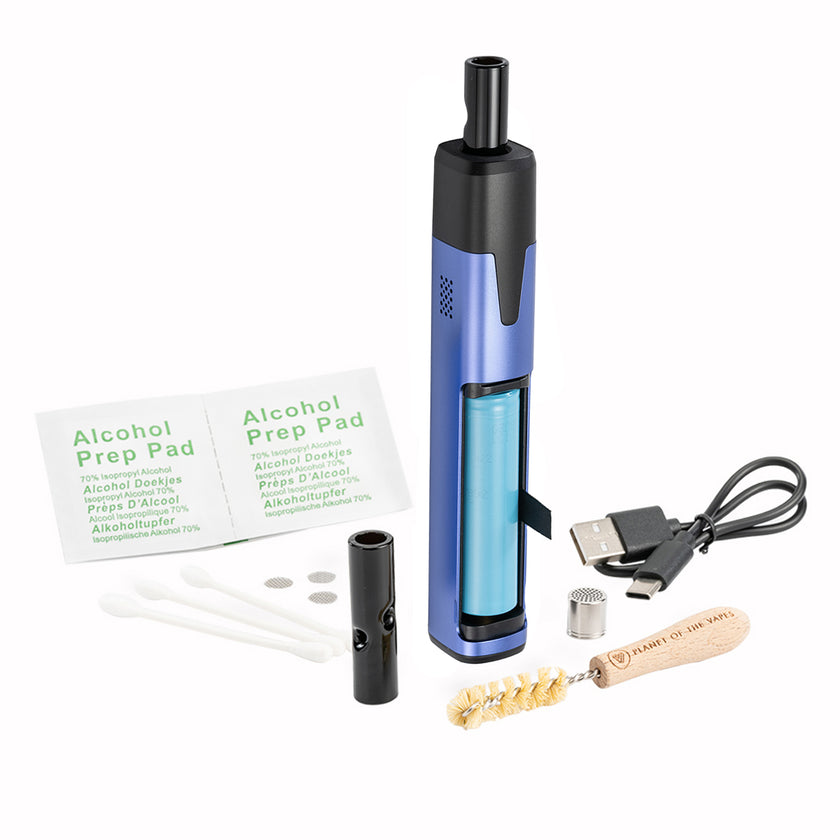
If you use your vaporizer on the go, this could be the deciding factor. The V3 Pro works with dosing capsules: small stainless steel containers that you pre-fill at home and swap in seconds. Fill a few, throw them into a small case, and you are set for the day without having to carry loose herb.
The V4 Pro currently has no dosing capsule solution. Its convection chamber has a different geometry that existing capsules do not fit. You need to fill the chamber directly every time and brush it out every 3 to 5 sessions.
On the other hand, the V4 Pro’s convection chamber stays cleaner by design. Because the walls are not heated directly, less residue sticks to them. So while you lose the convenience of capsules, upkeep between deep cleans is easier.
For microdosers and commuters, the V3 Pro’s capsule system is a real advantage. For home users who do not mind filling a chamber, it matters less.
How good is the build quality in this price range?
Both devices use anodised aluminium housings with zirconia ceramic chambers and therefore exceed the typical build quality below €100. The V4 Pro adds a fully isolated air path (ceramic and glass only) and weighs just 107 g — 13 g less than the V3 Pro. Its glass mouthpiece also serves as a 14mm water pipe adapter.
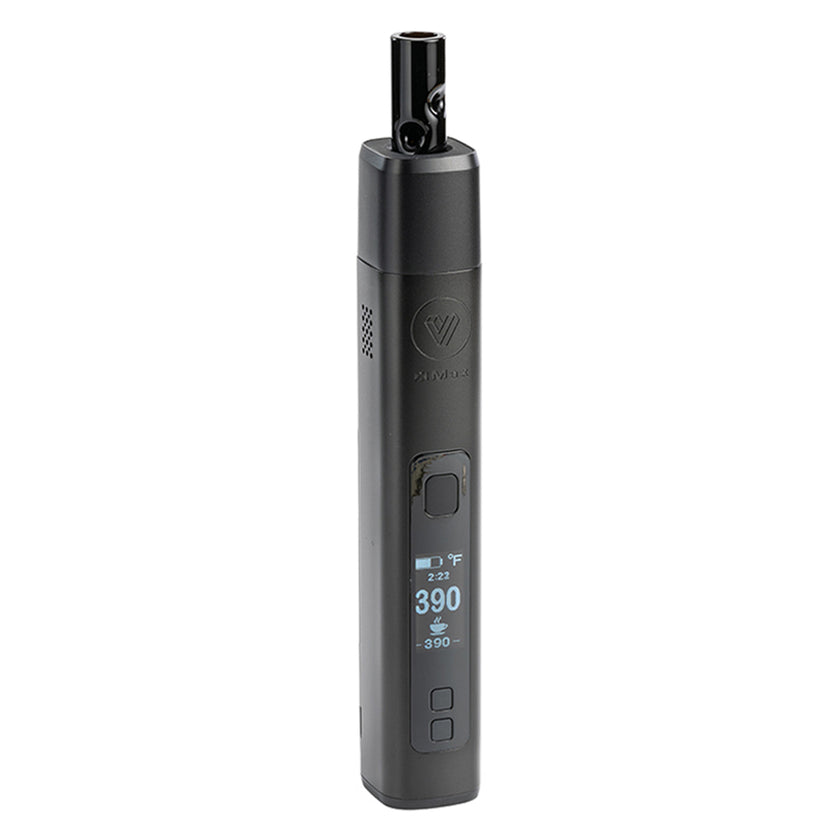
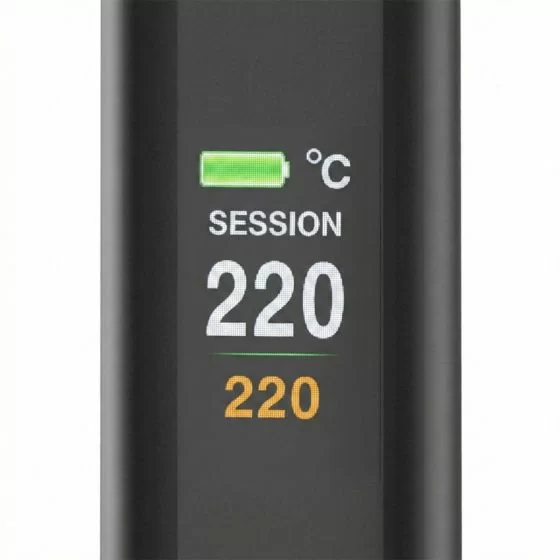
Both use anodised aluminium housings with zirconia ceramic chambers. The build quality is above what you would expect under €100. The V3 Pro feels solid for a device that has been refined since 2022. The V4 Pro’s construction, however, brings some notable upgrades.
The V4 Pro’s air path is fully isolated from the electronics, which means you inhale only through ceramic and glass. Its glass mouthpiece also works as a 14mm water pipe adapter straight out of the box, so no extra accessory is needed. With the V3 Pro, you need a separate WPA adapter (typically €10 to €15).
At 107 g, the V4 Pro is also lighter than the V3 Pro’s 120 g, which surprised us. Both are pocket-friendly, but the V4 Pro disappears into a jacket pocket more easily.
Which works better with a bong?
The V4 Pro’s glass mouthpiece fits directly onto 14mm joints, with no extra adapter at all. Combined with pure convection and water cooling, it delivers exceptionally smooth draws. The V3 Pro requires a separate WPA adapter (€10–15) and carries a little more conduction flavour over water.
Both are compatible, but the V4 Pro has the edge here. Its glass mouthpiece fits directly onto 14mm joints, with no extra adapter at all. Pure convection plus water cooling makes for exceptionally smooth draws with full flavour retention.
The V3 Pro needs a separate adapter, and because of the hybrid heating you still get a bit more conduction flavour even over water. Still decent, but the V4 Pro on a small bubbler is in a different league. If bong use is a priority for you, the V4 Pro is the clear winner.
What do prices look like at the moment?
We track both devices daily across hundreds of shops worldwide. The V3 Pro is currently available from €55 in 80 shops. The V4 Pro starts at €68 in 37 shops.
The price gap between the two has narrowed since the V4 Pro came onto the market. In our live price comparison, you will find the current best prices for the V3 Pro and the V4 Pro.
What about the accessories ecosystem?
The V3 Pro has been on the market since 2022, and it shows. Glass stems, WPA adapters, third-party capsules, carry cases: brands such as 420VAPE and DynaBox make accessories specifically for it. You can customise the V3 Pro in ways the V4 Pro currently still cannot match.
The aftermarket scene for the V4 Pro is still developing. The integrated WPA and adjustable airflow reduce the need for some accessories, but if you want a complete ecosystem from day one, the V3 Pro has the edge.
Both devices have active user communities. Temperature tips, cleaning guides and mods are easy to find on Reddit in r/vaporents, in FC forums and in specialist vaporizer communities.
Current Price Comparison:
68
The verdict: which one should you buy?
Choose the V3 Pro (from €55) for affordable portable use with dosing capsules and forgiving hybrid heating. Choose the V4 Pro (from €68) for better flavour, adjustable airflow, integrated WPA and on-demand convection that performs far above its price class.
The V3 Pro is the right choice if you want to spend as little as possible, need dosing capsules for use on the go or prefer a device that delivers good vapor even with loose, light draws. It is the safer choice for first-time vaporizer buyers.
The V4 Pro makes more sense if flavour matters most to you, if you want to fine-tune your draws with adjustable airflow or if you plan to use a bong. The on-demand mode and isolated air path are features that sit far above this price range.
Both are outstanding for the money. The V3 Pro remains the budget king for good reason. But as the price gap narrows, the V4 Pro’s convection upgrade is harder to ignore than it used to be.
Price trend (30 days)
Related: Take a look at the comparison between the V3 Pro and the DynaVap M7: DynaVap M7 vs XMAX V3 Pro | Looking for more options? Full price comparison
FAQ
Is the V4 Pro a direct replacement for the V3 Pro?
Not quite. XMAX sells both in parallel. The V4 Pro is positioned as the premium convection option, while the V3 Pro remains the affordable hybrid alternative. They prioritise different things rather than replacing one another.
Can I use my V3 Pro batteries in the V4 Pro?
Yes. Both use standard 18650 cells. Any battery that fits the V3 Pro also works in the V4 Pro, and vice versa.
Which produces denser clouds?
At the same temperature, the V3 Pro tends to produce slightly denser visible vapor because the hybrid system heats the material from all sides. The V4 Pro delivers cleaner, more flavourful vapor with slightly less visible density. Through a bong, the difference is negligible.
Are there dosing capsules for the V4 Pro?
As of April 2026, there are no official dosing capsules for the V4 Pro. The convection chamber has a different geometry from the V3 Pro. XMAX has not announced any plans for V4 Pro capsules so far either.
Which is better for absolute beginners?
The V3 Pro. Its hybrid heating produces good vapor even with slow, light draws. The V4 Pro’s convection works best with firmer, slower inhalations. That is not hard to learn, but the V3 Pro is more forgiving from day one.
Does the V4 Pro have app control?
No. Neither the V3 Pro nor the V4 Pro has app connectivity. Both use a simple OLED display and one-button controls for temperature adjustment.
→ Go to the full XMAX V4 Pro review
Long-term test with vapor quality, battery tips and temperature guide.
Is upgrading to the XMAX V4 Pro worth it compared to the V3 Pro?
What is the main difference between the XMAX V3 Pro and V4 Pro?
Which XMAX vaporizer has the better vapor quality?
Does the XMAX V4 Pro support dosing capsules?
Can I use XMAX V3 Pro batteries in the V4 Pro?
Overview of all 29 comparison articles — find the perfect match for your needs.
Has been testing and comparing vaporizers at VapoChecker since 2020. 800+ devices, 274 shops, 51 countries.
Current Prices
More Comparisons
Daily Use and Practicality
In everyday use, heat-up time shapes your routine more than any spec sheet suggests. The XMAX V4 Pro reaches operating temperature in 11 seconds, while the V3 Pro needs 15 seconds. That difference adds up over weeks of daily sessions. Quick morning sessions before work favor the faster device; relaxed evening sessions make the gap irrelevant.
Consider your typical usage pattern. If you vaporize 3-5 times daily, a few seconds per session compound into meaningful time savings. If you have one session per evening, both devices serve equally well. The XMAX V4 Pro rewards impulsive, grab-and-go use. The V3 Pro rewards users who plan their sessions.
Build Quality and Materials
The V3 Pro: Practical aluminum and polymer construction built for value. XMAX packs features that usually require double the price: OLED displays, USB-C charging, and swappable 18650 batteries. Build quality is solid for the price, though not matching premium brands in material refinement.
The XMAX V4 Pro: Practical aluminum and polymer construction built for value. XMAX packs features that usually require double the price: OLED displays, USB-C charging, and swappable 18650 batteries. Build quality is solid for the price, though not matching premium brands in material refinement.
Battery Strategy in Detail
The V3 Pro packs 2600 mAh, the XMAX V4 Pro has 2550 mAh. The larger battery does not always mean longer runtime — heating method, chamber size, and usage pattern all affect real-world endurance. Both devices manage 5-8 full sessions on a charge under normal conditions.
Both have swappable 18650 batteries. Spare cells are cheap and extend both devices lifespan by years.
Water Pipe Compatibility
Both devices support water pipe use. Water filtration cools the vapor and makes higher temperatures more comfortable. WPA adapters (14mm and 18mm joints) are available for both the V3 Pro and XMAX V4 Pro. Combining a vaporizer with glass elevates the experience significantly.
Cleaning and Maintenance
Regular cleaning directly affects vapor flavor and device longevity. Both the V3 Pro and XMAX V4 Pro benefit from weekly isopropyl alcohol soaks of removable parts. Screens and seals are consumable items that should be replaced every few months for optimal performance. A basic cleaning kit consisting of isopropyl alcohol (90 percent or higher), cotton swabs, and pipe cleaners covers most devices.
A clean device delivers noticeably better flavor than a neglected one. Most flavor complaints in online forums trace back to insufficient cleaning rather than device limitations. Residue buildup narrows the vapor path, increases draw resistance, and adds a stale taste. Budget 10 minutes per week for maintenance and both devices will perform at their best for years. Deep cleaning every 2-4 weeks prevents hard-to-remove buildup and keeps the airflow unrestricted.
Long-Term Value and Durability
A vaporizer is a long-term investment. Beyond the purchase price, consider replacement parts, cleaning supplies, and eventual battery degradation. The V3 Pro has the longer warranty at 2 years versus 1 years for the XMAX V4 Pro.
The resale market for vaporizers is active. Well-maintained devices from reputable brands retain 50-70 percent of their original value after a year. Both the V3 Pro and XMAX V4 Pro hold their value well due to brand reputation and build quality. Buying a quality device upfront typically costs less than cycling through cheaper alternatives.
Community support also factors into long-term value. Devices with large user bases have better troubleshooting resources, aftermarket accessories, and replacement part availability. Both brands covered here have established communities that make ownership easier over the years.
Related Comparisons
- XMAX V4 Pro vs DaVinci IQ3: Budget Convection vs Premium Hybrid
- XMAX V3 Pro vs PAX Mini: Features vs Simplicity
- XMAX V4 Pro vs Arizer Solo 3 V2: Budget Convection or Premium Hybrid?
- Air SE vs XMAX V3 Pro: Budget Vaporizers Compared
- Arizer Air SE vs XMAX V4 Pro: Budget Vaporizer Showdown
Who Should Buy Which?
- Users who want dosing capsules only have that option with the V3 Pro.