Editorial fact-check: This article draws on Arizer’s product page, support section, and comparison chart. It is not an independent lab or long-term test. Arizer does not publish a reliable battery capacity in mAh for either the Solo II or the Solo III v2.0. For that reason, we do not state any mAh figure or derive a percentage battery advantage from one.
Short answer: The Solo III v2.0 (commonly sold as “Solo 3 V2”) offers On-Demand mode, XL glass stems with a larger fill capacity, a shorter heat-up time, and USB-C charging compared to the Solo II. Arizer lists both devices with up to three hours of runtime per charge. If you primarily use Session mode and are happy with your Solo II, switching does not give you any documented additional battery life.
Current price of the Solo III v2.0: 213.27 € incl. shipping. Deals are updated continuously.
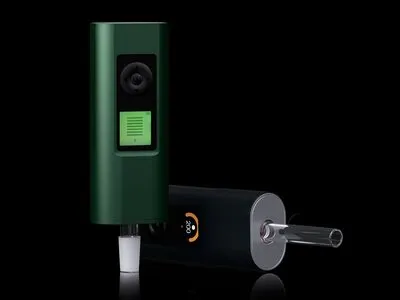
Solo III v2.0 and Solo II compared
| Feature | Solo II | Solo III v2.0 |
|---|---|---|
| Operating modes | Session | Session and On Demand |
| Heat-up time per Arizer | under 30 s | 5–15 s |
| Runtime per Arizer | up to 3 hours | up to 3 hours |
| Battery type | two 18650 cells, fixed | two 21700 cells, fixed |
| Battery capacity in mAh | not published | not published |
| Charging | 12 V DC power adapter | USB-C, 5 V/3 A |
| Device weight | 210 g | 280 g |
| Temperature range | 50–220 °C | 50–220 °C |
The runtime, weight, cell type, charging, and heat-up time figures come from Arizer’s comparison chart. The runtime is a manufacturer figure measured under unspecified usage conditions and does not replace an independent runtime test.
What does the Solo III v2.0 offer?
In Session mode the device maintains the selected temperature for a set period. In On-Demand mode it heats up at the press of a button for individual draws. Arizer states a heat-up time of 5 to 15 seconds and a temperature range of 50 to 220 °C. All settings are made on the device itself; no app is required. The Solo III v2.0 also supports use while charging. Arizer’s support page describes the modes and settings.
The XL glass stem offers twice the fill capacity of the original Air/Solo glass stems and greater airflow, according to the product page. The smaller original glass stems fit as well. Arizer’s included accessories and accessory list mention glass stems but no dosing capsules; capsule compatibility cannot therefore be confirmed.
What is new in version 2.0?
Arizer highlights customizable On-Demand presets, a real-time display, and a Session toggle for extending an active Session session as v2.0 additions. USB-C and On-Demand were already present in the original Solo III: both appear in its 2024 owner’s manual. We have no manufacturer statement confirming a larger v2.0 battery or a specific percentage performance increase.
How do you use the Solo 3 V2?
The device is controlled via a color display and a control ring: one center button (M) and four arrow buttons. To power on, hold M for three seconds, then unlock the device with the sequence left, up, right — a reminder is engraved on the bottom. The device is powered off using M as well.
In Session mode the device starts heating immediately. A short press of Up or Down changes the temperature by 1 degree; holding either button changes it by 10 degrees. Three presets can be saved and cycled through with a double press. In On-Demand mode, pressing Up starts heating; by default the device holds the temperature for 10 seconds afterward. Temperature and heating duration can be set individually per preset. The Session toggle extends a running session by five minutes per press.
Auto shut-off is adjustable: between 5 and 20 minutes in Session mode, and between 5 and 60 minutes in On-Demand mode. All figures come from the owner’s manual in Arizer support, which covers all on-device settings; the manufacturer does not mention an app there.
What’s in the box?
According to Arizer, the package includes:
- Solo III v2.0 and owner’s manual
- USB-C charger (5 V, 3 A)
- XL glass stem (90 mm) and XL glass stem with frosted 14 mm fitting
- Air/Solo glass stem (90 mm) and Air/Solo glass stem with frosted 14 mm fitting
- 4 silicone caps for the glass stems
- 2 PVC transport tubes with lids each in 90 mm and 70 mm
- Stainless steel stir tool
- 4 stainless steel screens
The transport tubes are designed for pre-packed glass stems: you fill several stems at home and simply swap the glass when you’re out.
What temperature is right?
The Solo III v2.0 uses hybrid heating. Arizer states a ratio of 80% convection and 20% conduction. The settable range is 50 to 220 °C. The right temperature depends on the material and the desired result: lower settings emphasize flavor and aroma, while higher settings release more active compounds and produce denser vapor. Our overview of cannabinoid and terpene boiling points shows which compounds vaporize at which temperature.
Arizer also notes in its support documentation that lower temperatures help preserve battery life.
Can the Solo 3 V2 be used with a water pipe?
Yes. The two frosted glass stems have a 14 mm glass joint (male) and connect directly to bongs or bubblers with a matching fitting. For other sizes, Arizer sells reducers and adapters separately. When the device is held upside down, the display and buttons rotate automatically if the inversion setting is enabled. For draws through a bubbler, Arizer recommends On-Demand mode on the product page.
How do you charge the Solo 3 V2?
According to support, a full charge takes about three hours — longer if the device is used while charging. Eco Charging is enabled by default: the device then only charges to 80% to protect the battery. To charge to 100%, hold the Up button while plugging in. After five to ten minutes on the charger, the Solo III v2.0 can already be used while continuing to charge. If the battery is completely empty, the device will not start.
Per charge, Arizer states up to three hours in Session mode or more than 100 draws in On-Demand mode. The battery cannot be replaced by the user; replacement is handled through Arizer service. For extended storage, Arizer recommends keeping the battery at around 50%.
How do you clean the Solo 3 V2?
The device itself requires very little maintenance. The glass stems are what need cleaning: Arizer recommends soaking them in isopropyl alcohol for several hours, then rinsing with hot water. The glass must be completely dry before the next use.
Two notes for the first few days: if a new glass stem fits too tightly, heat the device to 200 °C for one to two minutes and try again. To burn off residues from packaging, run the device at 220 °C for five to ten minutes.
What warranty does Arizer offer?
According to support, the warranty covers the heating element for life, material and workmanship defects for two years, and the battery for one year. Glass is excluded from the warranty. Damage from drops or modifications to the device is not covered. Keep your proof of purchase.
Who should consider upgrading?
Coming from the Solo II, the main reasons to switch are On-Demand mode, the XL glass stems, the shorter heat-up time, and USB-C. If you’re hoping for longer battery life, don’t compare the devices based on unconfirmed mAh figures: Arizer lists both at up to three hours. The Solo III v2.0 is also heavier at 280 g versus 210 g for the Solo II.
For existing Solo III owners, the updated controls and preset system are more relevant. A blanket claim such as “56% more battery,” a 70-minute charge time, or an advantage from new dosing capsules cannot be derived from the verified manufacturer sources.
Where does the Solo 3 V2 fall short?
- Size and weight: At 280 g with the glass stem protruding from the top, the device does not fit in a pants pocket.
- Glass: The stems can break, and glass is excluded from the warranty. The included transport tubes protect them on the go.
- Charging: A full charge takes about three hours per Arizer. With Eco Charging left on, you start with at most 80%.
- Battery: It is fixed in place. There is no spare battery for on-the-go use.
Solo 3 V2 or another device?
Detailed comparisons with manufacturer specs and current prices:
- Solo 2 vs Solo 3 V2: Is the upgrade worth it?
- Solo 3 V2 vs Solo 2 MAX
- Air MAX vs Solo 3 V2
- Solo 3 vs Mighty+
- Solo 3 V2 vs Venty
- Solo 3 V2 vs Crafty+
- Tinymight 2 vs Solo 3 V2
Frequently asked questions about the Solo 3 V2
Does the Solo 3 V2 require an app?
No. All settings are made directly on the device via the display and control ring. Arizer’s owner’s manual makes no mention of an app.
How long does the battery last?
Arizer states up to three hours in Session mode or more than 100 draws in On-Demand mode per charge. Arizer does not publish a capacity in mAh.
How long does charging take?
About three hours for a full charge, according to Arizer support. By default, Eco Charging limits the charge to 80%.
Can you replace the battery yourself?
No. The battery is fixed in place; replacement is handled by Arizer service.
Do glass stems from the Solo II or Air fit?
Yes. According to Arizer, all official Air and Solo glass stems as well as the new XL glass stems are compatible.
Can dosing capsules be used?
Arizer lists no dosing capsules in the box contents or accessory list. Compatibility cannot therefore be confirmed.
What warranty applies?
Lifetime coverage on the heating element, two years on material and workmanship defects, and one year on the battery. Glass is excluded.
Conclusion
Compared to the Solo II, the Solo III v2.0 primarily adds convenience: two operating modes, saveable presets, larger glass stems, and USB-C. Longer battery life cannot be derived from Arizer’s own specifications. If you’re looking for a device built around glass flavor and water filtration and don’t mind the weight, there’s a lot in the box. If you want something small enough for a pants pocket, one of the comparison devices above will serve you better.
Compare prices: Solo III v2.0 213.27 € incl. shipping, Solo II 173.28 € incl. shipping. Further technical details are available on the linked manufacturer pages.
Solo 3 V2
from 213.27 € incl. shipping
143 shops
Prices updated daily