DynaVap Buying Guide 2026: All Models
TL;DR
DynaVap currently sells around 13 different models. That sounds like a lot, and it is. The price range runs from 30 EUR to 200 EUR. In this buying guide, we explain every single model, tell you honestly where the differences lie, and which DynaVap suits your budget and your usage. All prices are updated daily from 77 shops in 23 countries.
The most important points at a glance
Introduction
DynaVap is a brand from Stoughton, Wisconsin (USA), which has been building butane vaporizers since 2015. The principle: a small metal device is heated with a jet flame lighter, an audible click signals the right temperature, and you inhale the vapor. No electronics, no battery, no app.
What sets DynaVap apart from other butane vaporizers is the sheer variety of models. Where Sticky Brick offers four variants and Vapman three, DynaVap now has well over a dozen active products in its line-up. That is both a blessing and a curse. A blessing because there is something for every taste. A curse because the differences are not obvious at first glance.
This is exactly where this buying guide comes in. We go through the models one by one — from the cheapest entry point to the titanium flagship device.
The DynaVap system explained
Before we compare the individual models, you need to understand how a DynaVap is built. Because all models are based on the same modular principle.
Four components:
- Tip: The chamber in which your material is vaporised. There are stainless steel tips and titanium tips. The tip largely determines the vapor quality.
- Cap: Sits on the tip. Contains a bimetal disc that snaps at around 200 °C and creates the click. The functional heart of every DynaVap.
- Condenser: A metal tube inside the stem that cools the vapor and catches condensate.
- Stem (body): The outer shell. This is where the models differ most strongly — stainless steel, silicone, glass, wood or titanium.
The click system: The bimetal disc in the cap changes shape when heated. As soon as the vaporisation temperature is reached, there is an audible click. It clicks again as it cools — the signal that you can heat it again. Simple, reliable, proven for years.
Modular design: All parts are compatible with one another. You can put a titanium tip on a wood stem, fit a new cap onto an old model, or install a longer condenser. That makes DynaVap a modular system.
Airport (carb hole): Most models have a small hole in the stem that you can cover or uncover with your finger. Open: less draw resistance, cooler vapor. Closed: denser, warmer vapor. You quickly get an intuitive feel for controlling it.
Compatibility with induction heaters: Every DynaVap model also works with induction heaters (IH). Instead of a lighter, you place the tip into a magnetic coil that heats it electrically. Same click, no flame. Practical for home use.
Budget models (30–55 EUR)
The B
The cheapest entry into the DynaVap world. The body is made of silicone with a stainless steel tip and cap. Priced at around 30–40 EUR.
What do you get? A fully functional DynaVap with click mechanism that, in terms of vapor, stands shoulder to shoulder with significantly more expensive models. The silicone stem has an anti-roll shape — sounds trivial, but in day-to-day use it is genuinely useful. The vapor quality is solid, not outstanding. The short vapor path means warmer vapor than on the M7.
Who it is for: People who want to try DynaVap without risking much money. If you like the principle, you can always upgrade to a better stem later — you keep the tip and cap.
The B2
The 2025 evolution of the B. Most important difference: the vapor path is now completely made of stainless steel instead of silicone. That noticeably improves the flavour. Price: 35–50 EUR.
The silicone stem remains as the outer shell, but your vapor now touches only metal on its way to your lips. For a 5–10 EUR surcharge over the original B, that is a sensible upgrade. The workmanship is also a touch better.
Who it is for: Budget buyers who do not want to compromise on flavour quality. The B2 currently offers the best value for money in the entire DynaVap line-up.
G3
Glass meets DynaVap. The G3 has a borosilicate glass stem that gives the vapor a particularly pure flavour. Price: 40–55 EUR. A torch lighter is often included.
Glass as a material has one decisive advantage: there is no metallic aftertaste. The G3 produces the cleanest vapor of all budget models. The downside is obvious — glass is fragile. Drop it on tiles, and the stem is history. The tip and cap will of course survive.
Who it is for: Flavour purists on a small budget. If you mainly use the DynaVap at home and are not constantly on the move, you get excellent vapor here for little money.
Mid-range (70–130 EUR)
M7
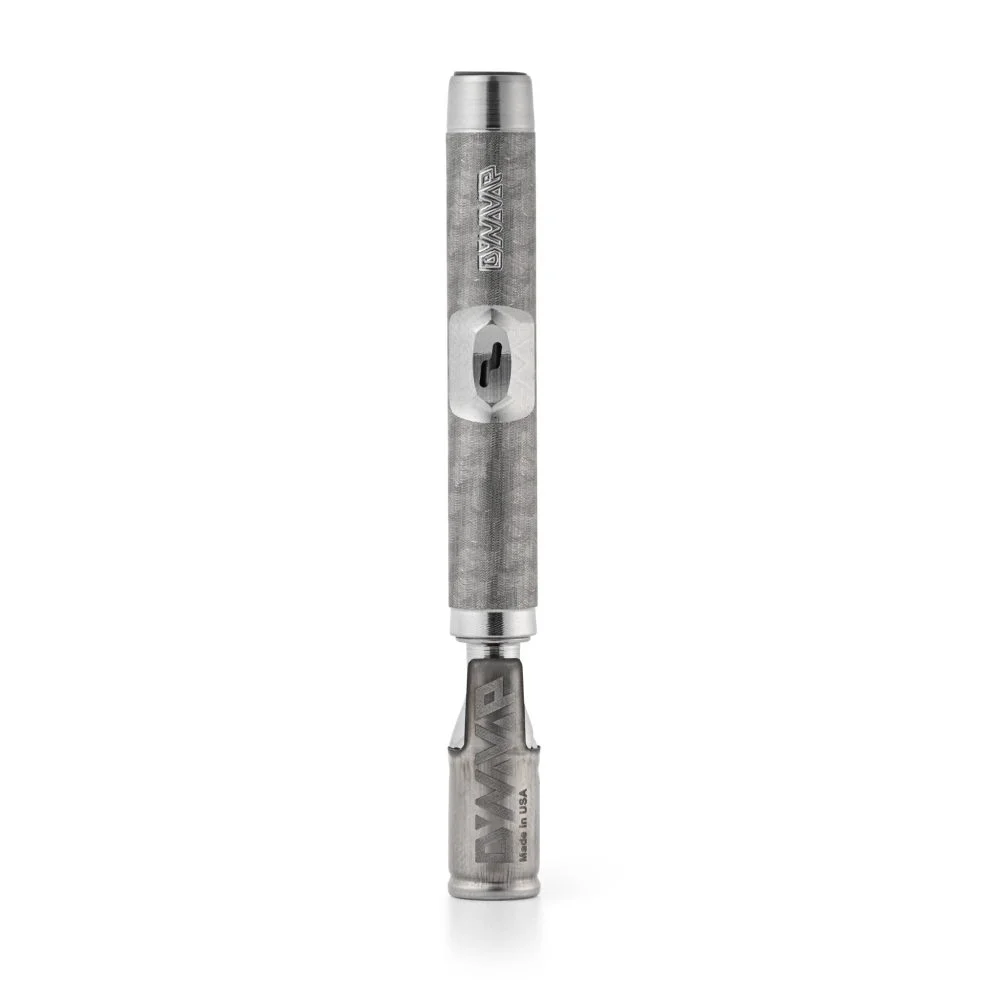
The standard model. The DynaVap that most people buy and that most people think of when someone says “DynaVap”. Price: 70–80 EUR.
The M7 came onto the market in 2024 and comes with six airflow settings. You turn the stem and choose between open and restrictive airflow. Open is ideal for beginners: less draw resistance, cooler vapor. Closed is for experienced users: denser, more intense. On top of that, there is the Adjust-a-Bowl function — a half click on the tip reduces the chamber to about half. Perfect for microdosing with around 0.05 g instead of the full 0.1 g.
The device, made entirely of stainless steel, is robustly built. You can drop it, forget it in your trouser pocket, scrub it with isopropanol. It can take it.
Who it is for: Beginners who want a solid all-rounder. The M7 forgives beginner mistakes during heating, offers enough flexibility for different usage styles, and does not cost the earth.
M7 XL
Identical to the M7, but with a longer stem. Price: 80–90 EUR.
The longer vapor path cools the vapor noticeably. If you find the regular M7 too warm or have sensitive airways, go for the XL version. People with large hands also prefer the longer device — it simply feels better in the hand.
All M7 features are identical: six airflow settings, Adjust-a-Bowl, same tip. The only difference is the length.
Who it is for: M7 buyers who prefer cooler vapor or have large hands. The 10 EUR surcharge is fair.
M Plus
The mid-range upgrade with a fundamentally different tip design. Price: 85–100 EUR.
The M Plus does without the fins on the tip. These ribs, which on the M7 store heat and distribute it evenly, are completely absent here. As a result, the heat reaches your material faster and more directly. Heat-up time drops to under 10 seconds. The chamber is 15 % larger than on the M7.
The result: denser vapor, more aggressive extraction, often in a single session instead of several cycles. That sounds better at first, but there is a catch. Without fins, heating is less forgiving. If you hold the flame too close or for too long, extraction becomes uneven. The M Plus rewards good technique and punishes bad technique.
Who it is for: Experienced DynaVap users who want maximum vapor production per draw. Not ideal as a first device.
VonG / VonG X
DynaVap for water pipe users. The VonG range combines a wood stem with an integrated 10/14-mm glass adapter. You plug the VonG directly into your bong or bubbler — without an additional adapter. Price: 90–120 EUR.
The wood stem not only looks good, it also feels pleasantly warm in the hand. The VonG X is the longer version with an extended vapor path. Both models can of course also be used without a water pipe, but the real advantage is then lost.
The water filters and cools the vapor. DynaVap plus water is a combination that many users describe as the best way to use a DynaVap. Bigger draws, smoother vapor, less urge to cough.
Who it is for: Anyone who already owns a bong or bubbler and wants to connect their DynaVap to it. Also the most attractive DynaVaps in the range visually.
WoodWynd
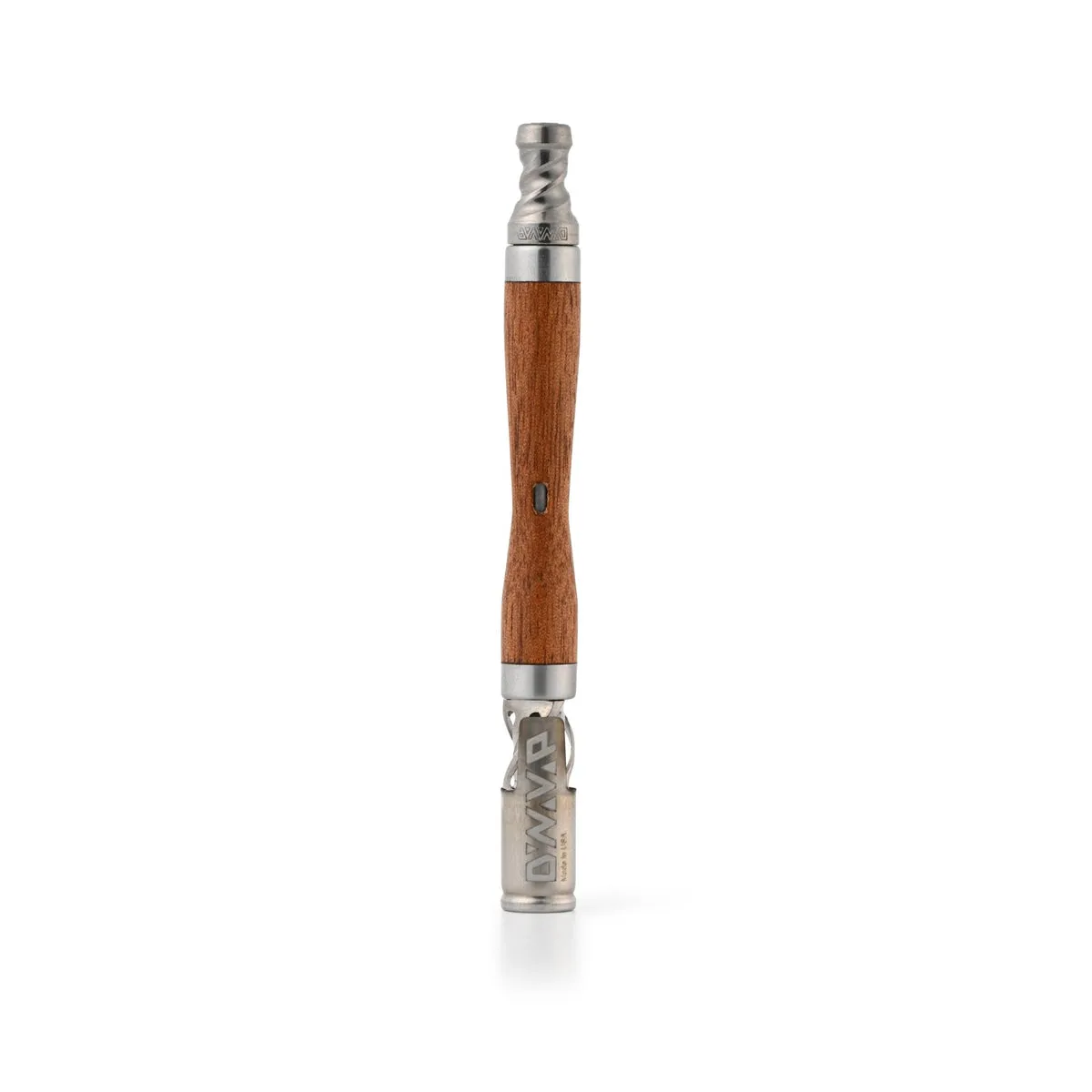
Wood meets titanium. The WoodWynd combines a handcrafted wood stem with a titanium condenser. The result is a DynaVap that feels like a small tool in the hand — warm, light, premium. Price: 110–130 EUR.
Titanium as a condenser material has one practical advantage: it is lighter than stainless steel and conducts heat differently. The vapor is a touch cooler and cleaner in flavour. Combined with the wood stem, it creates a combination that is especially popular among DynaVap collectors.
The WoodWynd is offered in limited wood types. Cocobolo, wenge, or other premium woods vary depending on availability. That makes each piece somewhat unique.
Who it is for: Collectors and enthusiasts who want a DynaVap with character. Functionally not a huge leap over the M7, but clearly more pleasant to use.
Premium models (150–200 EUR)
HyperDyn
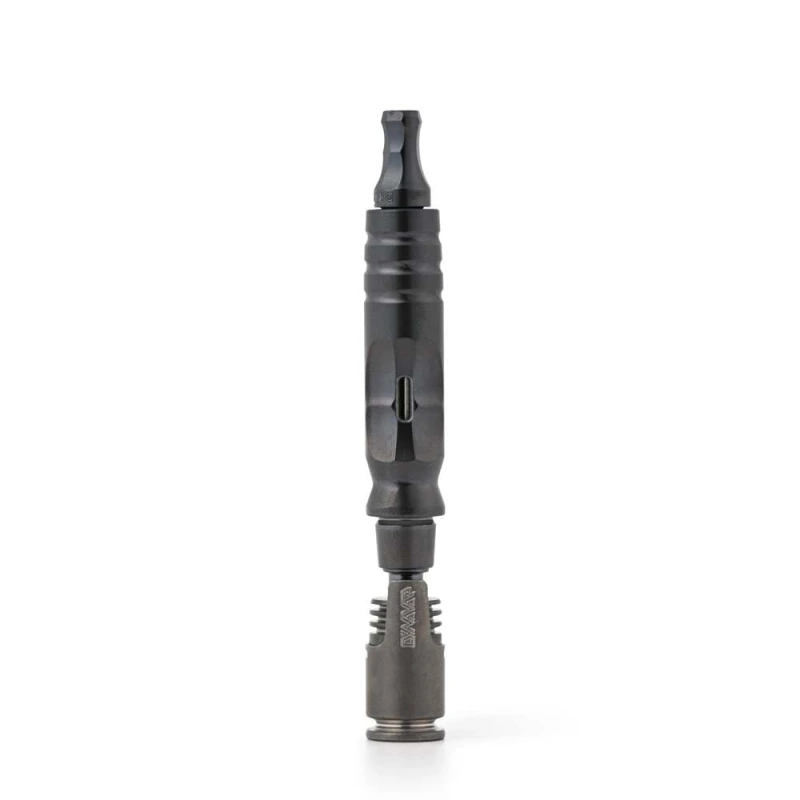
The vapor monster. The HyperDyn is made entirely of titanium and has an oversized chamber that holds up to 0.25 g. That is more than twice as much as the M7. Price: 150–180 EUR.
The rough surface of the tip increases the contact area between metal and material. That makes extraction more efficient. A single draw from the HyperDyn delivers more vapor than two full cycles with an M7. The device is clearly aimed at experienced users who consume large amounts or use the DynaVap as their main device.
Titanium as a material is not only lighter than stainless steel, it also heats up faster and cools down faster. That shortens the waiting time between cycles. The build quality is on a different level from the budget models — you feel that immediately.
Who it is for: Power users who want maximum output. Also interesting for people who want to load it just once in the evening and then be done. Not for microdosing.
UniDyn
The odd one out in the range. While all other DynaVaps work by conduction (contact heat), the UniDyn relies on convection. The material is vaporised not by hot metal, but by hot air. Price: 170–200 EUR.
The UniDyn is a titanium unibody — stem, condenser and tip are made from a single piece. So the modular system principle does not apply here. In return, the UniDyn comes with the BallR-Cap, a special cap with integrated beads that swirl and preheat the air.
Convection means: purer flavour, more even extraction, but also a different heating technique. You need to draw the air through the material while heating. That feels different from a normal DynaVap and takes some getting used to.
Who it is for: Experienced vaporizer users who appreciate convection and are willing to learn a different technique. The UniDyn is the best-tasting DynaVap — but also the most demanding.
All DynaVap models compared
| Model | Approx. price | Stem material | Chamber | Heating type | Special feature | Target group |
|---|---|---|---|---|---|---|
| The B | 30–40 EUR | Silicone | Standard | Conduction | Anti-roll shape | Bargain hunters |
| The B2 | 35–50 EUR | Silicone/stainless steel | Standard | Conduction | Stainless steel vapor path | Budget with standards |
| G3 | 40–55 EUR | Glass | Standard | Conduction | Purest flavour, torch included | Flavour purists |
| M7 | 70–80 EUR | Stainless steel | Adjust-a-Bowl | Conduction | 6 airflow settings | Beginners & all-rounders |
| M7 XL | 80–90 EUR | Stainless steel | Adjust-a-Bowl | Conduction | Longer vapor path | Want cooler vapor |
| M Plus | 85–100 EUR | Stainless steel | 15 % larger | Conduction | Finless tip, fast extraction | Experienced users |
| VonG | 90–110 EUR | Wood | Standard | Conduction | 10/14-mm WPA integrated | Water pipe users |
| VonG X | 100–120 EUR | Wood | Standard | Conduction | Longer version with WPA | Water pipe + cooler vapor |
| WoodWynd | 110–130 EUR | Wood | Standard | Conduction | Titanium condenser, limited woods | Collectors & enthusiasts |
| HyperDyn | 150–180 EUR | Titanium | 0.25 g (XXL) | Conduction | Rough surface, massive vapor clouds | Power users |
| UniDyn | 170–200 EUR | Titanium (unibody) | Standard | Convection | BallR-Cap, air swirling | Convection fans |
Tip: You can find current prices for all models on vapochecker.com — with daily updates from 77 shops in 23 countries.
Which DynaVap for which user?
The variety of models can be overwhelming. Here is the short version:
Are you a beginner and just want to get started? Take the M7. Six airflow settings, Adjust-a-Bowl, forgiving. There is a good reason the standard model is the best seller.
Do you want to spend as little as possible? The B2 offers a surprising amount for 35–50 EUR. Stainless steel vapor path, functional click, everything you need. Alternatively, the G3 if flavour matters more to you than robustness.
Are you looking for the best flavour? The G3 delivers the cleanest vapor in the budget segment. From 110 EUR upwards, the WoodWynd with wood and titanium goes in the same direction, only more premium. And if you are willing to learn a new technique, the UniDyn gives you the best flavour experience in the entire range.
Do you have a bong or a bubbler? The VonG was built exactly for that. Plug it in, heat it, inhale. No adapter needed.
Do you want microdosing? The M7 with Adjust-a-Bowl in the half position. Around 0.05 g per load; it hardly gets more economical. The half click reliably reduces the chamber.
Do you want the maximum amount of vapor per draw? HyperDyn. Full stop. The 0.25-g chamber and titanium design deliver more vapor than any other DynaVap.
Are you interested in convection instead of conduction? Then only the UniDyn remains. The only DynaVap with true convection heating and BallR-Cap. Other convection alternatives would be Sticky Brick or Lotus, but they are not DynaVaps.
Do you want an upgrade for your existing DynaVap? Do not buy a new DynaVap. Buy a titanium tip. For 30–40 EUR you get faster heating, better flavour and less weight. Fits every model with a standard stem.
Overview of all comparison articles – find the perfect device for you.
Price history
Conclusion
DynaVap offers the right model for practically every budget and every style of use. The M7 remains the best entry point and is still hard to beat after years in the line-up. If you want to save money, go for the B2. If you want more, move up towards the HyperDyn or UniDyn.
The modular system makes the decision somewhat less final than with electronic vaporizers. Tip, cap and condenser can be swapped at any time. You are not tied to one model, but can adapt your setup over time.
One final note: prices sometimes vary considerably depending on the shop and country. An M7 costs 65 EUR in some shops and 85 EUR in others. Before you buy, it is worth taking a look at vapochecker.com — prices there are updated daily from 77 shops.
Has been testing and comparing vaporizers at VapoChecker since 2020. Over 800 devices, 274 shops, 51 countries.