Arizer ArGo vs Arizer Go SRT: Is the Price Gap Worth It?
At 47 €, the ArGo is one of the most affordable all-glass portable vaporizers you can buy. At 137 €, the Go SRT is Arizer’s newest portable — six times faster to heat up, with nearly 50% more battery capacity. Both share the same glass stem system, the same 50–220°C temperature range, and the same all-Arizer vapor quality. The question isn’t which one performs better on paper. It’s whether those upgrades justify spending over three times as much.
- The Go SRT heats in 25 seconds vs 60 seconds for the ArGo — six times faster for the same all-glass Arizer vapor experience.
- The ArGo costs 47 € and has a removable 18650 battery you can swap on the go; the Go SRT costs 137 € with a larger non-removable 5000 mAh cell.
- Both use an identical glass stem vapor path, hybrid heating, and passthrough charging — so pure vapor quality is nearly indistinguishable.
- The ArGo carries a lifetime warranty on the heating element; the Go SRT is covered for 2 years.
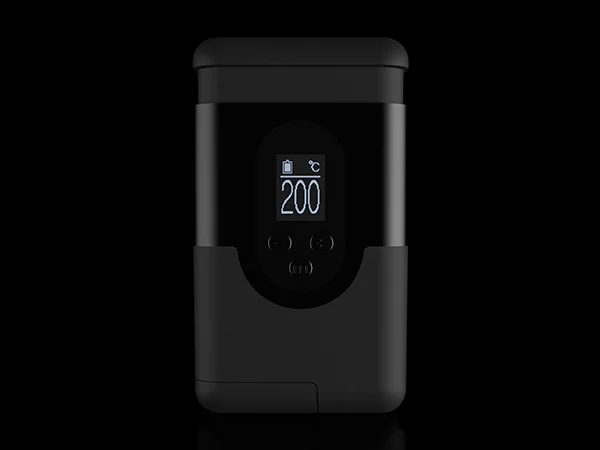
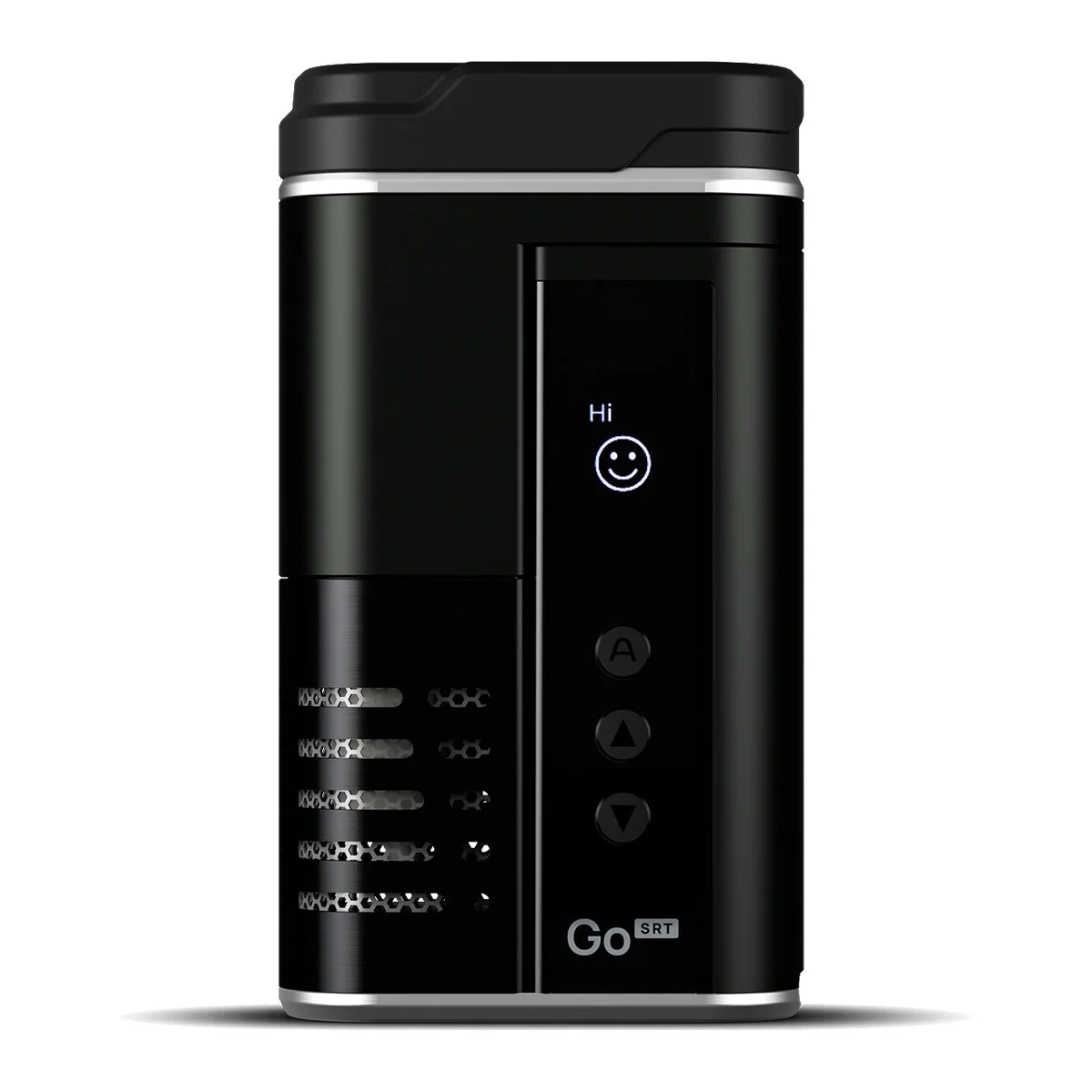
How Do the Specs Compare?
The portable cannabis vaporizer market hit USD 2.9 billion in 2024 and is growing at 13.7% per year, driven largely by demand for devices under $150 that don’t sacrifice vapor quality (Research and Markets, 2025). That’s exactly the price segment the ArGo still dominates — even as the Go SRT represents where the category is heading. Here’s the full picture side by side.
| Feature | Arizer ArGo | Arizer Go SRT |
|---|---|---|
| Current best price | from 47 € | from 137 € |
| Heating | Hybrid (conduction + convection) | Hybrid (convection-dominant) |
| Heat-up time | 60 seconds | 25 seconds |
| Temp range | 50–220 °C | 50–220 °C |
| Battery | 3400 mAh (18650, removable) | 5000 mAh (21700, built-in) |
| Sessions per charge | ~6–9 | ~10–14 |
| Passthrough charging | Yes (micro-USB) | Yes (USB-C) |
| Charging port | Micro-USB | USB-C |
| Weight | ~96 g | ~240 g |
| Vapor path | All-glass stem | All-glass stem |
| Water pipe compatible | Yes (adapter sold separately) | Yes (14mm WPA included) |
| Warranty | Lifetime (heating element) | 2 years |
| Shops tracked | 68 shops | 48 shops |
Why Does the Go SRT Heat Up Six Times Faster?
The ArGo takes 60 seconds to reach operating temperature. That’s one of the slowest heat-up times in the current portable vaporizer market — comparable to the Arizer Air MAX — and it’s the single biggest practical difference between these two devices. The Go SRT reaches temp in 25 seconds.
The difference comes down to the heating element format. The ArGo uses an older resistive heater design that takes time to build up sufficient thermal mass. The Go SRT uses a newer, more efficient element paired with a 21700 lithium cell that can deliver current faster. Battery cell technology matters: the 21700 format handles higher instantaneous discharge rates than the 18650 in the ArGo, which directly enables the quicker heat-up.
What does this mean in practice? At 60 seconds, the ArGo asks you to plan ahead — put it on, then pack a bowl while it heats, then wait. At 10 seconds, the Go SRT works more like a lighter: pick it up, load it, and you’re drawing before you’ve put the bag down. If spontaneous sessions matter to you, the Go SRT changes how the device fits into your routine.
Battery: Removable Cells vs Bigger Capacity
The ArGo carries a 3400 mAh removable 18650 cell — the same format used in laptop batteries, flashlights, and power tools. You can buy a spare online for under €10, charge it separately in an external charger, and swap batteries mid-day without ever plugging the device in. For heavy users who vape far from a power outlet, this is more useful than any mAh figure.
The Go SRT uses a built-in 5000 mAh 21700 cell. It can’t be swapped. What it can do is deliver more sessions per charge — roughly 10 to 14 versus the ArGo’s 6 to 9 — and it supports passthrough charging via USB-C, so you can vape while plugged in. The ArGo also supports passthrough, but through a micro-USB port. In 2026, that distinction matters: USB-C chargers are everywhere; micro-USB ones increasingly aren’t.
The honest trade-off: if you vape at home or within reach of a cable, the Go SRT’s bigger built-in battery is a genuine upgrade. If you’re on multi-day trips or away from power regularly, the ArGo’s swappable cell is more practical than any amount of extra capacity.
Current Best Prices
Do They Produce the Same Vapor Quality?
Yes — and this is the most important thing to understand about this comparison. Both the ArGo and Go SRT use the same all-glass stem vapor path that’s defined Arizer’s lineup for over a decade. Hot air passes through loose herb in the glass bowl, up through the tube, and directly to your mouth with no plastic, no silicone, no metal in the airstream. The flavor profile is essentially identical.
The Go SRT’s hybrid heating leans slightly more convection-dominant, which in extended use produces marginally better extraction at lower temperatures. But this is a refinement, not a revolution. At 185–200°C with a properly loaded stem, the ArGo produces vapor that’s indistinguishable from the Go SRT in any blind test. Both support the full Arizer glass stem ecosystem: the standard Aroma Tube, the curved diffuser tube, the glass tipped stems — all cross-compatible between every Arizer portable made in the last eight years.
Water pipe adapters work with both. The ArGo needs a 3-in-1 adapter purchased separately; the Go SRT ships with a 14mm WPA included. Add the WPA cost to the ArGo’s price if bubbler use is important to you — typically €15–25 for the official Arizer adapter.
Size: The ArGo Is Genuinely Pocket-Sized
The ArGo weighs 96 grams. The Go SRT weighs approximately 240 grams — two and a half times heavier. The ArGo fits in a jeans pocket without creating a visible bulge. The Go SRT does not.
This matters more than it sounds. Conduction-dominant vaporizers dominated early portable markets partly because smaller devices required less thermal mass. The ArGo at 96 g sits at the upper edge of what most people consider genuinely pocketable, in the same range as a full-size smartphone. The Go SRT’s 240 g is closer to a small power bank — carriable in a jacket pocket, less comfortable in anything tighter.
Battery-powered portables account for over 70% of handheld vaporizer market share in 2024 (Global Market Insights, 2024), and that growth is driven partly by devices small enough to carry everywhere. The ArGo continues to win in pocket portability. The Go SRT trades that against better specs in every other category.
Total Cost of Ownership: Is the Price Gap as Large as It Looks?
The headline gap — 47 € vs 137 € — is real. But a few factors shift the full picture.
The ArGo’s removable battery means you’re not paying for the device again when the cell degrades. A replacement 18650 costs €8–15. The Go SRT’s built-in cell will eventually degrade too, and when it does, replacing it requires sending the device for service rather than opening a battery door.
The ArGo doesn’t include a WPA. Official Arizer adapter: €15–25. Add that and the effective ArGo package costs €60–70, narrowing the gap slightly.
The Go SRT’s 2-year warranty versus the ArGo’s lifetime heating-element warranty is the bigger long-term factor. Arizer’s lifetime warranty has a strong track record. If the heating element fails outside the Go SRT’s 2-year window, you pay for repair or replacement.
If you use a vaporizer for 3–5 years: the ArGo’s lifetime warranty and swappable batteries make its long-run cost lower than the headline price suggests. The Go SRT’s advantage is entirely in the experience of using it — faster, more convenient, larger battery — not in long-term economics.
Who Should Buy Each Device?
Based on 68 shops tracked for the ArGo and 48 shops for the Go SRT across 51 countries on Vapochecker, the ArGo remains widely available and actively stocked — not a clearance item, but a product that shops continue to carry because demand holds.
Buy the ArGo (47 €) if: budget is the primary constraint; you value a removable battery for extended off-grid use; pocket portability matters; you want lifetime heating-element coverage; or you’re new to dry herb vaporizers and want to try the Arizer glass stem experience without a large upfront commitment.
Buy the Go SRT (137 €) if: you want the fastest Arizer heat-up currently available; micro-USB feels obsolete and you want USB-C; you primarily vape at home or near a charger and want more sessions per charge; or you’re upgrading from an older Arizer and want meaningful gains without moving to a completely different product ecosystem.
Consider the Solo 3 V2 instead if: you want Arizer’s best value-to-features ratio — it adds app control, a replaceable battery, and lifetime warranty at a price between the ArGo and Go SRT. See the full comparison linked below.
Related reviews:
Frequently Asked Questions
Is the Arizer ArGo still worth buying in 2026?
What is the main difference between the ArGo and Go SRT?
Can you use ArGo glass stems in the Arizer Go SRT?
Does the Arizer ArGo have passthrough charging?
Is the Go SRT worth the extra cost over the ArGo?
Testing and comparing vaporizers at Vapochecker since 2020. 800+ devices, 274 shops, 51 countries.
Current Prices
More Comparisons
Daily Use and Practicality
In everyday use, heat-up time shapes your routine more than any spec sheet suggests. The Arizer Go SRT reaches operating temperature in 25 seconds, while the ArGo needs 60 seconds. That difference adds up over weeks of daily sessions. Quick morning sessions before work favor the faster device; relaxed evening sessions make the gap irrelevant.
Consider your typical usage pattern. If you vaporize 3-5 times daily, a few seconds per session compound into meaningful time savings. If you have one session per evening, both devices serve equally well. The Arizer Go SRT rewards impulsive, grab-and-go use. The ArGo rewards users who plan their sessions.
Build Quality and Materials
The ArGo: Durable polymer body with all-glass vapor path. Arizer devices are manufactured in Canada with a focus on simplicity and reliability. The glass stems are the signature feature: easy to clean, flavor-neutral, and available in multiple lengths. Build quality is consistently high across the product line.
The Arizer Go SRT: Durable polymer body with all-glass vapor path. Arizer devices are manufactured in Canada with a focus on simplicity and reliability. The glass stems are the signature feature: easy to clean, flavor-neutral, and available in multiple lengths. Build quality is consistently high across the product line.
Battery Strategy in Detail
The ArGo packs 3400 mAh, the Arizer Go SRT has 5000 mAh. The larger battery does not always mean longer runtime — heating method, chamber size, and usage pattern all affect real-world endurance. Both devices manage 5-8 full sessions on a charge under normal conditions.
Both have swappable 18650 batteries. Spare cells are cheap and extend both devices lifespan by years.
Water Pipe Compatibility
Both devices support water pipe use. Water filtration cools the vapor and makes higher temperatures more comfortable. WPA adapters (14mm and 18mm joints) are available for both the ArGo and Arizer Go SRT. Combining a vaporizer with glass elevates the experience significantly.
Cleaning and Maintenance
Regular cleaning directly affects vapor flavor and device longevity. Both the ArGo and Arizer Go SRT benefit from weekly isopropyl alcohol soaks of removable parts. Screens and seals are consumable items that should be replaced every few months for optimal performance. A basic cleaning kit consisting of isopropyl alcohol (90 percent or higher), cotton swabs, and pipe cleaners covers most devices.
A clean device delivers noticeably better flavor than a neglected one. Most flavor complaints in online forums trace back to insufficient cleaning rather than device limitations. Residue buildup narrows the vapor path, increases draw resistance, and adds a stale taste. Budget 10 minutes per week for maintenance and both devices will perform at their best for years. Deep cleaning every 2-4 weeks prevents hard-to-remove buildup and keeps the airflow unrestricted.
Related Comparisons
- ArGo vs Solo 3 V2: Compact or Performance?
- ArGo vs PAX Plus 2026: Glass Path or Stealth?
- ArGo vs Crafty+ Comparison 2026
- Arizer ArGo vs Air MAX: Compact vs Versatile
- Arizer Go SRT vs. Solo 3 V2: Which Arizer is better?