
Pros
- Hybrid heating with butane flame.
- Just 30 g, ultra-light.
- On-demand with instant draws in 5 s.
- No charging needed, just fire.
- Budget price under 40 EUR.
Cons
- Needs lighter/flame to operate.
- No water pipe adapter.
- No temp display, no app.
Vaponic — Price Comparison (6 shops) 36–48 €













Last updated: 30/06/2026, 10:38 AM
* Some links are affiliate links. We earn a small commission if you purchase through these links — at no extra cost to you.
Specifications
| Specifications | |
|---|---|
| Heating Method | Hybrid |
| Device Type | Butane Vaporizer |
| Brand | Vaponic |
| Power Source | Butane |
| Heat-up Time | 5 seconds |
| Weight | 80 g |
| Warranty | 2 years |
| Session Mode | On-Demand |
| Temperature Control | Manual |
| Material | Dry Herb |
| Vapor Path | Glass |
| Replaceable Battery | No |
| Passthrough Charging | No |
| Charging Port | none |
| MSRP | €45,00 |
Source: OfficialOfficial, VerdampftNochMalRetailer · Verified 19.02.2026
About this vaporizer
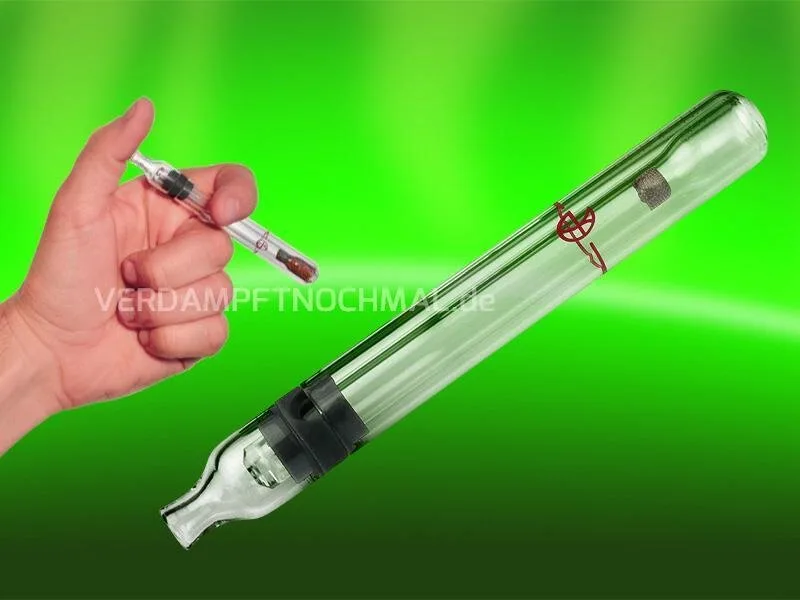
The Vaponic is one of the purest expressions of the vaporizer concept — a device stripped down to almost nothing. Made in Germany, it is essentially a glass tube with a screen and nothing else. No battery, no electronics, no moving parts. You heat it with a lighter and draw through it. That is the whole device.
What separates it from a conventional one-hitter is the heating method. You do not apply the flame directly to the herb — instead, you heat the outside of the glass tube, and the radiant heat penetrates through to the material inside. When done correctly, the temperature stays in vaporization range, not combustion range, and you get actual vapor rather than smoke. It takes a bit of practice. Distance from the flame, how long you heat, how fast you draw — all of these affect the result.
Heat-up is nearly instant, a few seconds at most. Maximum temperature tops out around 220°C. The device has no electronics to fail, no battery to deplete, no firmware to update. If you have ever been frustrated by a flat battery or a software bug on a device you paid hundreds of euros for, the Vaponic represents a philosophical counterpoint: a tool that works wherever you are, whenever you want, as long as you have a lighter.
Portability is essentially perfect. It weighs almost nothing and fits in any pocket. The glass construction is genuinely high-quality, and the two-year warranty shows the manufacturer stands behind it. But glass does break, which is the one real vulnerability. For desk use or careful travel, this is not a problem. For rough handling, perhaps keep a spare.
The Vaponic is not for everyone. It rewards patience and a willingness to develop technique. But for the right person — someone who values simplicity, clean flavor, and zero reliance on technology — it is difficult to argue against it.
- Hybrid heating with butane flame.
- Just 30 g, ultra-light.
- On-demand with instant draws in 5 s.
- No charging needed, just fire.
- Budget price under 40 EUR.
- Needs lighter/flame to operate.
- No water pipe adapter.
- No temp display, no app.
Vaponic Vaporizer Key Takeaways Vaponic — vaporizer manufacturer from Spain Conduction + hybrid heating, 2 models (butane) Range from {min_price} € to {max_price} €, available at {shops}+ shops
Vaponic →The Vaponic by Vaponic is a glass vaporizer that works entirely without electronics. Two glass tubes fitted inside each other, a butane flame – that is all it takes. The outer tube is heated with a lighter, the air flows through the inner tube and vaporizes the herbs via hybrid heating at up to 220 °C. Weighing just 80 g, it fits in any pocket. The Vaponic heats up in around 5 seconds and works on demand: one draw, done. You can find the current price in the Vaponic price comparison.
Operating Principle: Glass Meets Flame
The concept is as simple as it gets. A thick-walled borosilicate glass tube forms the outer shell. Inside it sits a thinner tube with an integrated herb chamber. You heat the outer glass with a butane lighter for 5 to 10 seconds and then draw on the mouthpiece. The hot air flows over the herb – convection and thermal radiation work together. No battery, no cable, no button presses.
Research context: A study in the Journal of Pharmaceutical Sciences (Hazekamp et al., 2006) showed that vaporization at controlled temperatures releases over 95 % of the desired active compounds, while largely avoiding combustion by-products. Source: PubMed 16637053
Build Quality and Material
Both tubes are made from heat-resistant borosilicate glass. The material is taste-neutral and easy to clean – isopropanol and a pipe cleaner are enough. The wall thickness withstands temperatures up to 500 °C, although only 180 to 220 °C are needed for vaporization. The Vaponic is made in Spain.
On-Demand and Microdosing
The Vaponic is a pure on-demand vaporizer. You heat, draw, and you are done. Between draws, the glass cools down quickly, so no material is wasted. The herb chamber holds about 0.05 to 0.1 g – perfect for microdosing. If you want to use very little material, you will hardly find a more efficient device.
Portability and Price
At 80 g and around 12 cm long, the Vaponic is one of the smallest vaporizers around. It needs no charging and no accessories apart from a lighter. The price is well below that of most portable vaporizers. For beginners who want to try vaporizing, it is a low-risk entry point.
Drawbacks and Limitations
Temperature control is not precise – you learn the right technique through trial and error. Anyone used to electronically regulated devices will need a little practice. Water filtration is not possible. And glass is still glass: a drop onto a hard floor can mean the end. For session users who prefer longer sittings, the Vaponic is less suitable.
Glass Vapour Path
The Vaponic is made entirely from borosilicate glass -- from the outer tube to the inner chamber. This means the vapour touches only glass on its way to your mouth. No plastic, no metal, no silicone. The flavour remains completely neutral.
Borosilicate glass is heat-resistant and withstands temperature changes without cracking. Even so, you should not drop the Vaponic -- it is robust for glass, but still glass. Many users keep it in a padded case.
Butane Technology
As a butane vaporizer, the Vaponic needs neither a battery nor a plug socket. A standard lighter or a jet-flame torch heats the outer glass tube. The heat travels through the glass to the inner chamber, where the herbal material is vaporized.
The technique is hybrid: partly conduction (heat transfer through the glass), partly convection (hot air flows through as you draw). At 220 °C maximum operating temperature, most herbs can be vaporized well. Because you guide the flame yourself, you quickly learn to control the temperature via the heating time.
Official Resources
Similar Vaporizers 1
Compatible Accessories
Other Accessories
1
You heat the outer glass tube with a butane lighter for 5 to 10 seconds. Then you draw on the mouthpiece. The hot air vaporizes the herbs in the inner tube.
Up to 220 °C. The exact temperature depends on how long and where you heat the glass.
Soak both glass tubes in isopropanol or run a pipe cleaner through them. Since there are no electronics built in, you can soak everything completely.
No. The herb goes directly into the small chamber in the inner glass tube.
No, the Vaponic does not have a water filter connection. Vapour cooling happens purely through the length of the glass.
For a very long time if handled carefully. Borosilicate glass is heat-resistant and robust, but not shatterproof. A drop onto tiles can destroy it.
Yes, because of the low price and simple operation. However, you do need a little practice with the heating technique.
In Spain. The glass tubes are manufactured and packaged there.
Comments
No comments yet. Be the first!
Sign in to comment